On this page is vital information about the research undertaken to support the development of the Blueprint and the OER.
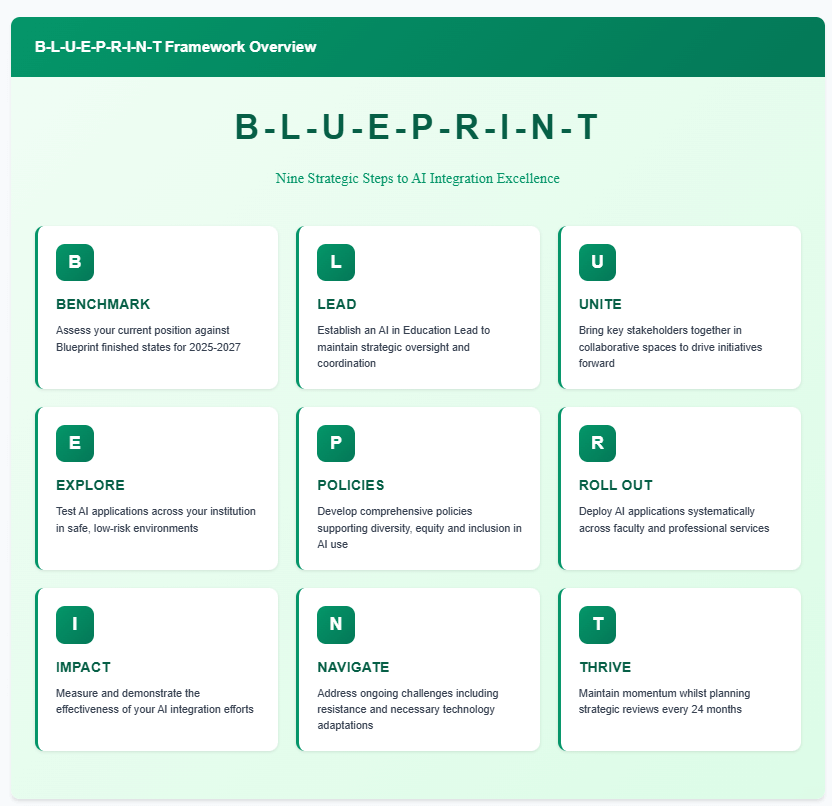
Scaffold created by Claude AI in May 2025 based upon raw research data to create the Blueprint outlining the WHAT needs to be in place in HEI.
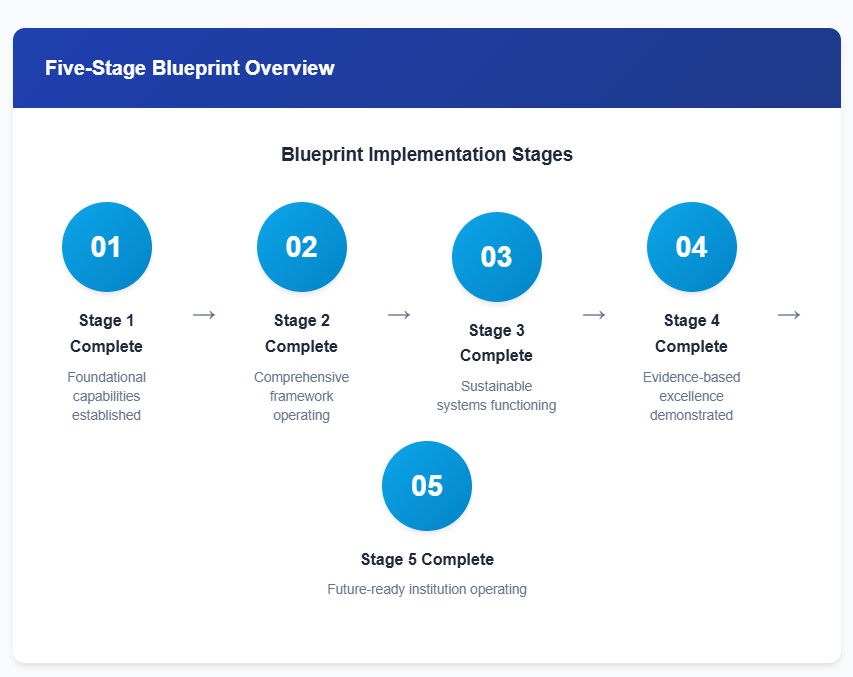
Scaffold for the OER created by Claude AI in May 2025 based upon raw research data as a way to show HOW to use the Blueprint.
Below is the FINAL summary of the research done by humans and not AI. The original scaffold shown above was created with the same data (raw) before it was analysed by humans.
Focus on whether our original scaffolds are still correct. I am loathe to change either of them but in the case of the Blueprint we might need to integrate some insights into the scaffold that we didn’t see before.
With regards the OER scaffold I don’t want to change that either as it is built around B-L-U-E-P-R-I-N-T and this is clever but again we might need to either change the words or the content in each of the sections based upon the human analysis below.
Below is the full human analysis of the research data
SUMMARY OF LITERATURE REVIEWS ICDE TIN GOAL
Now that we have all the raw research data, we have worked through each of the research to focus on the key messages and include information against each of these key points:
- Summary
- Challenges for the author
- Teaching practices
- Common themes or gaps
- Glocalization and scalability
- Artificial Intelligence in higher education
- Relationship to the Blueprint
- Anything else of interest, related to GOAL 2 ½
Look specifically at the section called Relationship to the Blueprint (scaffold)
Ebba Ossiannilsson
- Ezequiel, M., Vasquez, M., & Enricque, E. (2025). AI Revolution in Higher Education : What you need to know (English). World Bank Group. https://documents.worldbank.org/pt/publication/documents-reports/documentdetail/099757104152527995
Summary
Artificial Intelligence (AI) is revolutionizing Higher Education (HE), transforming how students learn, faculty teach, and institutions operate. Across Latin America and the Caribbean (LAC), AI-powered tools are being integrated into classrooms, research, and administrative processes, offering scalable and personalized solutions to improve educational access, efficiency, and equity. However, despite its vast potential, AI adoption in the region remains fragmented, hindered by infrastructure gaps, limited AI innovation, and challenges in faculty upskilling and talent retention. This report examines the transformative potential of AI in HE, focusing on key applications, challenges, and strategic recommendations for ethical integration. AI tools are already making a significant impact in student support, faculty research, and institutional management. Recent studies of well-designed Generative AI systems demonstrate promising results. For instance, AI-powered assignment platforms have increased student placement efficiency by 20% and improved options for under-assigned students by 38% (Larroucau et al., 2024). New studies of carefully implemented Generative AI tools demonstrate meaningful improvements in learning outcomes – a Harvard study found students using AI tutors learned more than twice as much in less time compared to active learning classrooms (Kestin et al., 2024), while a Stanford study demonstrated how AI-enhanced tutoring could effectively scale expert teaching practices, leading tutors to employ more effective pedagogical strategies while achieving improvements at a modest cost of $20 per tutor annually (Wang et al., 2025). These technologies are helping to close learning gaps and expand access to quality education, addressing Bloom’s “2 Sigma Problem” (Bloom, 1984) by offering personalized, 24/7 learning support that complements traditional teaching methods.
Challenges for the authors:
- The authors argue that there are digital inequality risks that exclude low-resource institutions.
- Different skills, competencies and attitudes among students and teachers
- If not properly regulated, AI tools can reinforce existing power imbalances
Teaching practices:
- Advocate for blended learning models supported by AI.
- Emphasizes adaptive learning platforms that provide personalized feedback.
- Emphasizes the importance of teacher training in AI-supported pedagogy
Common themes or gaps:
- Strong global focus, but too little detailed consideration of cultural and ethical dimensions.
- Limited attention to the risks to academic integrity.
Glocalization and scalability:
- Prioritizes adaptation to low- and middle-income countries.
- Emphasis on public-private partnerships to build capacity in underserved regions.
Artificial intelligence in higher education:
- Artificial intelligence (AI) is seen as a key enabler for expanding access to higher education around the world.
- An important tool for improving quality assurance, student retention and institutional efficiency.
Relationship to the Blueprint:
- Important source of infrastructure, capacity building and cross-sector partnerships.
Anything else of Interest:
- Presents an “AI roadmap” for universities.
- Warns that AI is exacerbating the global digital divide between North and South
- Miao, F., & Holmes, W. (2023). Guidance for generative AI in education and research. Paris: UNESCO. https://unesdoc.unesco.org/ark:/48223/pf0000386693
Summary
Publicly available generative AI (GenAI) tools are rapidly emerging, and the release of iterative versions is outpacing the adaptation of national regulatory frameworks. The absence of national regulations on GenAI in most countries leaves the data privacy of users unprotected and educational institutions largely unprepared to validate the tools. UNESCO’s first global guidance on GenAI in education aims to support countries to implement immediate actions, plan long-term policies and develop human capacity to ensure a human-centred vision of these new technologies. The Guidance presents an assessment of potential risks GenAI could pose to core humanistic values that promote human agency, inclusion, equity, gender equality, and linguistic and cultural diversities, as well as plural opinions and expressions. It proposes key steps for governmental agencies to regulate the
use of GenAI tools including mandating the protection of data privacy and considering an
age limit for their use. It outlines requirements for GenAI providers to enable their ethical and
effective use in education. The Guidance stresses the need for educational institutions to validate GenAI systems on their ethical and pedagogical appropriateness for education. It calls on the international community to reflect on their long-term implications for knowledge, teaching, learning
and assessment. The publication offers concrete recommendations for policy-makers and educational institutions on how the uses of GenAI tools can be designed to protect human agency and genuinely benefit learners, teachers and researchers.
Challenges for the authors:
- Lack of a global regulatory framework for AI in education
- Unequal access to GenAI tools worldwide due to the digital divide
- Risks of invasion of privacy and misinformation, and bias.
- Difficulties in ensuring age-appropriate AI use
Teaching practices:
- Advocates for human-led pedagogy supported by GenAI.
- Proposes personalized learning pathways with human supervision
- Recommends training for teachers in AI ethics, privacy and risk mitigation
- The Guidance stresses the need for educational institutions to validate GenAI systems on their ethical and pedagogical appropriateness for education.
Common themes or gaps:
- Strong ethical guidelines are needed, but practical implementation tools are limited.
- Assessment redesign challenges not fully explored
- Clear gap in addressing the context of low-income countries
Glocalization and scalability:
- Highlights for global ethical standards with flexible national adaptation.
- Emphasizes context-sensitive deployment, taking into account cultural norms and local capabilities
Artificial intelligence in higher education:
- GenAI as opportunity (personalization, inclusion) and risk (bias, integrity)
- Focuses heavily on ethics, governance and pedagogical safeguards
- It outlines requirements for GenAI providers to enable their ethical and
effective use in education
- Focus on humanistic values that promote human agency, inclusion, equity, gender equality, and linguistic and cultural diversities, as well as plural opinions and expressions
- It proposes key steps for governmental agencies to regulate the use of GenAI tools including mandating the protection of data privacy and considering an age limit for their use.
Relationship to the Blueprint:
- Central source for human-centered approach, responsible use, governance and EDIA principles
- Emphasizes the need for multi-stakeholder engagement
- It calls on the international community to reflect on their long-term implications for knowledge, teaching, learning and assessment
Anything else of Interest:
- UNESCO recommends national AI task forces
- Calls for generative AI safety testing before use in education
- Calls strongly for the human side and perspective using AI
- A core resource which many of following research are citing and referencing to
- Already translated to many languages and used worldwide and in different contexts (Glocalization)
. The publication offers concrete recommendations for policy-makers and educational institutions on how the uses of GenAI tools can be designed to protect human agency and genuinely benefit learners, teachers and researchers
- Gering, Z., Feher, K. & Vanda, H. & Tamassi, R Harmat(2025) Strategic organisational responses to generative AI-driven digital transformation in leading higher education institutions. International Journal of Organizational Analysis, vol. 33 no. 12 https://www.emerald.com/insight/search?q=Reka%20Tamassy
Summary
Purpose
This study aims to explore generative artificial intelligence (AI) as a significant milestone and key driver of digital transformation in higher education, emphasising the urgent need for universities and policymakers to adapt strategies to remain effective, competitive and aligned with the rapidly evolving demands of education and research.
Design/methodology/approach
This study used qualitative content analysis to examine publicly available strategic documents and statements related to digital transformation from the top 30 ranked universities in the Times Higher Education 2024 Ranking, producing a data set of 98 strategies covering all key organisational domains.
Findings
The collected documents span eight areas, from teaching-learning strategies to information technology (IT) strategies and committees, with substantial variation among universities in scope, content and strategic combinations. A significant result is that teaching-learning offices and development centres serve as bridges between institutional strategies and grassroots innovation, absorbing top-down and bottom-up knowledge and fostering adaptive responses to generative AI-driven transformation.
Practical implications
By showcasing the best practices, this paper provides practical guidance for proactive institutional development, supporting university leadership in strategy-building and aiding national and international policymakers in shaping forward-looking frameworks.
Originality/value
Understanding and defining generative AI as a milestone in digital transformation is crucial for universities. Proactive adaptation to emerging trends and best practices enables institutions to navigate these challenges effectively.
Challenges for the authors:
Teaching practices:
Common themes or gaps:
- This study aims to explore generative artificial intelligence (AI) as a significant milestone and key driver of digital transformation in higher education, emphasising the urgent need for universities and policymakers to adapt strategies to remain effective, competitive and aligned with the rapidly evolving demands of education and research.
Glocalization and scalability:
- By showcasing the best practices, this paper provides practical guidance for proactive institutional development, supporting university leadership in strategy-building and aiding national and international policymakers in shaping forward-looking frameworks.
Artificial intelligence in higher education:
- By showcasing the best practices, this paper provides practical guidance for proactive institutional development, supporting university leadership in strategy-building and aiding national and international policymakers in shaping forward-looking frameworks.
Relationship to the Blueprint:
- A significant result is that teaching-learning offices and development centres serve as bridges between institutional strategies and grassroots innovation, absorbing top-down and bottom-up knowledge and fostering adaptive responses to generative AI-driven transformation
- The research provides practical guidance for proactive institutional development, supporting university leadership in strategy-building and aiding national and international policymakers in shaping forward-looking frameworks
- This study aimed to explore generative artificial intelligence (AI) as a significant milestone and key driver of digital transformation in higher education, emphasising the urgent need for universities and policymakers to adapt strategies to remain effective, competitive and aligned with the rapidly evolving demands of education and research.
- Understanding and defining generative AI as a milestone in digital transformation is crucial for universities
Everything else of Interest:
- Proactive adaptation to emerging trends and best practices enables institutions to navigate these challenges effectively
- McCombes, S. (2025).How to Write a Literature Review. Guide, Examples, & Templates. Scribbr.https://www.scribbr.com/methodology/literature-review/#collect-select-literature
Summary
The literature review gives you a chance to: Demonstrate your familiarity with the topic and its scholarly context. Develop a theoretical framework and methodology for your research. Position your work in relation to other researchers and theorists. Show how your research addresses a gap or contributes to a debate. Evaluate the current state of research and demonstrate your knowledge of the scholarly debates around your topic.
Challenges for the authors: NA
Teaching practices: NA
Common themes or gaps: NA
Glocalization and scalability: NA
Artificial intelligence in higher education:cNA
Relationship to the Blueprint: On how to work with literature reviews
Everything else of Interest: On how to work with literature reviews
- Miao, F., UNESCO, & Mutlu, C. (2024). UNESCO AI competency framework for teachers, Paris: UNESCO. https://www.unesco.org/en/articles/ai-competency-framework-teachers
Summary
Teachers build AI knowledge, apply ethical principles, and support their professional growth.AI processes vast information, generates new content, and helps decision-making through predictive analyses. In education, AI has transformed the traditional teacher-student relationship into a teacher-AI-student dynamic. This shift requires a re-examination of teachers’ roles and the competencies they need in the AI era. Yet, few countries have defined these competencies or developed national programmes to train teachers in AI, leaving many educators without proper guidance. The AI Competency Framework for Teachers addresses this gap by defining the knowledge, skills, and values teachers must master in the age of AI. Developed with principles of protecting teachers’ rights, enhancing human agency, and promoting sustainability, the publication outlines 15 competencies across five dimensions:
- Human-centred mindset
- Ethics of AI
- AI foundations and applications
- AI pedagogy
- AI for professional learning
These competencies are categorised into three progression levels:
Acquire
Deepen
Create
As a global reference, this tool guides the development of national AI competency frameworks, informs teacher training programmes, and helps in designing assessment parameters. It also provides strategies for the development of skill.
Challenges for the authors:
- Teachers are not comfortable with AI tools, capacity building is lacking
- Pedagogy is not aligned with AI
- Infrastructures is not in place
Teaching practices:
- The publication outlines 15 competencies across five dimensions:
- It also provides strategies for teachers to build AI knowledge, apply ethical principles, and support their professional growth
- The AI Competency Framework for Teachers addresses this gap by defining the knowledge, skills, and values teachers must master in the age of AI
- Developed with principles of protecting teachers’ rights, enhancing human agency, and promoting sustainability, the publication outlines 15 competencies across five dimensions
Common themes or gaps:
- Focused on faculty development and capacity building
- Less emphasis on Cross-sector governance issues need to be emphasize
- The AI Competency Framework for Teachers addresses this gap by defining the knowledge, skills, and values teachers must master in the age of AI.
Glocalisation and scalability:
- As a global reference, this tool guides the development of national AI competency frameworks, informs teacher training programmes, and helps in designing assessment parameters. It also provides strategies for teachers to build AI knowledge, apply ethical principles, and support their professional growth
Artificial Intelligence in HE:
- Focused on faculty development and capacity building
- The AI Competency Framework for Teachers addresses this gap by defining the knowledge, skills, and values teachers must master in the age of AI. It also provides strategies for teachers to build AI knowledge, apply ethical principles, and support their professional growth
Relationship to the Blueprint:
- Core source for capacity building and teaching practice elements.
- Globally very well recognized and cited
Anything else of interest:
- Links AI competency with broader digital competence frameworks like UNESCO ICT-CFT.
- The UNESCO AI Competency Framework for teachers aims to help educators in this integration, outlining 15 competencies across the five dimensions
- Miao, F., UNESCO, Shiohira, K. & Lao, N. (2024). A competence framework for students. Paris: UNESCO. https://unesdoc.unesco.org/ark:/48223/pf0000391105
Summary
Artificial intelligence is increasingly integral to our lives, necessitating proactive education systems to prepare students as responsible users and co-creators of AI. Integrating AI learning objectives into official school curricula is crucial for students globally to engage with AI safely and meaningfully. The UNESCO AI Competency Framework for Students aims to help educators in this integration, outlining 12 competencies across four dimensions:
- A human-centred mindset
- Ethics of AI
- AI techniques and applications
- AI system design
These competencies span three progression levels:
- Understand
- Apply
- Create
The framework details curricular goals and domain-specific pedagogical methodologies. Grounded in the vision of students as AI co-creators and responsible citizens, the publication emphasizes critical judgement of AI solutions, awareness of citizenship responsibilities in the AI era, foundational AI knowledge for lifelong learning, and inclusive, sustainable AI design.
Challenges for the authors:
- Students are not always comfort with AI tools, capacity building is lacking
- Pedagogy is not aligned with AI
Teaching practices:
- The publication outlines 12 competencies across four dimensions which spam three progression levels
- The framework details curricular goals and domain-specific pedagogical methodologies
- Grounded in the vision of students as AI co-creators and responsible citizens, the publication emphasizes critical judgement of AI solutions, awareness of citizenship responsibilities in the AI era, foundational AI knowledge for lifelong learning, and inclusive, sustainable AI design.
Common themes or gaps:
- Focused on A human-centred mindset
- Ethics of AI
- AI techniques and applications
- AI system design
- Glocalisation and scalability:
- As a global reference, this tool guides the development of national AI competency frameworks, informs teacher training programmes, and helps in designing assessment parameters. It also provides strategies for teachers to build AI knowledge, apply ethical principles, and support their professional growth
Artificial Intelligence in HE:
- Grounded in the vision of students as AI co-creators and responsible citizens, the publication emphasizes critical judgement of AI solutions, awareness of citizenship responsibilities in the AI era, foundational AI knowledge for lifelong learning, and inclusive, sustainable AI designRelation to Blueprint:
- Core source for lerners as co-creators.
- Globally very well recognized and cited
Relation to Blueprint:
As an international core document and framework it is one of the basic references for the Blueprint
Anything else of interest:
- Links AI competency with broader digital competence frameworks like UNESCO FFT
- The UNESCO AI Competency Framework for student aims to help educators and students in this integration, outlining 12 competencies across the four dimensions
- Kurtz, G., Amzalag, M., Shaked, N., Zaguri, Y., Kohen-Vacs, D., Gal, E., Zailer, G., & Barak-Medina, E. (2024). Strategies for Integrating Generative AI into Higher Education: Navigating Challenges and Leveraging Opportunities. Education Sciences, 14(5), 503. https://doi.org/10.3390/educsci14050503
Summary
The recent emergence of generative AI (GenAI) tools such as ChatGPT, Midjourney, and Gemini have introduced revolutionary capabilities that are predicted to transform numerous facets of society fundamentally. In higher education (HE), the advent of GenAI presents a pivotal moment that may profoundly alter learning and teaching practices in aspects such as inaccuracy, bias, overreliance on technology and algorithms, and limited access to educational AI resources that require in-depth investigation. To evaluate the implications of adopting GenAI in HE, a team of academics and field experts have co-authored this paper, which analyzes the potential for the responsible integration of GenAI into HE and provides recommendations about this integration. This paper recommends strategies for integrating GenAI into HE to create the following positive outcomes: raise awareness about disruptive change, train faculty, change teaching and assessment practices, partner with students, impart AI learning literacies, bridge the digital divide, and conduct applied research. Finally, we propose four preliminary scale levels of a GenAI adoption for faculty. At each level, we suggest courses of action to facilitate progress to the next stage in the adoption of GenAI. This study offers a valuable set of recommendations to decision-makers and faculty, enabling them to prepare for the responsible and judicious integration of GenAI into HE.
Challenges faced by authors: NA
Teaching practices:
- In higher education (HE), the advent of GenAI presents a pivotal moment that may profoundly alter learning and teaching practices in aspects such as inaccuracy, bias, overreliance on technology and algorithms, and limited access to educational AI resources that require in-depth investigation.
- This paper recommends strategies for integrating GenAI into HE to create the following positive outcomes: raise awareness about disruptive change, train faculty, change teaching and assessment practices, partner with students, impart AI learning literacies, bridge the digital divide, and conduct applied research. Finally, we propose four preliminary scale levels of a GenAI adoption for faculty.
Common themes or gaps:
Recommendations as below (anything else of interest)
Glocalisation and scalability:
Artificial Intelligence in higher education:
- The authors propose four preliminary scale levels of a GenAI adoption for faculty. At each level, we suggest courses of action to facilitate progress to the next stage in the adoption of GenAI. This study offers a valuable set of recommendations to decision-makers and faculty, enabling them to prepare for the responsible and judicious integration of GenAI into HE.
Anything else of interest:
Recommendations in general
- Awareness of the coming disruptive change
- Training faculty
- Changing teaching and assessment practices
- Students as co-partners with faculty
- Imparting learning literacies adapted to the GenAI era
- Applied research is needed
Four preliminary scale levels of a GenAI adoption model for faculty are proposed . Each successive level is a more advanced stage of adoption of GenAI than the previous level. Further, at each level, we suggest courses of action to facilitate progress to the next stage in the adoption of GenAI:
- GenAI Novice Stage: This initial adoption phase is characterized by minimal utilization of GenAI tools. During this stage, it is imperative to foster a sense of curiosity among faculty members regarding the potential benefits that can be derived from engaging with GenAI technologies. Examples of activities that can be undertaken to this end include leveraging these technologies for tasks such as composing emails or facilitating brainstorming sessions. Furthermore, there is a pressing need to cultivate an awareness of the urgency of adopting GenAI technologies. This sense of immediacy stems from a recognition that a failure to integrate such advancements may swiftly result in a loss of relevance within the rapidly evolving technological landscape.
- GenAI as a Utility: In the secondary phase of adoption, GenAI assumes the role of a supplementary instrument employed for distinct tasks. During this stage, faculty members will appreciate the advantages offered by tools such as ChatGPT, incorporating them into their daily routines. For instance, GenAI may be harnessed to generate high-quality content or to provide support in project management endeavors, thus facilitating the acquisition of new competencies, such as the power to produce quality academic writing.
- GenAI as a Co-Pilot: At this level, GenAI functions as a strategic tool, guiding decision-making in the teaching process and serving as a support assistant that analyzes data to guide decision-making strategies. This is a significant change from the previous level because users are handing over tasks to AI. At this stage, faculty members should be encouraged to develop a concept of “delegating powers” to GenAI to “free up” their time for tasks where human users have an advantage over AI. Ideally, each faculty member should be required to select a task that can be “delegated” to AI.
- Transformative GenAI: This is the highest level of the GenAI adoption process. At this level of adoption, GenAI is deeply rooted in teaching strategies and methodologies, changing them significantly. For example, research processes can be redefined using chatbots powered by AI, providing immediate and personalized responses. This level of integration challenges users to reimagine their role as instructors. This level opens the way to a future where GenAI changes the world and existing roles and even creates new roles. At this stage, developing a “growth mindset” is necessary, which means looking for opportunities to create values that could not be created without AI and adopting the new values. Faculty members must be encouraged to exploit opportunities to experience the challenges of uncertainty and urgent changes.
- Sharples, M. (2023). Towards social generative AI for education: theory, practices and ethics. Learning: Research and Practice, 9(2), 159–167. https://doi.org/10.1080/23735082.2023.2261131https://www.tandfonline.com/doi/full/10.1080/23735082.2023.2261131
Summary
This opinion paper explores educational interactions involving humans and artificial intelligences not as sequences of prompts and responses, but as a social process of conversation and exploration. In this conception, learners continually converse with AI language models and other human learners within a dynamic computational medium of internet tools and resources. Learning happens when this distributed human-AI system sets goals, builds meaning from data, consolidates understanding, reconciles differences, and transfers knowledge to new domains. Building social generative AI for education will require development of powerful AI systems that can converse with each other as well as humans, construct external representations such as knowledge maps, access and contribute to internet resources, and act as teachers, learners, guides and mentors. This raises fundamental problems of ethics. Such systems should be aware of their limitations, their responsibility to learners and the integrity of the internet, and their respect for human teachers and experts. We need to consider how to design and constrain social generative AI for education.
Challenges faced by authors: NA
Teaching practices:
Common themes or gaps:
Glocalisation and scalability:
Artificial Intelligence in HE:
- The paper explores educational interactions involving humans and artificial intelligences not as sequences of prompts and responses, but as a social process of conversation and exploration
- The need to consider how to design and constrain social generative AI for education
Relationship for Blueprint:
- The paper explores educational interactions involving humans and artificial intelligences not as sequences of prompts and responses, but as a social process of conversation and exploration
- Building social generative AI for education will require development of powerful AI systems that can converse with each other as well as humans, construct external representations such as knowledge maps, access and contribute to internet resources, and act as teachers, learners, guides and mentors.
Anything else of interest:
- Panthalookaran, V. (2024). A blueprint for an ai-resilient education, edulearn24 Proceedings, https://library.iated.org/view/PANTHALOOKARAN2024ABL
Summary
The advent of artificial intelligence (AI) represents a unique technological revolution, distinctively characterized by its integration into the cognitive processes of individuals. This evolution has ushered in an AI generation (Gen AI), for whom AI-resilience is critical for survival and success in their lives and careers. For the education sector, it is a call for a radical paradigm shift in its conduct to foster AI resilience in its stakeholders. As the AI revolution directly influences the intellectual formation of individuals, it is imperative that educational processes achieve adequate AI-resilience. This paper introduces a comprehensive framework of seven perspectives and forty-nine thinking skills that help educators visualize an AI-resilient education. The seven holistic perspectives help new-generation students develop a 360-degree perspective of reality and assist them in escaping existential singularities posed by AI technology. Categorized into seven major domains, the polychromatic spectrum of thinking skills helps Gen AI learn to collaborate effectively and complement the cognitive achievements of modern AI tools. This extensive range of cognitive skills should equip new-generation learners with abilities to transcend a kind of noetic singularity caused by widespread AI integration in their life and workspaces. Moving beyond conventional taxonomies of human cognitive skills, this framework advocates for a novel learning theory and pedagogy for digital natives. Both this learning theory and pedagogy should cultivate an AI-resilient generation, capable of augmenting the cognitive functions progressively taken over by AI tools. This paper also warns that without a concerted effort to adapt educational paradigms to this new reality, educational processes could eventually become obsolete, leading to a superficial intellectual landscape for Gen AI. It underscores the urgency of redefining educational goals to ensure that Gen AI emerges as a cohort adept at both leveraging and enhancing the capabilities of AI, thereby securing their relevance in AI-dominated thinking spaces of today and tomorrow.
Challenges faced by authors: NA
Teaching practices:
- For the education sector, it is a call for a radical paradigm shift in its conduct to foster AI resilience in its stakeholders. As the AI revolution directly influences the intellectual formation of individuals, it is imperative that educational processes achieve adequate AI-resilience
Common themes or gaps:
- Paradigm shift
- Human and social perspectives
- Moving beyond conventional taxonomies
- Novel learning theory and practises
Glocalisation and scalability:
Artificial Intelligence in HE:
- Paradigm shift
- Human and social perspectives
- Moving beyond conventional taxonomies
- Novel learning theory and practises
Relevance for Blueprint:
- This paper introduces a comprehensive framework of seven perspectives and forty-nine thinking skills that help educators visualize an AI-resilient education. The seven holistic perspectives help new-generation students develop a 360-degree perspective of reality and assist them in escaping existential singularities posed by AI technology
- The paper underscores the urgency of redefining educational goals to ensure that Gen AI emerges as a cohort adept at both leveraging and enhancing the capabilities of AI, thereby securing their relevance in AI-dominated thinking spaces of today and tomorrow.
- Paradigm shift
- Human and social perspectives
- Moving beyond conventional taxonomies
- Novel learning theory and practises
Anything else of interest:
A very innovative and radical article highly relevant for the Blueprint
- World Economic Forum. (2024). Shaping the futre of learning: The Role of AI in Education 4.0. https://www3.weforum.org/docs/WEF_Shaping_the_Future_of_Learning_2024.pdf
Summary
As technological change accelerates, there is an urgent need for supporting education systems in managing new opportunities and risks. If managed well, technology – particularly artificial intelligence (AI) – offers a unique opportunity to help education systems enable Education 4.0 – teaching and learning approach that focuses on providing learners with the abilities, skills, attitudes and values fit for the future. Developed by a global coalition of education experts, practitioners, policy-makers and business leaders, Education 4.0 serves as a comprehensive framework that outlines key transformations needed in primary and secondary education to promote better education outcomes. AI can help broaden the reach of future-ready education systems and enhance their effectiveness in preparing students for the future. Yet, there are challenges and risks, for teachers and learners alike, that must be addressed and overcome to deliver on the promise of educational technology. The adoption of emerging technologies in education, particularly AI, holds immense potential to revolutionize teaching methodologies, personalize learning experiences and streamline administrative processes. However, while AI can excel at tasks like presenting differentiated content and assuming many administrative duties, the complex process of facilitating learning requires more than mere dissemination of information. AI should therefore serve to enhance, not replace, the role of the teacher. By freeing educators from routine tasks, AI empowers them to focus on building relationships, understanding individual student needs and fostering motivation. This synergy not only improves teaching effectiveness but also underscores the indispensable human element in education.
The successful integration of AI into education systems and processes will require careful
consideration and strategic implementation. The latest in a series of analyses on Education 4.0, this paper provides insight into AI’s potential to address challenges within education systems through:
- Personalized learning content and experiences, offering solutions to the challenge of catering to diverse student needs and enabling tailored educational journeys for each learner.
- Refined assessment and decision-making processes, promising more accurate evaluations and insights into student progress.
- Optimization of teacher roles through augmentation and automation of tasks, alleviating administrative burdens and empowering educators to focus more on personalized instruction and mentorship.
- Integration of AI into educational curricula, presenting an opportunity for teaching both with and about AI, equipping students with essential skills, discernment and knowledge for the future.
A set of illustrative case studies highlights some of the learnings thus far in this frontier field.
These examples point to the need for nuanced discussions and further research to explore
opportunities and challenges. By leveraging this technology judiciously, we can enhance learning outcomes, empower educators and equip students with the requisite skills for success in the dynamic landscape of the future. We invite readers to engage with the findings, and support local and global dialogue aimed at shaping a more responsive, inclusive and future-ready education system in the age of AI
Challenges faced by authors: NA
Teaching practices:
- As technological change accelerates, there is an urgent need for supporting education systems in managing new opportunities and risks
Common themes or gaps:
Glocalisation and scalability:
- A WEF report provide both global and local insights thus relevant for glocalization
- Invite readers to engage with the findings, and support local and global dialogue aimed at shaping a more responsive, inclusive and future-ready education system in the age of AI
Artificial Intelligence in HE:
- The successful integration of AI into education systems and processes will require careful consideration and strategic implementation. The latest in a series of analyses on Education 4.0, this paper provides insight into AI’s potential to address challenges within education systems through:
- Personalized learning content and experiences, offering solutions to the challenge of catering to diverse student needs and enabling tailored educational journeys for each learner.
- Refined assessment and decision-making processes, promising more accurate evaluations and insights into student progress.
- Optimization of teacher roles through augmentation and automation of tasks, alleviating administrative burdens and empowering educators to focus more on personalized instruction and mentorship.
- Integration of AI into educational curricula, presenting an opportunity for teaching both with and about AI, equipping students with essential skills, discernment and knowledge for the future.
- Examples point to the need for nuanced discussions and further research to explore opportunities and challenges. By leveraging this technology judiciously, we can enhance learning outcomes, empower educators and equip students with the requisite skills for success in the dynamic landscape of the future
- AI can excel at tasks like presenting differentiated content and assuming many administrative duties, the complex process of facilitating learning requires more than mere dissemination of information.
- AI should therefore serve to enhance, not replace, the role of the teacher. By freeing educators from routine tasks, AI empowers them to focus on building relationships, understanding individual student needs and fostering motivation.
- This synergy not only improves teaching effectiveness but also underscores the indispensable human element in education.
Relationship to the Blueprint:
- AI can excel at tasks like presenting differentiated content and assuming many administrative duties, the complex process of facilitating learning requires more than mere dissemination of information.
- AI should therefore serve to enhance, not replace, the role of the teacher. By freeing educators from routine tasks, AI empowers them to focus on building relationships, understanding individual student needs and fostering motivation.
- This synergy not only improves teaching effectiveness but also underscores the indispensable human element in education.
Anything else of interest:
- UNESCO. (2024). Dubai Declaration on Open Educational Resources (OER). Paris: Unesco. https://unesdoc.unesco.org/ark:/48223/pf0000392271.locale=en
Summary
The Dubai Declaration on Open Educational Resources (OER) is the result of a comprehensive and collaborative process to advance the implementation of the UNESCO 2019 Recommendation on OER. This initiative was built upon the contributions of Dr. Tel Amiel, UNESCO Chair in Open Education and Technologies for the Common Good, Brazil, as well as a research paper prepared by Dr. Javiera Atenas, Senior Lecturer in Learning and Teaching at the University of Suffolk, United Kingdom for UNESCO. It was further supported by the UN Sustainable Development Solutions Network (SDSN. These contributions ensured that the Dubai Declaration on OER incorporated actionable strategies to leverage technological advancements, fostering expanded knowledge sharing and creation in alignment with the goals of the 2030 Agenda for Sustainable Development.
The Dubai Declaration on OER was formally adopted on 20 November 2024, during the 3rd UNESCO World OER Congress, Digital Public Goods: Open Solutions and AI for Inclusive Access to Knowledge
Challenges faced by authors:
The use of emerging technologies and artificial intelligence (AI) tools by the public is increasing at a rapid speed. To ensure AI systems are transparent and can be replicated and critiqued, the public requires AI infrastructure based on open-source software and openly licensed content. The advancement of generative AI has fostered significant debates about the new ways in which content and data can be scraped, created, used, reused and shared.
In the legal field, there have been intensive discussions on the status of creative works generated through AI, such as: whether using all-rights-reserved copyrighted content to train AI models is fair use / fair dealing; the legality of using both copyrighted and open content to train AI models; whether preference signals might empower creators to tell AI systems what they can and cannot do with their works; and the relevance of current open licences in light of the challenges presented to content creators.
To examine mechanisms for optimizing openly licensed learning content to address the challenges and opportunities posed by emerging technologies and AI, UNESCO organized the 3rd World Open Educational Resources Congress: “Digital Public Goods: Open Solutions and AI for Inclusive Access to Knowledge”. The Congress was hosted by the Mohammed bin Rashid Al Maktoum Knowledge Foundation (MBRF) and the
United Arab Emirates Authorities in Dubai, United Arab Emirates, from 19 to 20 November 2024.
The deliberations of this Congress aimed to identify how the implementation of this United Nations normative instrument on OER, the 2019 Recommendation, could contribute to the United Nations Secretary General’s Roadmap for Digital Cooperation, in line with Commitment 7 of Our Common Agenda, to “improve digital cooperation”. In particular, the Congress aimed to contribute to the Global Digital Compact by putting forward targeted actions to promote the digital commons as a public good, drawing on the implementation of the 2019 Recommendation. The objectives of the 3rd World OER Congress were to:
- share best practices and innovations in the implementation of the 2019 Recommendation in the five years since its adoption;
- identify strategies for supporting the implementation of the 2019 Recommendation to meet
emerging challenges;
- identify collaborative mechanisms to mobilize more stakeholders to implement the
2019 Recommendation, and to expand access to quality, free, accessible, openly licensed learning resources in support of the Global Digital Compact and the Transforming Education Summit 2023 Call to Action.
A key theme for the Congress was digital public goods (DPGs), which are defined by the United Nations Secretary-General’s Roadmap for Digital Cooperation as open-source software, open data, open AI models, open standards and open content that adhere to privacy and other applicable laws and best practices, do no harm, and help attain the sustainable development goals (SDGs). DPGs available with an open copyright
licence have become essential in a variety of areas including education, with OER. Open solutions are aligned with the principles of DPGs. Due to their open licensing rules, they allow flexibility, scalability and interoperability to promote knowledge-sharing and access to OER, a digital public good that supports the enrichment of the global knowledge commons.
Teaching practices:
Common themes or gaps:
Glocalisation and scalability:
Artificial Intelligence in HE:
Relationship to the Blueprint:
Focus onh open educatron and AI and its relations
Anything else of interest:
Call for actins among member states
Eleni Simeou Askim – Grey matter
1. Miao, F., & Holmes, W. (2023). Guidance for generative AI in education and research. Paris: UNESCO. https://unesdoc.unesco.org/ark:/48223/pf0000386693
Summary
Challenges faced by authors:
- Lack of global regulatory frameworks for AI in education.
- Unequal access to GenAI tools globally due to digital divides.
- Risks of bias, privacy breaches, and misinformation.
- Difficulty in ensuring age-appropriate AI usage.
Teaching practices:
- Advocates human-led pedagogy supported by GenAI.
- Suggests personalised learning pathways with human oversight.
Recommends teacher training in AI ethics, data privacy, and risk mitigation.
Common themes or gaps:
- Strong ethical guidelines needed but practical implementation tools are limited.
- Challenges in assessment redesign not fully explored.
- Clear gap in addressing low-income country contexts.
Glocalisation and scalability:
- Urges global ethical standards with flexible national adaptation.
- Emphasises context-sensitive deployment respecting cultural norms and local capabilities.
Artificial Intelligence in HE:
- GenAI as both opportunity (personalisation, inclusion) and risk (bias, integrity).
- Focuses heavily on ethics, governance, and pedagogical safeguards.
Relationship to the Blueprint:
- Core source for human-centred approach, responsible use, governance, and EDIA principles.
Reinforces the need for multi-stakeholder engagement.
Anything else of interest:
- UNESCO recommends national AI task forces.
- Calls for generative AI safety audits before deployment in education.
2. Miao, F., UNESCO, Shiohira, K. & Lao, N. (2024). A competence framework for students. Paris: UNESCO. https://unesdoc.unesco.org/ark:/48223/pf0000391105
Summary
Challenges faced by authors:
- Rapid evolution of AI outpacing education systems.
Lack of comprehensive student AI literacy globally.
Risks of widening inequality if competencies aren’t universally taught.
Teaching practices:
- Introduces 12 student AI competencies across 4 dimensions (mindset, ethics, technical skills, system design).
- Encourages project-based and inquiry-led AI learning activities.
- Proposes integrating AI competencies into core curricula.
Common themes or gaps:
- Excellent competency coverage, but limited detail on teacher preparation.
- Strong student lens but weaker institutional governance discussion.
Glocalisation and scalability:
- Flexible framework adaptable for local curricula, policy, and infrastructure variations.
Designed for both low- and high-resource contexts.
Artificial Intelligence in HE:
- AI as an enabler for student empowerment if ethical literacy is prioritised.
- Calls for hands-on, participatory student experiences with AI.
Relationship to the Blueprint:
- Major contributor to the critical AI literacy, equity, and lifelong learning pillars.
Anything else of interest:
- Defines progression levels (Understand > Apply > Create), useful for curriculum mapping.
- Miao, F., UNESCO, & Mutlu, C. (2024). UNESCO AI competency framework for teachers, Paris: UNESCO
https://www.unesco.org/en/articles/ai-competency-framework-teachers
Summary
Challenges faced by authors:
- Teachers unprepared to model ethical AI use.
- Lack of formal teacher education programmes covering AI pedagogy.
Teaching practices:
- Defines 13 teacher competencies across 4 domains.
- Recommends integrating AI into subject teaching and assessment practices.
- Emphasises role modelling and ethical classroom leadership.
Common themes or gaps:
- Similar to student framework but focused on faculty development.
- Less emphasis on cross-sector governance issues.
Glocalisation and scalability:
- Designed for global adoption and adaptable to local teacher professional development systems.
Artificial Intelligence in HE:
- Teachers seen as key agents for ethical AI integration.
- Requires comprehensive upskilling and ongoing support structures.
Relationship to the Blueprint:
- Core source for capacity building and teaching practice elements.
Anything else of interest:
- Links AI competency with broader digital competence frameworks like UNESCO ICT-CFT.
4. Hauck, M. Moore, E., & Wright, C. (2025) A framework for the learning and teaching of critical AI literacy skills. Open University
https://www.open.ac.uk/blogs/learning-design/wp-content/uploads/2025/01/OU-Critical-AI-Literacy-framework-2025-external-sharing.pdf
Summary
Challenges faced by authors:
- Overfocus on technical skills at expense of critical reflection.
- Risk of technocentric AI adoption without considering power and bias.
Teaching practices:
- Critical, social practice approach to AI literacy.
- Focus on iterative, participatory learning with AI.
- Encourages students to question underlying AI structures and power relations.
Common themes or gaps:
- Stresses reflective practice and inclusion strongly.
- Lacks detailed institutional policy recommendations.
Glocalisation and scalability:
- Fully adaptable framework for HE institutions across diverse cultural contexts.
Artificial Intelligence in HE:
- AI is viewed as a social practice requiring critical understanding of data, design, and ethics.
- Students positioned as active co-creators, not passive users.
Relationship to the Blueprint:
- Foundational to developing critical AI literacy pillar and inclusive pedagogy.
Anything else of interest:
- Applies “critical digital pedagogy” lens; integrates intersectionality and EDIA into AI learning.
5. Tertiary Education Quality and Standards Agency (TEQSA). (2024). Gen AI strategies for Australian higher education: Emerging practice. https://www.teqsa.gov.au/sites/default/files/2024-11/Gen-AI-strategies-emerging-practice-toolkit.pdf
Summary
Challenges faced by authors:
- Institutions lack comprehensive frameworks for GenAI governance.
- Risk of rapid adoption without proper assessment of academic integrity risks.
- Institutional uncertainty about legal obligations and ethical responsibilities.
Teaching practices:
- Strong emphasis on assessment redesign to mitigate GenAI misuse.
- Encourages authentic assessments, oral defences, and collaborative work.
- Highlights need for staff training on AI literacy and assessment security.
Common themes or gaps:
- Strong on institutional governance; less detailed on student perspectives.
- Limited global application examples (primarily focused on Australia).
Glocalisation and scalability:
- Framework is highly adaptable for institutional self-assurance globally.
- Useful for HEIs developing internal policy, governance, and risk management.
Artificial Intelligence in HE:
- GenAI creates both opportunities and institutional risks.
- AI’s role in assessment, academic integrity, and student support is central.
Relationship to the Blueprint:
- Critical source for institutional readiness, governance, assessment redesign, and capacity building.
Anything else of interest:
- Offers practical checklists, maturity models, and risk scenarios for HE leaders.
- Encourages proactive institutional self-assessment before AI adoption.
6. Molina, E., & Medina, E. (2025) AI revolution in higher education: What you need to know. World Bank. https://documents.worldbank.org/pt/publication/documents-reports/documentdetail/099757104152527995
Summary
Challenges faced by authors:
- Digital inequality risks excluding low-resource institutions.
- Skills gap among both faculty and students.
- AI tools may reinforce existing power imbalances if not regulated properly.
Teaching practices:
- Advocates blended learning models supported by AI.
Stresses adaptive learning platforms that offer personalised feedback. - Highlights importance of faculty development in AI-supported pedagogy.
Common themes or gaps:
- Strong global lens, but under-explores cultural and ethical dimensions in detail.
- Limited attention to academic integrity risks.
Glocalisation and scalability:
- Prioritises low- and middle-income country adaptation.
- Stresses public-private partnerships to build capacity in underserved regions.
Artificial Intelligence in HE:
- AI is seen as a major enabler for expanding higher education access globally.
- Key tool for improving quality assurance, student retention, and institutional efficiency.
Relationship to the Blueprint:
- Key source for infrastructure, capacity building, and cross-sector partnerships.
Anything else of interest:
- Introduces “AI-readiness roadmap” for HEIs.
- Warns against AI exacerbating global North-South digital divide.
7. World Economic Forum. (2024) Shaping the future of learning: The role of AI in Education 4.0. https://tinyurl.com/yfp5prsj
Summary
Challenges faced by authors:
- AI may accelerate both skills obsolescence and inequality.
- Lack of lifelong learning systems capable of adapting to rapid change.
- Risk of employer over-dependence on micro-credential systems.
Teaching practices:
- Supports AI-powered modular, competency-based education.
- Emphasises career-long upskilling and micro-credential pathways.
- Strong focus on work-integrated learning models.
Common themes or gaps:
- Excellent on future of work alignment; limited institutional governance discussion.
- Minimal focus on ethical frameworks or academic integrity.
Glocalisation and scalability:
- Envisions globally portable AI-enabled skills systems.
- Stresses strong industry-academic cooperation across borders.
Artificial Intelligence in HE:
- AI seen as both disruptor and critical enabler of workforce-readiness.
- Supports dynamic curriculum renewal through AI analytics.
Relationship to the Blueprint:
- Major source for lifelong learning, employability, and workforce alignment sections.
Anything else of interest:
- Encourages public-private investment to scale AI learning platforms.
- Highlights urgent need for equity in AI-facilitated career pipelines.
- Ministry of Electronics and Information Technology (2024). Empowering public sector leadership: A competency framework for AI integration in India. IndiaAI
https://indiaai.gov.in/article/empowering-public-sector-leadership-a-competency-framework-for-ai-integration-in-india
Summary
Challenges faced by authors:
- Severe disparities in AI literacy across India’s higher education sector.
- Digital poverty remains a barrier to equitable access.
- Institutional leaders often lack AI governance expertise.
Teaching practices:
- Proposes detailed AI competency frameworks for policymakers, faculty, and administrators.
- Encourages embedding AI ethics, bias awareness, and policy literacy into faculty development.
Common themes or gaps:
- Highly tailored to Indian policy context.
- Less applicable directly to student learning practice, more focused on system governance.
Glocalisation and scalability:
- Strong national model that can inspire similar efforts in developing regions.
- Highly contextualised to emerging economies.
Artificial Intelligence in HE:
- AI is framed as a nation-building tool to modernise Indian higher education.
- Strong focus on institutional leadership development.
Relationship to the Blueprint:
- Significant contributor to leadership, institutional governance, and capacity-building sections.
Anything else of interest:
- Applies AI governance to broader public sector reforms beyond HE.
9. Complete College America (2025). Generating college completion: Charting a path to institutional AI adoption for student success in higher education. Complete College America.
Summary
Challenges faced by authors:
- AI may unintentionally reinforce existing equity gaps without proactive design.
- Risk of prioritising AI efficiency over student well-being.
- Limited preparedness for AI-supported advising and interventions.
Teaching practices:
- Focus on AI-enabled student success platforms and real-time data analytics.
- Personalised student pathways driven by predictive modelling.
- Stresses human advising augmentation rather than automation.
Common themes or gaps:
- Strong on student support systems; lighter on pedagogy redesign.
- Limited attention to global applicability or lifelong learning.
Glocalisation and scalability:
- Primarily US-focused, but core student success models may be adapted globally.
Artificial Intelligence in HE:
- AI as enabler for closing attainment gaps via data-driven interventions.
- Early alert systems and AI-powered academic advising highlighted.
Relationship to the Blueprint:
- Core source for student success, personalisation, and equity-supportive analytics.
Anything else of interest:
- Discusses ethics of student nudging systems powered by AI.
- Highlights importance of institutional ethical AI audit frameworks.
Watsachol Narongsaksakul (Natasha)
- Sanabria-Zepeda, J.C., Olivo-Montaño, P.G., Artemova, I., & Argüelles-Cruz, A.J. (2024). Prospective narratives on global issues: An AI-based pedagogical model for assessing complex thinking. Journal of Technology and Science Education, 14(1), 184-199. https://doi.org/10.3926/jotse.244555
Summary
The study highlights the importance of integrating complex thinking, narratives, and AI in higher education.The research aims to develop a narrative pedagogical model that helps university students create case studies focused on the megatrends of the Fourth Industrial Revolution, particularly the “People and the Internet” trend. This model is designed to enhance complex thinking skills among students, which are essential for addressing interdisciplinary challenges in today’s world.
Challenges faced by authors
Measuring and Assessing Complex Thinking
By Integrating AI for narrative assessment, using AI to analyse narrative case studies requires sophisticated methods. AI must identify subtle relationships, semantic connections, and the logical flow within a constructed narrative. Ensuring that these tools are accurate and unbiased presents technical challenges in both development and application
Assessing how learners approach multifaceted problems on online platforms poses its own challenges. Complex thinking involves analysing connections between ideas, understanding underlying causes, and proposing comprehensive solutions. Designing exercises that adequately capture these abilities is a demanding task, particularly when it relies on AI tools for automated evaluation
Teaching Practices
Using the AI-Based Pedagogical Model
Integrating AI tools for real-time feedback and assessment by using AI to provide immediate feedback on students’ work. AI tools assess the complexity of the narratives by identifying how well students connected different ideas and proposed innovative solutions. By doing so, assessment helps quickly pinpoint areas where students excel or might need additional support. Automated feedback allows teachers to tailor their instructional strategies to improve learning outcomes effectively.
Supporting a transition to innovative and holistic teaching methods by re-examining in favor of more dynamic and interactive methods. Using narrative case studies supported by AI helps educators move away from didactic lectures towards a learner-centered approach that values creativity and complex reasoning. Teaching models can foster an environment that encourages students to experiment with ideas, reflect on feedback, and develop a rich understanding of interconnected global issues, ultimately leading to more adaptable and forward-thinking graduates.
Teaching Practices
Using AI tools to assess narrative case studies allows for automated and precise feedback on how well students connect different elements of the megatrend to real-world issues.
An iterative , user-centered design process where stages such as problem definition, prototyping, and evaluation play significant roles. This iterative nature reinforces the idea that teaching practices should continuously evolve based on user feedback through collaboration among multiple disciplines—for example design, educational innovation, and AI—supports the model, highlighting a commitment to interdisciplinary approaches in education
Common themes or gaps
Future Curriculum Design
The integration of AI technology with storytelling could lead to curriculum changes where more emphasis is placed on interdisciplinary and narrative-based competencies rather than traditional rote learning .
Glocalization and scalability
Innovative educational strategy
The design shows promise as an innovative educational strategy, which could be adapted for various subjects. It suggests that future educational models might incorporate similar platforms to empower students to face complex challenges with creative solutions.
AI enabled solutions
AI is used both as an enabler for innovative learning and as a means of assessing complex thinking. The platform employs AI to evaluate narrative stories constructed by students, thereby identifying how well students are able to discern interrelated factors and propose holistic solutions.
Artificial Intelligence in higher education
AI driven assessment process
AI drives the assessment process on the educational platform, helping to evaluate the quality and depth of students’ narratives.This AI-powered assessment system is particularly significant for higher education because it introduces an objective, data-driven method of measuring complex thinking, allowing for more informed feedback and instructional strategies
Relationship to the Blueprint
AI-based pedagogical model
While the AI-based pedagogical model introduces innovative, interdisciplinary, and technology-enhanced teaching practices, attention to broader megatrends, balanced assessment methods, and diversity considerations represent important areas for future improvement. Narratives and storytelling are used as core learning tools in designing case studies. This method helps students engage with abstract or complex subjects by creating relatable and chronological stories around global challenges contextualizing modern digital challenges into personal and meaningful experiences that resonate with students
- Fernández‐Sánchez, A., Lorenzo‐Castiñeiras, J. J., & Sánchez‐Bello, A. (2025). Navigating the Future of Pedagogy: The Integration of AI Tools in Developing Educational Assessment Rubrics. European Journal of Education, 60(1), e12826. https://doi.org/10.1111/ejed.12826
Summary
Integrating AI into HEhas the potential to transform teaching and learning. It promotes efficiency, collaboration, and personalized education, but it requires careful implementation and ongoing teacher training to maximize its benefits.The study emphasizes a collaborative approach where both students and teachers work together to create and refine rubrics using AI. This method encourages active participation and reflection, leading to better learning outcomes.Students learn to provide detailed and specific information to the AI of both the subject matter and the assessment process.
Challenges faced by authors
Implementing AI Tools for Rubric Creation
ChatGPT is an AI tool that can produce accurate and useful rubrics only if they receive clearly defined, detailed, and precise information. The successful integration of AI in creating educational rubrics requires that teachers understand both the subject matter and the specific nuances of rubric design.There is also a significant challenge regarding the need for ongoing professional development, as not all educators are inherently skilled in utilizing these AI tools or designing precise prompts. Although AI can support the rubric creation process by automating repetitive tasks, it does not replace the critical oversight of experienced educators.
Teaching Practices
Develop and Redesign Assessment Tools
Develop and redesign assessment tools on how assessments are planned and executed. With AI technology, teachers can design and refine assessment tools like rubrics more efficiently. This not only improves the quality of the evaluations but also aligns them with learning objectives and curricular elements. So, teachers continuously review and adjust these AI tools based on classroom feedback and student performance, making the process an iterative and collaborative one that involves both educators and students.The integration of AI in the classroom encourages teachers to reflect on their teaching methods continually. Through cycles of planning, action, observation, and reflection—a core principle of action research—the teaching process becomes dynamic and adaptive. In addition, this reflective practice not only enhances educational outcomes but also fosters a culture of continuous improvement, where both teachers and students learn together and adjust their strategies as necessary.
Common themes or gaps
Importance of Precise and Comprehensive Input
The quality of AI output highly depends on the quality and specificity of the input provided. When teachers and students supply detailed descriptions of curricular elements, activities, and specific objectives, the resulting rubrics tend to be more aligned with curricular goals and learning outcomes
Glocalization and scalability
Continuous Improvement and Adaptability
By following a structured action-research cycle, the study demonstrates how iterative refinement based on feedback can lead to better-designed assessment instruments and enhanced teaching methodologies.This theme reinforces the idea that both technology and pedagogy must evolve together, with AI playing a supportive role in fostering educational innovation and adaptability in diverse contexts.
Artificial Intelligence in higher education
Enhancing Educational Processes
ChatGPT is being integrated into higher education to support the development of assessment instruments for evaluation rubrics. This integration is transforming conventional teaching and assessment methods by streamlining tasks that would otherwise be time-consuming for teachers
Relationship to the Blueprint
HEIs work to standardise their methods of rubric creation and formative assessment. They can easily share and implement these practices on a wider scale, both locally and globally. AI tools allow teachers to tailor educational content and assessments to meet the needs of individual learners. With personalized feedback provided by AI-generated rubrics, teachers can focus on supporting each student along their unique learning path. Personalization also helps create an inclusive learning environment where students feel valued, understood, and motivated to engage more deeply with the material.
- Overono, A. L., & Ditta, A. S. (2025). The rise of artificial intelligence: A clarion call for higher education to redefine learning and reimagine assessment. College Teaching, 73(2), 123-126. https://doi.org/10.1080/87567555.2023.2233653
Summary
The rise of AI presents an opportunity for educators to rethink and improve assessment practices, making learning more authentic and engaging for students in HE. The integration of AI in education calls for a cultural shift as teachers are encouraged to create learning environments that prioritize creativity and critical thinking, building stronger relationships between students and teachers, focusing on collaboration rather than competition.
Challenges faced by authors
Sustaining Academic Integrity in an Era of Evolving AI
The rapid evolution and increasing capabilities of AI technologies mean that any educational system that relies solely on traditional methods is constantly at risk of being outpaced. This creates an ongoing challenge for higher education institutions to continually update their assessment strategies to ensure they remain both fair and meaningful.
Teaching Practices
Human-centered learning and instructor-student relationship
Human-centered learning and instructor-student relationships are key aspects of modern teaching practices to build a learning environment based on relationship-building, where feedback is personalized and continuous. Instructors can foster an open dialogue that helps students understand the learning objectives and the value of their individual growth over the mere accumulation of grades. This human-centered approach not only mitigates academic dishonesty but also reinforces the importance of personal engagement and intrinsic motivation in the learning process.
Common themes or gaps
A Shift Towards Self-Assessment and Ungrading
The development of ungrading practices focuses on self-assessment over traditional grading scales such as letter or point-based grading. This means teachers might shift their roles to become mentors or coaches, rather than just evaluators, providing more personal feedback to support student growth
Glocalization and scalability
Building Trust and Mutual Accountability
The shift towards self-assessment necessitates that both students and educators trust each other with honest evaluations of performance. This mutual accountability helps dismantle the adversarial stance often seen in traditional grading systems and encourages a more collegial and respectful atmosphere in the classroom.This trust builds a cultural foundation where mistakes are seen as learning opportunities rather than failures.
Artificial Intelligence in higher education
Cultural Shift in Educational Practices
Integrating AI into HE pushes for a change in academic culture. As teaching becomes more of a mentorship process rather than a strictly graded experience, the relationship between students and educators evolves to one of trust and collaboration
Relationship to the Blueprint
Reflective Forms of Assessment
Implementing more authentically reflective forms of assessment ensuring that self-assessment and reflective practices truly capture a student’s learning journey and are resistant to manipulation by AI, which requires new strategies and a rethink of the evaluative framework in higher education.
Innovative teaching practices require designing assignments that are authentic and tailored to class-specific experiences, which recent advances in AI are less capable of replicating accurately. These types of assessments challenge students to apply concepts in unique ways and argue for a more holistic understanding of the subject matter, distancing the reliance on AI-generated content.
- Rampelt, F., Ruppert, R., Schleiss, J., Mah, D.-K., Bata, K., & Egloffstein, M. (2025). How Do AI Educators Use Open Educational Resources? A Cross-Sectoral Case Study on OER for AI Education. Open Praxis, 17(1), pp. 46–63 : https://doi.org/10.55982/ openpraxis.17.1.766
Summary
The study investigates how educators in various sectors in HE utilize Open Educational Resources (OER) to enhance AI literacy among learners. It is found that educators prefer smaller, modular formats of OER, such as videos and specific course components, rather than entire courses because his allows them to tailor content to their specific teaching needs and the learning objectives of their students. They also use OER as supplementary materials, often without formal assessments. Their motivations for using OER varied, with factors including content quality, free availability, and open licensing being significant drivers for educators across sectors.
Challenges faced by authors
Using OER for AI Education
Sector-specific differences found in integrating Open Educational Resources (OER) within AI education. For example, while higher education tends to adopt full online courses, the school sector favours small modules, particularly face-to-face or blended scenarios. Additionally, the integration of OER as supplementary material is common, but its lack of assessment component (e.g. exams or credits) sometimes undermines the measurement of educational effectiveness.
HEIs face further difficulties in adapting large-scale online courses into more flexible, modular formats suitable for diverse learning scenarios. The drive for modularity comes with design challenges in creating content that easily fits various educational contexts (online, blended, or face-to-face). There is the need for further research to better support educators, implying that there are unresolved questions regarding how best to adapt and develop OER tailored to each sector’s needs.
Teaching Practices
Teaching with OER
OER is adjusted to fit their teaching styles and the needs of their learners.Teachers often select only parts of the available online courses or modules, such as specific videos, exercises, or simulations, rather than using an entire course. This allows them to tailor their lessons to match the learning level and interest of their students. The selection process allows educators with different expertise levels, especially those who are not AI experts, to integrate high-quality, ready-made resources without experiencing the need for complex technical preparation.
Common themes or gaps
OER Content to Create Assessments
Teachers use OER content to create assessments, though many do not assess the learning success linked to these resources. This indicates a reliance on OER to spark discussion and project-based learning rather than solely for exam preparation.
Glocalization and scalability
Scalability and Cross-Sector Collaboration
AI Campus to reach large and diverse audiences. The scalability of digital content, particularly when provided as OER, allows educational practices to evolve and adapt as usage grows. Cross-sectoral research and collaboration are seen as necessary for refining and improving digital education strategies, ensuring that AI literacy initiatives are both impactful and widely applicable.
Artificial Intelligence in higher education
Enhanced Teaching of AI Literacy
HEIs are facing a demand to integrate AI literacy into their curricula. This study reveals that AI educators in higher education use OER to provide foundational knowledge about AI (i.e. understanding what AI is and how it works) and progressively build skills among learners to meet the unique challenges of teaching complex AI topics in an accessible manner
Relationship to the Blueprint
The AI Campus utilises digital formats that are inherently scalable, such as online courses, videos, and modular learning components. By offering these resources as OER, they remove barriers related to cost and access. The emphasis on modular rather than full course approaches makes it simpler for educators to integrate content into diverse teaching scenarios. Modular bits of content can be reused, reorganized, or updated independently, which supports scalability because the same material can reach many different users without needing a complete overhaul. Flexible Learning can be further enhanced when resources can be used in various learning scenarios, such as fully online, blended, or face-to-face settings. This flexibility ensures that as more educators adopt these resources, the system can adjust to different teaching formats and institutional requirements.
Corrected by Józefa
Thanh, B. N., Vo, D. T. H., Nhat, M. N., Pham, T. T. T., Trung, H. T., & Xuan, S. H. (2023). Race with the machines: Assessing the capability of generative AI in solving authentic assessments. Australasian Journal of Educational Technology, 39(5), 59–81. https://doi.org/10.14742/ajet.8902
Summary
This study focuses on how GenAI tools( ChatGPT and Google Bard), can be used in educational assessments, particularly in economics. The study introduces a framework based on Bloom’s taxonomy to evaluate these tools’ effectiveness in solving authentic assessment tasks. It reveals GenAI tools perform well at lower levels of Bloom’s taxonomy, such as remembering and understanding, but struggle significantly at higher levels, particularly in creating original content. In addition, the integration of AI in assessments raises concerns about academic integrity, as students might misuse these tools to complete assignments without genuine understanding.
Challenges faced by authors
Misuse of AI Performance Disparity
Academic Integrity and misuse can lead to students relying on AI to secure satisfactory marks rather than developing critical thinking and problem-solving skills. Teachers face the challenge of designing assessments that can discern between AI-generated easy responses and genuine creative analysis that reflects a student’s true capability. The effectiveness of generative AI outputs highly depends on the quality of the user prompts. Poorly designed or vague prompts lead to suboptimal answers, making the assessment process less reliable This disparity challenges the design of balanced assessments that can equally test numerical and textual skills while minimizing the benefits of AI intervention in one area over another.
Teaching Practices
Higher-order thinking tasks
Shift learning activities towards higher-order thinking tasks that require evaluation, critical analysis, and creation — areas where current AI solutions show limitations. Introduce classroom activities such as debates, case studies, or group projects where students must collaborate and articulate explanations, thus reinforcing effective communication and critical reasoning skills in line with higher levels of Bloom’s taxonomy.
Prepare teaching practices to incorporate discussions about generative AI’s strengths and limitations, helping students learn when and how to appropriately use such tools without undermining academic integrity. Teachers should encourage a balanced approach where AI-generated outputs are critically reviewed, ensuring that students can integrate AI assistance while still learning to build theoretical arguments and coherent narratives.
Common themes or gaps
Shift in the Design of Educational Assessments
There is a necessary paradigm shift in the design of educational assessments. As AI tools become more integrated into both learning and assessment, educational institutions are urged to re-evaluate learning outcomes and redesign assessments to focus on higher-order cognitive skills that AI cannot easily replicate. This strategic reassessment is crucial not only to maintain academic integrity but also to prepare students for a professional landscape increasingly influenced by AI and rapid technological advancements.
Glocalization and scalability
Impact on the Future of Work and Professional Skills Development
The findings suggest a broader implication for workforce readiness. As AI tools become more involved in everyday tasks, academic training must evolve to produce graduates who excel in skills that AI cannot easily replicate, such as creativity, critical thinking, and nuanced argumentation. HEIsare thus called to align their programs with future industry needs, ensuring that the integration of AI supports rather than undermines the development of essential human competencies.
Artificial Intelligence in higher education
Curriculum and Institutional Policy Changes
As GenAI becomes a more prominent tool, academic institutions must consider modifying curriculum content and learning outcomes to better prepare students for an AI-integrated future This could include training on how to use AI responsibly, incorporating AI literacy in courses, and updating policies to reflect challenges in academic assessment posed by AI use.
Relationship to the Blueprint
The framework of using Bloom’s taxonomy to design authentic assessments is a globally recognized method, its application should reflect the local economic context, cultural expectations, and specific learning outcomes of a particular institution or region. Develop detailed rubrics and marking guides for each assessment, specifying the criteria for different grading levels. This practice helps students know what is expected and promotes transparency in grading . Clear rubrics also benefit teaching practices by providing a framework for students to self-assess their work and identify areas for improvement, contributing to a more self-regulated learning process.
- Jin, Y., Yan, L., Echeverria, V., Gašević, D., & Martinez-Maldonado, R. (2025). Generative AI in higher education: A global perspective of institutional adoption policies and guidelines. Computers and Education: Artificial Intelligence, 8, 100348. https://doi.org/10.1016/j.caeai.2024.100348
Summary
The study provides comprehensive understanding regarding how universities globally are adopting GenAI, especially outside the Global North. It highlights the proactive measures universities are taking to integrate GenAI into their GenAI adoption strategies across 40 universities from six global regions, using the Diffusion of Innovations Theory (DIT) as a framework to understand how new technologies spread and are integrated into educational systems.
Challenges faced by authors
Equity and Access Disparities
GenAI integration risks widening the digital divide; not every student has equal access to the necessary technology or resources, which could inadvertently increase disparities. Policies need to address financial constraints and include measures to provide affordable or free access to these tools so that all students can benefit equally. Without clear communication channels between faculty, students, and administrators, misunderstandings and inconsistent implementations of policies can occur, further complicating the integration process
Teaching Practices
Designing Authentic Assignments
Teachers are experimenting with GenAI to design authentic assignments that require critical thinking. This could include assignments where students evaluate the responses generated by AI or adjust traditional tasks to include the use of AI tools. Such assessments help students develop high-order cognitive skills like analysis and problem-solving. Using GenAI for quick feedback also allows teachers to monitor student performance in real time, ensuring that learning is more personalized and adaptive.
A core aspect of modern teaching practices is ensuring critical thinking and creativity
that students do not just passively receive information. With GenAI, teachers emphasize the importance of questioning and verifying information generated by technology. Effective integration of GenAI into teaching is also supported by clear communication channels. Instructors are provided with guidelines on how to explain the ethical use and limitations of GenAI to students.
Common themes or gaps
Academic Integrity as a Core Value
HEIs highlighted academic integrity as a core value. They consistently mention that using GenAI should not undermine principles like originality and honesty. For instance, HEIs like the University of Cambridge and the University of Sydney warn against misuse of AI-generated content, emphasizing that ethical practices must always be maintained, making sure that students and faculty understand the boundaries of acceptable behaviors.
Glocalization and scalability
Continuous Evaluation and Observability
HEIs implement measures to evaluate GenAI’s effectiveness through ongoing collaborative discussions and periodic assessments This evaluation process may include feedback sessions, testing new assessment methods, and keeping track of the benefits as well as the challenges, which further refines GenAI policies over time. HEI such as Nanyang Technological University explore the idea of integrating GenAI into curriculum design to help re-think traditional pedagogical approaches, underscoring how these technologies can support modern educational objectives.
Artificial Intelligence in higher education
Re-think Traditional Pedagogical Approaches
HEIs have encouraged teachers to re-think traditional pedagogical approaches by incorporating AI into curriculum development.
Relationship to the Blueprint
Some universities have launched trial initiatives where educators experiment with different GAI applications in their courses, assessing what works best for their students . These experimental approaches allow teachers to adapt their methods gradually and adjust their lesson plans based on feedback, making it a dynamic and evolving learning environment to create teaching practices that not only leverage advanced technology but also maintain core educational values like academic integrity and inclusivity
7.Chan, C. K. Y. (2023). A comprehensive AI policy education framework for university teaching and learning. International journal of educational technology in higher education, 20(1), 38.https://doi.org/10.1186/s41239-023-00408-3
Summary
This study identifies ten key areas essential for planning an AI policy in HE.
- Understanding, Identifying, and Preventing Academic Misconduct and Ethical Dilemmas
- Addressing Governance of AI
- Monitoring and Evaluating AI Implementation
- Ensuring Equity in Access to AI Technologies
- Attributing AI Technologies
- Providing Training and Support in AI Literacy
- Rethinking Assessments and Examinations
- Encouraging a Balanced Approach to AI Adoption
- Preparing Students for an AI-Driven Workplace
- Developing Holistic Competencies/Generic Skills
These areas include understanding academic misconduct, addressing data privacy, and ensuring equitable access to AI technologies. Both students and teachers expressed concerns about the potential misuse of AI for academic dishonesty, highlighting the need for clear guidelines and policies.
Challenges faced by authors
Ethical Dilemmas and Misuse of AI
Implementing an effective AI policy is complex due to the need to coordinate among various stakeholders, including teachers, students, management, and support staff, all of which have different roles and expertise.The emergence of AI technologies creates ethical challenges concerning academic integrity. Rethinking traditional assessment methods is necessary to prevent over-reliance on AI. There is a risk of neglecting the development of critical thinking and other holistic skills if students depend too much on AI tools. Balancing AI assistance with the cultivation of essential intellectual and transferable skills remains a significant challenge.
Teaching Practices
Modification of Lesson Plans and Assessment Strategies
Teachers are encouraged to modify their lesson plans and assessment strategies to incorporate AI tools effectively. This means creating assignments and projects where AI acts as a supportive tool rather than a shortcut for academic tasks. Assessment methods are being rethought to emphasize understanding and critical thinking over the mere reproduction of information. Teachers can design tasks where students analyze AI-generated outputs or use AI to generate ideas that are then critically examined.
Common themes or gaps
Incorporating AI as a Supplement to Human Assessment
Rather than viewing AI as a tool that entirely replaces the teacher’s role, many stakeholders believe AI should serve as a supportive tool that enhances learning and provides personalized feedback to blend AI’s strengths in data processing and pattern recognition with the human ability for deep analytical thinking and creativity, striking a balance between technology-assisted feedback and traditional evaluative methods.
Glocalization and scalability
Long-term Educational and Societal Impact
The broader implications extend to how educational systems reimagine pedagogy and assessment. An AI-integrated framework pushes institutions to adopt more holistic and flexible teaching practices, ensuring that technological advances enhance rather than hinder academic integrity and the broader educational mission. While AI brings significant opportunities, it requires thoughtful implementation supported by robust policies, training, and continuous evaluation to balance innovation with ethical responsibility.
Artificial Intelligence in higher education
Transforming Student Competencies and Workforce Readiness
Exposure to AI in educational settings is preparing students for an increasingly digital workforce. Students learn critical technological skills and how to work alongside AI systems, which is essential for future job markets where AI integration is inevitable. AI literacy helps ensure that students do not overly depend on technology. Instead, they develop core transferable skills such as problem-solving, adaptability, and ethical reasoning.
Relationship to the Blueprint
With AI’s introduction, teachers are rethinking their classroom dynamics by incorporating interactive activities. Lessons might include activities where students work in teams to solve problems using AI-generated insights, fostering a balanced blend of human creativity and technological assistance in supporting diverse learning needs and ensuring that each student receives the support they need. This approach highlights inclusiveness and equitable access to learning resources.
- Denecke, K., Glauser, R., & Reichenpfader, D. (2023). Assessing the potential and risks of ai-based tools in higher education: Results from an eSurvey and SWOT analysis. Trends in Higher Education, 2(4), 667-688. https://doi.org/10.3390/higheredu2040039
Summary
The study aimed to identify the strengths, weaknesses, opportunities, and threats (SWOT) associated with the use of AI-based tools (ABTs) in higher education.
- Strengths (the ability to personalize learning experiences and automate repetitive tasks)
- Weaknesses (bias in AI algorithms, lack of human interaction, and the potential for errors in output)
- Opportunities (enhancing student engagement through interactive learning experiences and automating administrative tasks to allow educators to focus more on teaching)
- Threats (data privacy, plagiarism, and the ethical implications of using AI in assessments)
Challenges faced by authors
Limitations in Understanding Educational Contexts
AI-based tools (ABTs) generate inaccurate or wrong results, which can lead to misunderstandings. For example, many users have reported issues like translation errors, lack of precision, or even hallucinations where the tool makes up information. While ABTs are useful for tasks like translating or generating text, they often struggle to grasp the complexities and nuances of educational content. These tools may fail to adapt to specialized subjects or subtle contextual cues, thereby impacting the quality of feedback they provide. Their inability to fully capture the human element of teaching might reduce the effectiveness of learning experiences.
Teaching Practices
AI integration into lesson planning
With the emergence of ABTs, teachers are now exploring ways to integrate technology into their lesson planning. Teachers are experimenting with using ABTs to generate teaching content, such as explanations, quizzes, and even multimedia resources that can make learning more engaging. This integration means that teachers spend less time on routine tasks like creating slides or scheduling reviews, allowing them more time to focus on understanding student needs.
Common themes or gaps
Academic Integrity and Malpractice Prevention
A common theme is that the integration of AI into assessments brings concerns about academic misconduct. Educators worry that students may misuse AI tools, such as generative language models, to complete assignments in ways that could be considered cheating or plagiarism.
Glocalization and scalability
Institutional and Operational Readiness
Successful AI integration demands schools adopt systematic operational changes. This means providing necessary training and support for both staff and students, and continuously monitoring AI’s impact on teaching and learning processes. HEIs must remain flexible, updating their strategies as AI technologies evolve and new challenges or opportunities arise.
Artificial Intelligence in higher education
Fairly Attribute AI-generated content
Both teachers and students have raised questions about what constitutes cheating in an era when AI can create human-like text. This has led to the call for clear guidelines on acceptable use of AI in coursework and assessment, including how to fairly attribute AI-generated content.
Relationship to the Blueprint
Teaching practices must with AI tools strike a balance where AI supports, but does not override, the crucial human aspects of education. Teachers emphasize that while ABTs can generate content and manage routine tasks, they still cannot replace interpersonal interactions like one-on-one mentoring, providing emotional support, or understanding the subtle dynamics of a classroom The shifts of assessment method ensure that while technology is leveraged for teaching, student learning and critical thinking remain the primary goals.Teachers might adopt more project-based assessments, oral exams, or closed-book exams to ensure academic integrity and assess true understanding
- Perkins, M., Furze, L., Roe, J., & MacVaugh, J. (2024). The Artificial Intelligence Assessment Scale (AIAS): A framework for ethical integration of generative AI in educational assessment. Journal of University Teaching and Learning Practice, 21(6), 49-66. https://doi.org/10.53761/q3azde36
Summary
AI Assessment Scale (AIAS) represents a significant step towards integrating GenAI into higher education in a way that balances innovation with ethical considerations. By fostering open dialogue and collaboration, it prepares students for a future where technology plays a central role in their academic and professional lives.
Challenges faced by authors
Cultural and Contextual Variations in GenAI Assessments
The perception of what counts as academic misconduct variations can vary across cultures, creating an issue when standard policies are applied in diverse educational environments. Different cultural norms about knowledge sharing and plagiarism can lead to misunderstandings or disputes over whether the use of GenAI tools is acceptable in a given context. This necessitates a flexible, context-sensitive approach for defining and enforcing academic integrity that considers these cultural differences. With the rapid technological change and policy adaptation, educational institutions may struggle to continuously update their guidelines to keep up with new GenAI tools, leading to potential gaps in regulatory frameworks and student understanding given the complex interplay of ethical, technological, and pedagogical factors.
Teaching Practice
AI Transparency
Teachers provide transparency by asking students to disclose any AI involvement, helping to maintain academic integrity while integrating digital tools into assignments. Teachers must provide clear guidelines about when and how AI may assist in writing, editing, or idea development while ensuring that final submissions reflect the student’s understanding and voice.
A Scalar or Tiered Approach to AI Use
A scalar-based assessment framework has different levels of AI involvement defined. This range goes from “No AI” (strictly human-authored work) to “Full AI”, where AI acts as a collaborative partner throughout the project. This tiered approach is designed to help educators determine the extent of AI assistance permitted in various assignments and to clarify expectations for both students and teachers.
The incremental levels, from idea generation to critical evaluation, help students gradually build their skills and ethical understanding around AI use.
Common themes or gaps
Student Skill Development and Critical Engagement
The importance of not just using AI as a shortcut but engaging with it to develop valuable skills. For instance, using AI for brainstorming or structural suggestions at lower levels can evolve into deeper engagement where students critically assess AI-generated content.This progression encourages students to not merely rely on AI but to use it to enhance their own understanding and communication skills. It stresses a balance where human insight remains central while AI serves as an aid.
Glocalization and scalability
Enhancing Academic Integrity and Ethical Use of AI
The framework shifts the conversation from banning AI to clearly defining its role in academic work, promoting responsible use while preserving academic honesty. By providing a structured approach to AI integration, the scale helps pinpoint when AI use is acceptable and when it might risk crossing ethical boundaries. This clarity supports both educators and students in maintaining high academic standards.
Artificial Intelligence in higher education
Need for Clear Guidelines and Policies in Higher Education
This paper calls on HEIs to develop coherent policies that safeguard academic integrity while allowing the constructive use of AISuch guidelines are critical in the HE context because they help create a fair learning environment amid rapid technological changes.
Relationship to the Blueprint
At the introductory level, teachers need to set up step-by-step incorporation of GenAI in classrooms by allowing GenAI for basic idea generation or as a brainstorming partner, meaning that students use AI to generate ideas which they later refine on their own. As students become more familiar with GenAI, teachers can incrementally integrate more advanced uses, moving from simple editing tasks to more complex critical engagements with AI-generated content.
————————
Evangelia Manousou
1.Holmes, W., Iniesto, F., Anastopoulou, S., & Boticario, J. G. (2023). Stakeholder perspectives on the ethics of ai in distance-based higher education. The International Review of Research in Open and Distributed Learning, 24(2), 96-117. https://doi.org/10.19173/irrodl.v24i2.6089
Holmes, W., Iniesto, F., Anastopoulou, S., & Boticario, J. G. (2023). Stakeholder perspectives on the ethics of AI in distance-based higher education. The International Review of Research in Open and Distributed Learning, 24(2), 96–117. https://doi.org/10.19173/irrodl.v24i2.6089
Summary
Increasingly, Artificial Intelligence (AI) is having an impact on distance-based higher education, where it is revealing multiple ethical issues. However, to date, there has been limited research addressing the perspectives of key stakeholders about these developments. The study presented in this paper sought to address this gap by investigating the perspectives of three key groups of stakeholders in distance-based higher education: students, teachers, and institutions. Empirical data collected in two workshops and a survey helped identify what concerns these stakeholders had about the ethics of AI in distance-based higher education. A theoretical framework for the ethics of AI in education was used to analyse that data and helped identify what was missing. In this exploratory study, there was no attempt to prioritise issues as more, or less, important. Instead, the value of the study reported in this paper derives from (a) the breadth and detail of the issues that have been identified, and (b) their categorisation in a unifying framework. Together these provide a foundation for future research and may also usefully inform future institutional implementation and practice.
Challenges faced by authors
Holmes et al. Holmes et al. (2023) identify the ethical considerations of AI integration in distance-based higher education, highlighting the nuanced perspectives of stakeholders involved in this transition. They classify AI’s role within education into three dimensions: learning with AI, learning about AI, and preparing for AI, emphasizing that the dominant focus of many institutions remains on the first dimension, particularly through the utilization of AI-driven tools in teaching and learning environments. This multifaceted approach underscores the need for institutions to not only adopt these technologies but also critically engage with their ethical ramifications.
Teaching practices
Teaching practices evolving from AI integration reflect a shift towards more student-centered methodologies. Authors across the literature address how AI can facilitate personalized learning experiences, prompting educators to leverage AI tools to tailor instruction to individual learner needs and enhance engagement. This trend raises pertinent questions about the preparedness of educators to adapt to AI technologies and the support systems in place to assist them.
Common themes or gaps
Glocalization and scalability
Several studies highlighted recurrent themes, including the necessity for robust professional development for educators to effectively utilize AI tools. Conversely, gaps persist in understanding the long-term impacts of these tools on educational equity and accessibility. A significant concern is whether the shift towards AI-centric education exacerbates existing inequalities in access to technology and learning opportunities, particularly in under-resourced settings.
The concept of glocalization, which refers to the adaptation of global strategies to local contexts, is pivotal when discussing the scalability of AI applications in higher education. Authors argue that AI can foster both local relevance and global reach in educational practices, making it essential to consider local educational cultural dynamics when implementing AI tools. This adaptability speaks to the overarching goal of ensuring that AI initiatives align with diverse educational contexts while maintaining quality and inclusivity.
Artificial intelligence in higher education
The article reflects an increasing discourse on the implications of AI in the realm of higher education (HE), particularly in developing curricula that adequately prepare students for an AI-driven future. There is a pressing need for educational systems to integrate AI literacy into their frameworks, equipping learners with the necessary skills to navigate and thrive in a landscape that is rapidly being shaped by artificial intelligence. This integration highlights a vital and ongoing discussion regarding the place of AI within the broader educational ethos and its implications for future generations
Relationship to the Blueprint
Τhe connection between Holmes et al.’s article and the blueprint for glocalized scalability is deeply woven into the ethical considerations dictating how AI can be ethically and effectively integrated into local educational systems. Both highlight the balance required to maintain educational effectiveness while simultaneously ensuring that global initiatives respect local contexts, enabling a more thoughtful, scalable, and responsive approach to AI in higher education.
Perera, P., & Lankathilake, M. (2023). Preparing to revolutionize education with the multi-model genAI tool Google Gemini? A journey towards effective policy making. Journal of Advances in Education and Philosophy, 7(08), 246-253. https://doi.org/10.36348/jaep.2023.v07i08.001
Summary
The integration of Generative AI (GenAI) in Education presents immense potential for reshaping learning experiences and empowering students and educators. However, harnessing this potential requires collective action and responsible decisionmaking to ensure the effective and ethical use of AI technologies. This paper presents a series of recommendations and proposals aimed at effectively integrating GenAI in the higher education sector, catering to the perspectives of government, AI developers, students, educators, universities, schools, and researchers. By exploring diverse viewpoints about ChatGPT and future Google Gemini, this research aims to create a comprehensive recommendation guiding regulatory measures that address challenges, ethical considerations, and best practices of GenAI integration. Through a holistic approach, researchers believe that policymakers can foster a transformative and ethical environment, leveraging the full potential of generative AI while safeguarding students’ well-being and academic integrity.
Challenges faced by authors
The authors articulate several challenges associated with the adoption of Generative AI (GenAI) technologies in educational contexts. A primary concern is the need for responsible decision-making to guide the ethical implementation of these technologies. The integration of GenAI in education is portrayed as offering significant potential for innovation; however, it also raises ethical and practical concerns, such as creating equitable access to AI tools among diverse student populations and ensuring that these tools are used responsibly. Additionally, the authors emphasize that effective policy-making is essential for addressing these challenges, including navigating regulatory frameworks that govern the use of AI technologies in educational settings and ensuring that stakeholders—including governments, educators, and students—collaborate towards a common goal.
Teaching practices
In their exploration of GenAI integration, Perera and Lankathilake advocate for adaptive teaching practices that leverage the capabilities of AI technologies to enhance educational outcomes. They suggest that educators should embrace innovative teaching practices that utilize GenAI tools to foster engaging and personalized learning experiences. This could involve reimagining curricular design to include AI-driven resources that can provide tailored feedback and support for students, thereby transforming the traditional educational landscape into one that is more interactive and responsive to individual learner needs (Perera & Lankathilake, 2023). The implication here is that as GenAI tools are embedded within teaching practices, educators must adapt their methods to fully leverage the capabilities of these technologies, which may involve retraining and professional development.
Common themes or gaps
Glocalization and scalability
The authors raise pertinent issues regarding globalization and the scalability of AI practices in higher education. They highlight the importance of designing policies that can be applied at both local and global levels, suggesting that scalability requires a framework that accommodates diverse educational contexts while maintaining a commitment to high-quality standards. This is particularly relevant for glocalized solutions—where global AI technologies must be tailored to align with local educational demands and cultural contexts. The authors argue that effective policies must address these varying needs to ensure that AI implementations are not only scalable but also meaningful and contextually appropriate (Perera & Lankathilake, 2023).
Artificial intelligence in higher education
Perera and Lankathilake’s discourse on artificial intelligence in higher education positions GenAI as a transformative force. They articulate how AI tools like Google Gemini can revolutionize educational practices by enabling more adaptive and personalized learning pathways for students. The authors advocate for collaborative approaches among stakeholders, including educators, AI developers, and policymakers, to maximize the benefits of AI while addressing the ethical implications involved. This reflects a broader trend in the literature that emphasizes the role of AI in reshaping educational experiences, but with the crucial caveat that its integration must be thoughtful and responsible to avoid exacerbating existing inequities (Perera & Lankathilake, 2023).
Relationship to the Blueprint
Τhe article by Perera and Lankathilake highlights critical challenges and frameworks necessary for the successful integration of AI in higher education. Their insights into teaching practices, scalability, and ethical implications provide a comprehensive understanding of how glocalization can successfully inform and shape policy making that facilitates the efficient and equitable use of AI technologies in diverse educational settings.
- Jafari, F. and Keykha, A. (2023). Identifying the opportunities and challenges of artificial intelligence in higher education: a qualitative study. Journal of Applied Research in Higher Education, 16(4), 1228-1245. https://doi.org/10.1108/jarhe-09-2023-0426
Summary
Purpose
This research was developed to identify artificial intelligence (AI) opportunities and challenges in higher education.
Design/methodology/approach
This qualitative research was developed using the six-step thematic analysis method (Braun and Clark, 2006). Participants in this study were AI PhD students from Tehran University in 2022–2023. Purposive sampling was used to select the participants; a total of 15 AI PhD students, who were experts in this field, were selected and interviews were conducted.
Findings
The authors considered the opportunities that AI creates for higher education in eight secondary subthemes (for faculty members, for students, in the teaching and learning process, for assessment, the development of educational structures, the development of research structures, the development of management structures and the development of academic culture). Correspondingly, The authors identified and categorized the challenges that AI creates for higher education.
Research limitations/implications
Concerning the intended research, several limitations are significant. First, the statistical population was limited, and only people with characteristics such as being PhD students, studying at Tehran University and being experts in AI could be considered the statistical population. Second, caution should be exercised when generalizing the results due to the limited statistical population (PhD students from Tehran University). Third, the problem of accessing some students due to their participation in research grants, academic immigration, etc.
Originality/value
The innovation of the current research is that the authors identified the opportunities and challenges that AI creates for higher education at different levels. The findings of this study also contribute to the enrichment of existing knowledge in the field regarding the effects of AI on the future of higher education, as researchers need more understanding of AI developments in the future of higher education.
Challenges faced by authors
Jafari and Keykha highlight several challenges associated with the integration of AI in higher education. A key challenge is the ambiguity surrounding the effective management of AI implementations. The authors note that there is often resistance from faculty due to fears of job displacement and insufficient training in using AI systems. Additionally, ethical considerations, such as data privacy and bias in AI algorithms, also pose significant hurdles. These challenges necessitate a comprehensive approach to policymaking that addresses these issues systematically and considers the perspectives of diverse stakeholders within educational settings (Jafari & Keykha, 2023).
Teaching Practices
In discussing teaching practices, the authors reveal that AI can offer transformative possibilities in pedagogy, particularly through innovations in adaptive learning and personalized education. AI technologies can facilitate differentiated instruction, enabling educators to tailor their teaching strategies to meet the diverse needs of students. Jafari and Keykha emphasize the potential of AI to enhance assessment methods by providing real-time, data-driven feedback, which can streamline the learning process and improve student engagement. Their findings suggest that successful implementation of AI in teaching practices requires educators to be adequately trained in AI tools, thereby maximizing their potential to foster more engaging learning environments (Jafari & Keykha, 2023).
Common themes or gaps
Globalization and Scalability
The article underscores the importance of glocalization when discussing the scalability of AI applications in higher education. According to the authors, while AI technologies possess the potential to transcend geographical boundaries, their implementation must be carefully localized to align with cultural contexts and educational standards. Jafari and Keykha argue that for AI solutions to be effectively scalable, they must involve continuous collaboration between local institutions and global developers to ensure that innovations in AI are culturally relevant and educationally effective. This interplay is essential to addressing the varying needs of local educators and students, thus facilitating a more inclusive uptake of AI technologies in diverse settings (Jafari & Keykha, 2023).
Artificial Intelligence in Higher Education
Jafari and Keykha detail various opportunities that AI presents within higher education, examining its potential to enhance teaching, learning processes, and institutional management. The authors identify eight themes through which AI opportunities manifest, including advancements in educational structures, assessment methods, and overall academic culture. The implications of these opportunities signal a shift in educational paradigms, suggesting that AI has the potential to revolutionize educational practices by making them more efficient and tailored to individual learning needs (Jafari & Keykha, 2023).
Relationship to the Blueprint
The findings of Jafari and Keykha’s research contribute significantly to the blueprint on glocalized scalability of AI in higher education. Their identification of challenges and opportunities provides a roadmap for developing effective policies aimed at facilitating AI integration. By emphasizing the need for training and ethical considerations, the authors outline actionable pathways for stakeholders to ensure that AI tools are used responsibly and effectively. Furthermore, their focus on the need for localized adaptations of global AI tools aligns with the blueprint’s objectives of ensuring that educational technologies meet local demands while adhering to global standards. Jafari and Keykha’s insights into the interplay of challenges and opportunities surrounding AI in higher education provide a valuable perspective for developing a blueprint that promotes glocalized scalability. Their analysis highlights the need for adaptive teaching practices, collaborative international policies, and culturally aware implementations of AI technologies, all of which are essential for fostering an educational environment where AI can thrive responsibly.
- Jin, S., Im, K., Yoo, M., Roll, I., & Seo, K. (2023). Supporting students’ self-regulated learning in online learning using artificial intelligence applications. International Journal of Educational Technology in Higher Education, 20(1). https://doi.org/10.1186/s41239-023-00406-5
Summary
Self-regulated learning (SRL) is crucial for helping students attain high academic performance and achieve their learning objectives in the online learning context. However, learners often face challenges in properly applying SRL in online learning environments. Recent developments in artificial intelligence (AI) applications have shown promise in supporting learners’ self-regulation in online learning by measuring and augmenting SRL, but research in this area is still in its early stages. The purpose of this study is to explore students’ perceptions of the use of AI applications to support SRL and to identify the pedagogical and psychological aspects that they perceive as necessary for effective utilization of those AI applications. To explore this, a speed dating method using storyboards was employed as an exploratory design method. The study involved the development of 10 AI application storyboards to identify the phases and areas of SRL, and semi-structured interviews were conducted with 16 university students from various majors. The results indicated that learners perceived AI applications as useful for supporting metacognitive, cognitive, and behavioral regulation across different SRL areas, but not for regulating motivation. Next, regarding the use of AI applications to support SRL, learners requested consideration of three pedagogical and psychological aspects: learner identity, learner activeness, and learner position. The findings of this study offer practical implications for the design of AI applications in online learning, with the aim of supporting students’ SRL.
Challenges faced by authors
Jin et al. identify several challenges related to the effective implementation of AI tools aimed at enhancing self-regulated learning in online environments. One significant issue is the complexity of measuring and augmenting SRL, which is inherently multifaceted and varies among individual students. The authors note that students often struggle to properly apply self-regulation strategies in asynchronous online learning contexts due to a lack of feedback mechanisms and support systems. This underscores the necessity for AI applications that not only facilitate self-regulated learning but also account for these varied student experiences and needs. Another challenge discussed is the nascent stage of research in this area. While advancements in AI applications show promise, there is still a notable gap in empirical studies that comprehensively evaluate the effectiveness of these tools in enhancing SRL. The authors call for further research to solidify the pedagogical framework that would allow for the effective integration of AI in supporting students.
Teaching Practices
The authors propose innovative teaching practices that leverage AI applications to
foster self-regulation among learners. These practices emphasize metacognitive strategies, which involve teaching students to monitor and evaluate their own learning processes. Jin et al. suggest the integration of AI tools that provide personalized feedback, adaptive learning pathways, and tailored learning resources, thereby empowering students to take control of their learning experiences [4]. Such an approach not only promotes engagement but also equips students with the necessary skills to self-regulate their efforts in real-time.
Common themes or gaps
Glocalization and Scalability
In discussing globalization and scalability, Jin et al. recognize that the potential for AI applications in education transcends geographical boundaries. The authors highlight that as online learning becomes more prevalent worldwide, AI tools must be designed with scalability in mind to accommodate diverse student populations and educational contexts. The need for adaptable technologies that can be tailored to meet varying cultural and pedagogical demands is emphasized, reinforcing the blueprint’s vision of glocalized scalability. The authors advocate for collaborative efforts among educational institutions, AI developers, and policy makers to ensure that these tools are both effective and accessible across different educational settings.
Artificial Intelligence in Higher Education
Jin et al. assert that AI has significant potential to transform higher education, particularly in enhancing self-regulation through personalized learning experiences. The authors argue that AI’s capability to analyze data on student performance can lead to informed instructional decisions that better support individual learning trajectories. Furthermore, they illustrate how AI applications can intervene at critical junctures during the learning process, providing timely prompts and resources when students demonstrate a lack of self-regulation [4]. This intersection of AI and educational practice underscores the transformative potential of technology in shaping learning outcomes.
Relationship to the Blueprint
The insights presented by Jin et al. are highly relevant to the blueprint on glocalized scalability of AI in higher education. Their emphasis on self-regulated learning aligns with the blueprint’s focus on creating supportive educational environments that equip students with the skills to thrive in an ever-evolving learning landscape. By advocating for AI applications that enhance SRL, the authors provide a clear pathway for integrating technology into educational frameworks, which reflects the principles of adaptability and responsiveness inherent in the blueprint.
Moreover, their call for further empirical research supports the blueprint’s initiative to develop evidence-based practices that ensure effective AI applications are implemented. By addressing both the opportunities and challenges presented by AI in fostering self-regulated learning, Jin et al.’s work contributes meaningfully to the discourse surrounding the sustainable integration of AI technologies in higher education. Jin et al. provide a comprehensive exploration of the interplay between AI and self-regulated learning within online educational contexts. Their identification of challenges, adoption of innovative teaching practices, recognition of globalization and scalability concerns, and insights into the application of AI in education profoundly align with the objectives of the proposed blueprint.
5.
Chiu, T. K. F., Ahmad, Z., Ismailov, M., & Sanusi, I. T. (2024). What are artificial intelligence literacy and competency? A comprehensive framework to support them. Computers and Education Open, 6, 100171. https://doi.org/10.1016/j.caeo.2024.100171
Summary
Artificial intelligence (AI) education in K–12 schools is a global initiative, yet planning and executing AI education is challenging. The major frameworks are focused on identifying content and technical knowledge (AI literacy). Most of the current definitions of AI literacy for a non-technical audience are developed from an engineering perspective and may not be appropriate for K–12 education. Teacher perspectives are essential to making sense of this initiative. Literacy is about knowing (knowledge, what skills); competency is about applying the knowledge in a beneficial way (confidence, how well). They are strongly related. This study goes beyond knowledge (AI literacy), and its two main goals are to (i) define AI literacy and competency by adding the aspects of confidence and self-reflective mindsets, and (ii) propose a more comprehensive framework for K–12 AI education. These definitions are needed for this emerging and disruptive technology (e.g., ChatGPT and Sora, generative AI). We used the definitions and the basic curriculum design approaches as the analytical framework and teacher perspectives. Participants included 30 experienced AI teachers from 15 middle schools. We employed an iterative co-design cycle to discuss and revise the framework throughout four cycles. The definition of AI competency has five abilities that take confidence into account, and the proposed framework comprises five key components: technology, impact, ethics, collaboration, and self-reflection. We also identify five effective learning experiences to foster abilities and confidences, and suggest five future research directions: prompt engineering, data literacy, algorithmic literacy, self-reflective mindset, and empirical research.
Challenges faced by authors
Chiu et al. identify several challenges associated with defining and implementing AI literacy and competencies in educational contexts. One significant hurdle is the lack of a unified understanding of what constitutes AI literacy, leading to inconsistencies in its integration into curricula. The authors note that educators often lack adequate training and resources to effectively teach AI literacy, which inhibits their ability to prepare students for the demands of a technology-driven workforce. Furthermore, there exists a disparity in access to AI resources across different educational institutions. This inequity can stem from varying levels of institutional support, funding, and infrastructure, which complicates efforts to foster comprehensive AI competency among students.
Teaching Practices
To address these challenges, Chiu et al. propose a comprehensive framework that emphasizes active and inquiry-based learning approaches to enhance AI literacy. The authors advocate for teaching practices that integrate hands-on experiences with AI tools, encouraging students to engage with AI technologies directly and critically assess their applications. By incorporating project-based learning and collaborative problem-solving into the curriculum, educators can cultivate a deeper understanding of AI and its societal implications. These teaching practices align with fostering a growth mindset, enabling students to adapt and thrive in an evolving technological landscape.
Common themes or gaps
Glocalization and Scalability
The authors stress the importance of globalization and scalability in promoting AI literacy education. They argue that AI literacy programs should be designed to suit diverse educational contexts while maintaining core competencies applicable across borders. This glocalized approach involves tailoring AI literacy education to meet local needs while ensuring that it remains relevant within the global framework of technological advancements. The scalability of educational initiatives is also highlighted, with the authors suggesting that online and hybrid learning environments can facilitate widespread access to AI literacy programs, thereby accommodating students from various backgrounds and educational settings.
Artificial Intelligence in Higher Education
Chiu et al. present AI as an integral component of the future of higher education, positing that fostering AI literacy is essential in preparing students for success in an increasingly automated and AI-driven job market. They emphasize the need for educational institutions to prioritize AI competency frameworks as essential curricula components, advocating for interdisciplinary approaches that combine technology with ethics, critical thinking, and creativity. Their findings suggest that as AI continues to permeate various sectors, higher education must adapt its pedagogical practices to equip students with the skills necessary to navigate and thrive in this new landscape.
Relationship to the Blueprint
The insights from Chiu et al.’s article are particularly relevant to the blueprint on glocalized scalability of AI in higher education. By offering a comprehensive framework for understanding AI literacy and competency, the authors provide a foundational basis for developing effective educational policies and practices aimed at integrating AI into curricula. Their focus on accessible, adaptable teaching methods resonates with the blueprint’s emphasis on creating educational environments that account for diverse learning needs and contexts. Moreover, their call for interdisciplinary approaches aligns with the blueprint’s goal of fostering innovative educational practices that leverage AI while addressing ethical considerations. By adhering to this framework, institutions can ensure that their students are not only technologically literate but also capable of critically engaging with the implications of AI in society. Overall, the article by Chiu et al. supports a robust understanding of how AI literacy can be operationalized within higher education’s evolving landscape, facilitating the fulfillment of the blueprint’s objectives.
6.
Zhao, C. (2024). Application and prospect of artificial intelligence in personalized learning. Journal of Innovation and Development, 8(3), 24-27. https://doi.org/10.54097/nzxx6z36
Summary
With the rapid development of “big data, intelligence, cloud, things and mobile” technology, artificial intelligence has been widely used in the field of education, providing technical support for personalized learning. The traditional education model cannot meet the personalized needs of students. Education reform calls for the introduction of artificial intelligence technology to achieve the optimal allocation of educational resources and improve teaching effectiveness. The knowledge economy era has put forward higher requirements for talents’ innovation ability and lifelong learning ability. Personalized learning is an important way to cultivate these abilities. This paper first takes the main application of artificial intelligence in personalized learning as the starting point, and then analyzes the advantages and challenges of artificial intelligence in personalized learning. It is concluded that artificial intelligence plays a positive role in innovating teaching methods, achieving educational equality, and giving new impetus to learning, but at the same time it also faces challenges in various aspects.
Challenges faced by authors
Zhao identifies several challenges intrinsic to the application of AI in personalized learning. A primary concern is the inconsistency in the effectiveness of AI tools across different educational contexts. Many educational institutions struggle to implement AI-driven personalized learning due to varying levels of technological sophistication and acceptance among faculty and administration. Additionally, the author notes issues with data privacy and security, as student data must be used responsibly to provide tailored learning experiences. This complexity highlights the need for robust ethical frameworks to guide the use of AI in education. Moreover, the scalability of AI solutions remains a significant hurdle, as different educational environments demand varying levels of adaptation to meet localized needs effectively. Zhao’s recognition of these challenges indicates an understanding of the multifaceted nature of AI integration in educational settings.
Teaching Practices
In exploring teaching practices, Zhao emphasizes the necessity of learner-centered approaches that harness the capabilities of AI to create customized learning pathways for students. The article discusses innovative practices such as intelligent tutoring systems and adaptive learning technologies that adjust in real-time to individual learning behaviors and preferences. Zhao advocates for integrating AI-driven analytics to assess and support student learning continuously, allowing educators to intervene more effectively when learners display signs of struggle. The focus on personalized learning experiences not only promotes increased student engagement but also aims to enhance overall academic outcomes by addressing individual student needs.
Common themes or gaps
Glocalization and Scalability
The author discusses the implications of globalization and scalability for AI in personalized learning. Zhao highlights that as education becomes increasingly globalized, AI applications must be adaptable to diverse educational settings and cultural contexts. This adaptability is essential for creating scalable solutions that can be implemented in various regions without compromising educational quality. Zhao advocates for developing frameworks that cater to local nuances while ensuring that the core principles of personalized learning remain intact. By proposing a collaborative approach to developing these AI solutions, Zhao underscores the potential to enhance educational equity across different geographies.
Artificial Intelligence in Higher Education
Zhao posits that AI holds significant promise for reshaping the landscape of higher education by making learning more personalized and responsive to individual student needs. The article illustrates how AI tools can help educators leverage data to inform instructional practices and enhance student engagement through tailored feedback and resources. The author emphasizes that integrating AI into educational frameworks is not merely about technology enhancement but also about transforming pedagogical approaches to foster deeper learning. This perspective aligns with contemporary trends in education that highlight the importance of preparing students for a digital world where AI will play an increasingly central role.
Relationship to the Blueprint
The insights offered by Zhao are particularly relevant to the broader objectives of integrating AI in higher education. The challenges identified in the article resonate with the goals of establishing clear pathways for effective AI integration that respect local educational demands and resources. By addressing issues of scalability and encouraging adaptable solutions, Zhao emphasizes the importance of local context in the application of global AI strategies. Furthermore, the focus on learner-centered teaching practices articulates a clear roadmap for higher education institutions aiming to incorporate AI tools to enhance personalized learning experiences. Zhao’s recommendations for ethical frameworks and collaborative development of AI resources support the objectives of fostering responsible and equitable practices in higher education. Through the lens of Zhao’s article, it is evident that AI can serve as a transformative force in education, provided that challenges are thoughtfully addressed and robust frameworks for implementation are established. In conclusion, Zhao’s exploration of the application and prospects of AI in personalized learning presents crucial insights that can help shape the integration of AI technologies in higher education. By identifying challenges, proposing innovative practices, and addressing scalability, the article provides a comprehensive understanding that aligns with effective AI application in diverse educational contexts.
7.Макаренко, О., Borysenko, O., Horokhivska, T., Kozub, V., & Yaremenko, D. (2024). Embracing artificial intelligence in education: shaping the learning path for future professionals. Multidisciplinary Science Journal, 6, 2024ss0720. https://doi.org/10.31893/multiscience.2024ss0720
Summary
The integration of artificial intelligence plays a key role in modern education, transforming the learning process and training of future specialists. The purpose of the present research is to analyze the role of artificial intelligence in education, define its goals and objectives, and apply various research methods to identify the main aspects of this integration. In the course of the research, existing technologies and methods of using artificial intelligence in education were analyzed, and integration goals were identified, including personalization of learning, improving accessibility and efficiency of education, and preparing students for modern labor market challenges. The research results have shown that the integration of artificial intelligence into education opens up new prospects for improving the learning process while also posing challenges related to data security and staff training. The integration of artificial intelligence is a significant breakthrough in the modern world, where technology is playing an increasingly important role in education. This guideline draws attention to the goals and objectives of integrating artificial intelligence into education, as well as to the various research methods used to study this issue. The advantages and challenges faced by educational institutions in implementing such technology are discussed, and the key aspects of cooperation between artificial intelligence and humans are highlighted. The present research is an important contribution to understanding the role of technology in modern education and identifying ways to use it optimally. The conclusion emphasizes the importance of developing a harmonious interaction between artificial intelligence and humans to ensure optimal learning and preparation for the future.
Challenges faced by authors
The authors detail several challenges that arise from the integration of AI in education. A significant issue is the ethical implications of AI implementation, particularly concerning student data privacy and the transparency of algorithms used in AI systems. Ensuring ethical use involves navigating complex legal and moral considerations, which can be a daunting task for educational institutions. Makarenko et al. emphasize that the potential misuse of AI technologies can lead to discrimination or biases that affect student learning outcomes (Макаренко et al., 2024). Additionally, there is concern regarding the adaptation of teachers to AI-enhanced environments. The evolving role of educators raises questions about their preparedness to utilize AI effectively while continuing to engage with students meaningfully.
Teaching Practices
In addressing these challenges, the authors propose innovative teaching practices that actively integrate AI into the learning process. These practices emphasize the importance of personalized learning paths, where AI can tailor educational content and resources to meet individual student needs. The article suggests that leveraging AI-driven learning analytics can help educators identify students who may require additional support, thus enhancing educational outcomes (Макаренко et al., 2024). Furthermore, the integration of collaborative and interactive learning environments is advocated, where AI tools facilitate dynamic teaching methods, allowing for increased student engagement and participation in their learning journey.
Common themes or gaps
Glocalization and Scalability
Makarenko et al. highlight the need to consider globalization and scalability when implementing AI in education. They assert that AI technologies must be adaptable to various educational contexts and cultural backgrounds to be effective globally. The authors advocate for the development of AI solutions that can be localized, ensuring that they meet the specific needs of different regions without compromising the quality or effectiveness of the education provided. This scalability aspect is critical in extending the benefits of AI education to underserved populations and ensuring that diverse learners can access high-quality educational resources regardless of their geographic location (Макаренко et al., 2024).
Artificial Intelligence in Higher Education
The authors articulate a strong case for the value of AI in enhancing higher education by focusing on its potential to personalize learning, increase access, and improve overall educational efficiency. They assert that AI can provide significant advantages, such as enabling more effective assessment methods and facilitating the customization of learning experiences based on student performance data. Moreover, AI’s ability to analyze vast amounts of educational data has potential implications for curriculum design and pedagogical strategies, reshaping how higher education institutions deliver instruction (Макаренко et al., 2024).
Relationship to the Blueprint
The insights from Makarenko et al. are closely aligned with the objectives of the blueprint for glocalized scalability of AI in education. Their emphasis on addressing ethical considerations, teacher training, and personalized learning pathways reflects the blueprint’s commitment to establishing robust frameworks that support effective AI integration. Moreover, the focus on localization of AI applications supports the blueprint’s aim to create educational solutions that are not only effective on a global scale but also culturally relevant and accessible in local contexts.Furthermore, by discussing innovative teaching practices and the need for scalable solutions, the authors contribute valuable perspectives that can guide institutions as they navigate the complexities of AI integration in higher education. Their work underlines the importance of preparing educators and students alike for an evolving educational landscape shaped by AI technologies. Makarenko et al.’s exploration of AI in education provides critical insights that can inform the ongoing discourse surrounding AI integration in higher education. By addressing ethical challenges, proposing practical teaching methodologies, and considering the need for scalable, localized solutions, they contribute to a nuanced understanding that aligns with the broader goals of the proposed blueprint.
- Sanasintani, S. (2023). Revitalizing the higher education curriculum through an artificial intelligence approach: an overview. Journal of Social Science Utilizing Technology, 1(4), 239-248. https://doi.org/10.55849/jssut.v1i4.670
Summary
Background. Higher education is faced with the challenges of global change which requires innovative curriculum adaptations. In this context, this research aims to develop practical guidelines for higher education institutions in implementing curriculum changes by utilizing artificial intelligence (AI).
Purpose. The aim of the research is to develop practical guidelines for higher education institutions in order to implement innovative curriculum changes and responsive to global change.
Method. Research methodology uses a quantitative approach with survey design. Identify key variables, including students’ understanding of AI, preferences for AI learning methods, and their views on its impact on the learning experience. The research process involved developing a comprehensive survey instrument with questions designed to gain in-depth insight into student perceptions. The research sample consisted of 20 respondents from higher education program students who were randomly selected. Surveys can be carried out online or through face-to-face interviews.
Results. Data analysis involves statistical methods, including descriptive analysis, categorization, and coding to identify patterns in student responses. The survey results reflect a positive level of understanding (70%) and confidence (80%) of students in the role of AI in improving the quality of learning. There is a group that is neutral (20%), indicating the need for further understanding.
Conclusion. The survey results create a comprehensive picture of student perceptions and preferences for AI in higher education. Most respondents showed positive acceptance of this technology, with about half expressing a preference for learning involving AI. Overall, this research provides a foundation for higher education institutions to design effective communication and expectation management strategies to ensure optimal acceptance and participation in AI implementation.
Challenges faced by authors
Sanasintani identifies several critical challenges in the integration of AI within higher education curricula. A primary concern is the resistance to change from faculty and institutions that may be apprehensive about the implications of AI on traditional educational paradigms. The inertia in current curricular designs is often rooted in established practices and a lack of familiarity with AI technologies. Additionally, the author highlights other obstacles, such as the need for robust training and resources for faculty to adapt to these new technologies, which can further complicate the integration process.
Teaching Practices
Sanasintani advocates for innovative teaching practices that leverage AI to enrich curricular offerings. The author emphasizes the importance of adaptive learning frameworks that utilize AI to create personalized educational experiences tailored to individual student needs. This approach not only enhances learner engagement but also promotes a more dynamic learning environment where students receive real-time feedback and support. Furthermore, the article discusses the inclusion of project-based and hands-on learning opportunities, where AI technologies are integrated into curriculum design to facilitate collaborative and inquiry-based learning. Such practices encourage students to actively engage with AI tools, developing their competencies in a context that is relevant and applicable to their future professional endeavors.
Common themes or gaps
Glocalization and Scalability
The article underscores the importance of globalization and scalability in the implementation of AI in higher education curricula. The author notes that as educational institutions navigate a rapidly evolving global landscape, they must adapt to diverse cultural contexts, ensuring that AI solutions are relevant and effective across various educational settings. This adaptability is crucial for establishing scalable AI applications that can be implemented in multiple regions while preserving educational quality. The article advocates for a collaborative and responsive approach to curriculum design that recognizes local needs while simultaneously engaging with global standards and practices.
Artificial Intelligence in Higher Education
The role of AI in reshaping higher education is a central theme in Sanasintani’s article. AI is portrayed not merely as a tool for enhancing administrative efficiency but as a transformative agent capable of revitalizing educational content and pedagogical approaches. The author highlights AI’s potential to facilitate personalized learning experiences, streamline assessment processes, and enhance student engagement through tailored feedback mechanisms. Ultimately, the integration of AI in the curriculum is framed as a critical step toward preparing students for the modern workforce, where technological competencies are increasingly essential.
Relationship to the Blueprint
The insights presented by Sanasintani are highly pertinent to the blueprint for glocalized scalability of AI in higher education. The challenges outlined in the article resonate with the blueprint’s commitment to developing comprehensive, adaptable frameworks that promote effective AI integration. By emphasizing the need for faculty training and support, the author aligns with the blueprint’s emphasis on equipping educators to leverage AI technologies successfully and effectively.The focus on innovative teaching practices underscores the blueprint’s objective of creating dynamic educational environments that prepare students for the complexities of the 21st-century workforce. The advocacy for localized AI solutions while drawing from global best practices contributes to promoting educational equity and inclusivity, thereby fulfilling one of the blueprint’s core aims.Sanasintani’s exploration of AI integration in higher education curricular revamps offers significant insights that inform the discourse surrounding AI in education. By addressing challenges, proposing innovative teaching methodologies, and underscoring the potential for localized scalability, the article contributes to a broader understanding of how AI can effectively shape educational practices in diverse contexts.
- Chan, C. K. Y. and Hu, W. (2023). Students’ voices on generative ai: perceptions, benefits, and challenges in higher education. International Journal of Educational Technology in Higher Education, 20(1). https://doi.org/10.1186/s41239-023-00411-8
Summary
This study explores university students’ perceptions of generative AI (GenAI) technologies, such as ChatGPT, in higher education, focusing on familiarity, their willingness to engage, potential benefits and challenges, and effective integration. A survey of 399 undergraduate and postgraduate students from various disciplines in Hong Kong revealed a generally positive attitude towards GenAI in teaching and learning. Students recognized the potential for personalized learning support, writing and brainstorming assistance, and research and analysis capabilities. However, concerns about accuracy, privacy, ethical issues, and the impact on personal development, career prospects, and societal values were also expressed. According to John Biggs’ 3P model, student perceptions significantly influence learning approaches and outcomes. By understanding students’ perceptions, educators and policymakers can tailor GenAI technologies to address needs and concerns while promoting effective learning outcomes. Insights from this study can inform policy development around the integration of GenAI technologies into higher education. By understanding students’ perceptions and addressing their concerns, policymakers can create well-informed guidelines and strategies for the responsible and effective implementation of GenAI tools, ultimately enhancing teaching and learning experiences in higher education.
Challenges faced by authors
Chan and Hu identify several challenges related to students’ integration of GenAI tools within higher education. A major concern is the apprehension surrounding the ethical implications of using AI technologies, particularly issues of academic integrity and plagiarism. Students express uncertainty about the boundaries of acceptable use, which may lead to hesitation in fully engaging with GenAI tools for fear of falling into academic misconduct. Additionally, there are concerns about the reliability of the information generated by AI tools, with students needing reassurance regarding the quality and accuracy of AI outputs. Furthermore, the authors highlight potential disparities in accessibility, as not all students may have equal access to technological resources or familiarity with using such AI tools, thereby creating inequities in learning opportunities.
Teaching Practices
To leverage the benefits of generative AI in educational settings, Chan and Hu suggest various teaching practices that encourage the effective integration of these technologies. The authors advocate for collaborative learning environments where students can utilize GenAI tools for brainstorming, creating content, and conducting research together. By integrating these tools into structured assignments and projects, educators can help students develop critical thinking and analytical skills alongside their ability to use AI technologies. Moreover, the article emphasizes the importance of scaffolded learning approaches that guide students in understanding how to critically assess and utilize AI-generated content effectively, thereby enhancing their digital literacy.
Common themes or gaps
Glocalization and Scalability
Throughout their study, Chan and Hu underscore the importance of addressing globalization and scalability in the integration of GenAI technologies. They argue that as higher education becomes increasingly globalized, it is vital for educational institutions to implement scalable AI solutions that can be adapted to diverse cultural and educational contexts. This means that curricula should be designed to accommodate local learning needs while integrating global advancements in AI technology. The authors advocate for sharing best practices and collaborating across institutions to ensure that the benefits of GenAI are maximized and equitably distributed among students of different backgrounds and institutions.
Artificial Intelligence in Higher Education
The findings from Chan and Hu affirm that generative AI has the potential to revolutionize teaching and learning in higher education by offering personalized support and enhancing student engagement. The students surveyed generally expressed a positive attitude towards the use of GenAI in their academic pursuits, recognizing its capabilities in areas such as writing assistance, research analysis, and personalized learning experiences. This potential highlights the transformative role AI can play in modernizing curricula and redefining educational methodologies.
Relationship to the Blueprint
The insights from Chan and Hu’s research are crucially relevant to the blueprint for scalable integration of AI in education. Their identification of challenges provides a framework for developing policies that address ethical concerns and accessibility issues, ensuring that the integration of AI technologies is responsible and equitable. The authors’ emphasis on collaborative teaching practices aligns well with the blueprint’s goal of creating interactive and engaging educational environments that leverage technology to meet diverse learner needs. Furthermore, the call for scalable and culturally aware AI solutions resonates with the blueprint’s objectives to ensure that educational innovations are adapted to local contexts while still benefiting from global advancements. This synergy emphasizes the need for institutions to work collaboratively and share knowledge, making AI resources accessible to all students while maintaining educational quality across diverse settings. Chan and Hu’s investigation into student perceptions of generative AI provides valuable insights into how these technologies can be effectively integrated into higher education. By addressing challenges, proposing adaptive teaching practices, and advocating for globalization and scalability in AI education, the authors contribute to a deeper understanding of the crucial role that AI can play in shaping the future of educational practices and policies.
- Slimi, Z. and Villarejo-Carballido, B. (2023). Systematic review: ai’s impact on higher education – learning, teaching, and career opportunities. TEM Journal, 1627-1637. https://doi.org/10.18421/tem123-44
Summary
AI is transforming many fields, including higher education. The pandemic has shown how AI can improve learning and teaching in higher education. This review examines how AI affects education quality, learning assessment, and higher education jobs (HE). The study employs a systematic qualitative method to review the academic literature on AI and higher education between 1900 and 2021. The data was gathered from various sources, including ERIC, Scopus, and the Web of Science, using specific exclusion and inclusion criteria centred on publication date, language, reported outcomes, setting, and publication type. From there on, the articles were analysed by Rayyan Software and categorised in Excel according to a scale that included aspects such as the quality of learning and teaching, assessment, and potential ethical future careers. The research also produced two bibliometric figures using VOSviewer to investigate co-authorship and the frequency of keyword occurrences in academic journals published in AI and HE. The analysis was done to ensure the study’s validity in the scientific community. The study found that AI can improve education quality, provide practical learning and teaching methods, and improve assessments to better prepare students for careers. The study also emphasises the potential of AI to shape future employment opportunities and the need for higher education institutions to adopt AI to meet market demands. The study calls for more research on AI’s effects on assessment, integrity, and higher education careers.
Keywords –Artificial intelligence evaluation, future professions, higher education, influence.
Challenges faced by authors
Slimi and Villarejo-Carballido identify multiple challenges related to the effective implementation of AI in higher education. One of the primary concerns is the resistance from educational institutions and faculty toward adopting AI technologies. This apprehension often stems from fears of job displacement, a lack of understanding of AI’s capabilities, and concerns regarding the reliability of AI systems to provide meaningful educational experiences. Additionally, the authors discuss ethical issues such as data privacy, potential biases in AI algorithms, and the need for transparent AI decision-making processes within educational environments. These challenges highlight the necessity for comprehensive strategies to address not only the technological but also the social and ethical dimensions of integrating AI into higher education (Slimi & Villarejo-Carballido, 2023).
Teaching Practices Used
In the realm of teaching practices, Slimi and Villarejo-Carballido outline several innovative approaches to enhance learning outcomes through AI integration. They advocate for the use of adaptive learning technologies that personalize student experiences based on their unique learning styles and progress. Such practices can include AI-driven tutoring systems that provide immediate feedback and scaffold learning. Additionally, the authors recommend project-based learning environments that utilize AI tools to facilitate collaboration among students and encourage the development of critical thinking skills. These teaching practices demonstrate the potential of AI not only to supplement traditional teaching methods but also to create more engaging and tailored learning experiences for students (Slimi & Villarejo-Carballido, 2023).
Common themes or gaps
Glocalization and Scalability
The authors also highlight the significance of globalization and scalability when integrating AI into higher education. They argue that as higher education becomes increasingly internationalized, AI solutions must be flexible and adaptable to accommodate diverse educational contexts. This means developing scalable AI applications that can be effectively implemented in various geographic and cultural settings without compromising educational quality. The discussion emphasizes the need for collaboration among institutions across different regions to share resources, best practices, and insights, thereby ensuring that the benefits of AI technologies are equitably distributed (Slimi & Villarejo-Carballido, 2023).
Artificial Intelligence in Higher Education
Slimi and Villarejo-Carballido present AI as a transformative force in higher education, capable of reshaping learning and teaching dynamics dramatically. They emphasize the role of AI in enhancing educational efficiency through automating administrative tasks, improving assessment methods, and providing personalized learning experiences. The authors assert that AI can prepare students for the future workforce by equipping them with necessary digital competencies, thereby improving their employability in an increasingly AI-driven job market. This framing of AI underscores its potential not only as a tool for enhancing educational outcomes but also as a vital element in aligning educational practices with future employment opportunities (Slimi & Villarejo-Carballido, 2023).
Relationship to the Blueprint
The insights offered by Slimi and Villarejo-Carballido are directly relevant to the blueprint for integrating AI in education on a scalable, glocalized basis. The challenges highlighted in their study provide a foundation for developing strategies that address resistance to AI integration, ethical considerations, and the need for robust training for educators. By advocating for innovative teaching practices that utilize AI to create personalized and engaging learning experiences, the authors align their findings with the blueprint’s goals of fostering more adaptive and impactful educational reform.Their discussion on globalization and scalability resonates with the blueprint’s emphasis on ensuring that AI technologies are both effective and contextually relevant. By encouraging a collaborative approach to AI adoption in education, the authors support the blueprint’s commitment to creating inclusive and equitable educational experiences that are culturally aware and responsive.Slimi and Villarejo-Carballido’s systematic review provides valuable insights into the multifaceted impact of AI on higher education. By addressing challenges, proposing innovative teaching strategies, and emphasizing the importance of scalability and global collaboration, their work contributes meaningfully to the discourse surrounding the future integration of AI technologies in educational contexts.
Summary of Di’s research
Dianne Stratton-Maher
Summary
This study develops a toolkit to facilitate a smooth and ethical transition to AI-based education. Through a participatory approach, are involved in various stakeholders in discussions about AI in education ensuring that the voices of teachers, students, and policymakers It includes hypothetical scenarios that help educators reflect on the ethical dimensions of AI integration. AI has the potential to enhance educational practices, it is crucial to approach its integration thoughtfully.
Challenges faced by authors
Ethical Issues Related to Affective and Social Interactions
The current AI systems in education have not been proven to be effective in all aspects of learning. So there is inadequate evidence and uncertain cognitive impacts. Ethical Issues
AI systems often include components meant to simulate human interaction, such as virtual agents or social robots. While these agents are designed to create engaging learning experiences by simulating empathy or encouragement, they can sometimes lead to problems including affective and social interactions in students that are not healthy or even realistic.
Standardisation and Mainstream Thinking
AI systems use data-driven decisions, educational practices may become overly standardised. Such standardisation might force both teachers and students into a one-size-fits-all approach, reducing diversity in thought and creativity. When AI systems drive decisions based on typical patterns, they can promote mainstream thinking, which might not account for unique learning needs, cultural differences, or individual creativity, further deepening the learning divide between differently resourced schools or regions.
Teaching practices
Balancing Automated Assessment and Teacher Judgment
While AI provides quick and consistent scoring, it is important for teachers to blend these insights with their professional judgment. Teachers provide context and empathy that AI alone cannot offer. Ethical implementation involves making sure that AI assessments are fair and that their results are interpreted in light of individual student contexts and abilities.
Participatory and Inclusive Assessment Methods
Involving various cultural perspectives helps tailor AI-driven assessments so they respect and reflect differences in cultural expectations and learning styles
Common themes or gaps
Ethical Considerations and Risks
It is important to examine the ethical implications of integrating AI in education. Educators must consider how automated decisions might affect student privacy, agency, and overall learning experiences. It encourages teachers and policymakers to weigh the benefits of AI, such as rapid data analysis and personalized feedback, against potential risks like violation of personal privacy and the reduction of human interaction in classrooms.
Glocalization and scalability
Adaptive Planning
The creation of exploratory scenarios to picture different futures of AI in education. These scenarios offer a way to imagine both positive outcomes, like better-targeted teaching strategies, and negative consequences, such as increased surveillance or bias in decision-making processes. The scenarios were developed using future studies methodologies that help educators and policymakers discuss potential changes and challenges, encouraging a forward-looking perspective on technology integration.
Artificial Intelligence in higher education
Common themes or gaps
Ethical Integration of AI in HE
In higher education, these ethical concerns are important because universities and colleges are increasingly using AI for student assessment, personalized learning, and administration. The study serves as a call for cautious and deliberate AI integration in teaching and learning processes, which directly benefits higher education institutions.
Relationship to the blueprint
Inclusive Approach to Designing Assessments
One key aspect of using AI in assessments is ensuring that all cultural voices are heard.Teachers should involve students, parents, and community leaders in discussions about how AI is used in assessments where diverse stakeholders contribute to shaping educational methods. Blend automated feedback from AI systems with the reflective judgment of educators, thereby ensuring that AI serves as a supportive tool rather than a rigid decision-maker. This human-AI synergy encourages flexibility as outcomes are continually assessed and balanced with local expertise, making the approach robust and scalable across diverse educational landscapes.
- Zhang, Y., Zhang, M., Wu, L., & Li, J. (2025). Digital Transition Framework for Higher Education in AI-Assisted Engineering Teaching: Challenge, Strategy, and Initiatives in China. Science & Education, 34(2), 933–954. https://doi.org/10.1007/s11191-024-00575-3
Summary
AI is reshaping higher education globally. In China, this transformation is particularly evident in engineering education, where AI is integrated into teaching methodologies and curriculum design. The digital transformation framework outlines a holistic approach to digital transformation in higher education, targeting improvements in educational delivery, curriculum relevance, teacher capabilities, and overall learning experiences.
Challenges faced by authors
Automation and Fairness Issues
AI driven assessment tools might not be able to fairly evaluate creative or complex answers that do not fit neatly into standardised models, leading to concerns about fairness in grading. This can be compared to situations where a calculator might solve a problem correctly but fails to interpret an unexpected twist in a human-written explanation.
Adaptability to Novel Situations
In situations where teaching scenarios are constantly evolving, such as during the rapid digitalization of HE, AI might face difficulties in adapting its assessment criteria dynamically. For example, during unplanned events like the recent shift to online learning due to the epidemic, traditional assessment mechanisms may need quick modifications that are challenging for AI systems to implement without human intervention.
Teaching practices
Enhanced Assessment Through AI
AI systems are used to automatically evaluate student assignments and examinations. This helps in reducing human error and ensures that assessments are conducted in a consistent manner. By using real time analysis, it helps teachers adjust their lesson plans quickly if they notice that a significant number of students are struggling with specific topics.
Common themes or gaps
Integration and Role of AI
AI is deployed as an assistive technology that helps in personalized teaching and learning, offering instant feedback and enhancing the efficiency of educational assessments. AI systems are highlighted as tools that not only increase the speed and accuracy of tasks such as grading and feedback but also support customized learning experiences and help adapt curriculum content based on real-time data.
Glocalization and scalability
Long-Term Strategic and Ethical Considerations
There is a long term need for long-term strategies that continuously adapt to technological changes. It also raises critical ethical and privacy issues that must be carefully managed to protect student data while maximizing the benefits of digital learning environments. Ensuring all students have access to modern digital tools is critical to avoid widening educational disparities.
Artificial Intelligence in higher education
Enhancing Educational Processes
AI systems contribute by gathering and analyzing data on student performance, which allows educators to tailor their teaching approaches. These systems can monitor students’ progress during lessons and provide suggestions to both teachers and students on areas needing improvement. By doing so, AI supports a continuous cycle of teaching improvement, ensuring that lessons are not only up-to-date with current standards but also personalized to optimize learning outcomes.
Relationship to the Blueprint
Evolving with Changing Curriculum Needs
As new courses or different educational content are integrated, AI systems are capable of updating their processes automatically. This means the same system can serve for various subjects, whether it’s engineering or another discipline, without needing a complete overhaul Flexibility in curriculum design supported by AI means that both teachers and students can experience a more dynamic learning environment where the content is always up-to-date with the latest industry practices.
Multiple Modalities of Learning
AI systems support various teaching modes such as virtual labs, simulation environments, and online interactive classes, which means learning can be conducted both in person and remotely. This flexibility allows classrooms to adjust their approach seamlessly depending on circumstances, such as switching to online modes during disruptions or incorporating blended learning techniques.
Anything else of interest
- Malik, A., Khan, M. L., Hussain, K., Qadir, J., & Tarhini, A. (2025). AI in higher education: unveiling academicians’ perspectives on teaching, research, and ethics in the age of ChatGPT. Interactive Learning Environments, 33(3), 2390–2406. https://doi.org/10.1080/10494820.2024.2409407
Summary
The study investigates how ChatGPT, a conversational AI tool, is impacting higher education. It looks at both the benefits and challenges of using this technology in teaching, learning, research, and ethical considerations. The study suggests that educational institutions should develop clear guidelines for the ethical use of ChatGPT. This includes training for both educators and students on how to use the tool responsibly. Institutions should also rethink assessment methods to ensure they align with the use of AI, promoting authentic learning experiences.
Challenges faced by authors
Teacher Training and Adaptation
Educators need support and training to adapt to these changes. The integration of ChatGPT in assessments is not just a technological shift; it requires faculty to understand how to design tasks that can differentiate between AI-assisted and independent student work.Training efforts should focus on teaching instructors how to construct meaningful assessments that emphasize critical thinking and problem-solving, rather than mere answers that could be generated by AI.
Technical and Logistical Challenges
Beyond pedagogical concerns, there are logistical challenges such as the difficulty in reliably detecting AI-generated content. Traditional plagiarism detection tools often fail to capture the nuances of text produced by advanced language models such as ChatGPT, making it harder for educators to identify and manage academic dishonesty.This calls for investments in new technologies or methodologies to detect AI involvement in academic submissions, further complicating the assessment landscape.
Teaching practices
Redefining Assessments in the AI Era
Incorporating AI into teaching requires a reassessment of traditional evaluation methods. Traditional take-home assignments can easily be completed using ChatGPT, which might lead to superficial learning. This challenge pushes educators to design assessments that are more in-class, context-based, and interactive – such as oral exams, problem-based learning tasks, or case studies.
Teacher Training and Support
Training sessions might include workshops on using ChatGPT, discussions on best practices, and seminars on rethinking assessment designs in the age of AI. Such support not only helps teachers become comfortable with new technology but also ensures that they can guide students appropriately. Ultimately, teacher training helps create an ecosystem where technology is a valuable tool for learning, rather than a shortcut that compromises skill development.
Common themes or gaps
AI for Teaching, Learning, and Assessment
Chat GPT has its potential for personalized learning, where students receive customized feedback tailored to their specific needs and learning pace. The tool also promises to make learning more interactive by providing instant feedback on writing, grammar, and even content ideas, thus supplementing traditional educational methods without replacing the critical thinking process.
Glocalization and scalability
Future Developments and Continuous Oversight
Since ChatGPT is a rapidly evolving technology, ongoing research and regular updates to institutional policies are necessary. This continuous oversight will help institutions adapt to changes that come with new AI functionalities while ensuring that educational practices remain effective and ethical.Collaboration among educators, AI developers, and regulatory bodies is crucial to keep up with technological advances and to ensure that the application of AI tools remains beneficial for all stakeholders in higher education.
Artificial Intelligence in higher education
Reorganizing Assessment Practices
The use of ChatGPT calls for a rethinking of traditional evaluation methods. Educational institutions may need to revamp their curriculum and assessment strategies to incorporate more in-class testing, oral examinations, and problem-based evaluations. This adjustment will help in aligning assessments with the evolving educational landscape where AI tools are part of the learning process .A revised assessment structure would not only focus on the final output but also emphasize the process of learning and understanding, ensuring that students develop critical thinking skills even when using AI-generated inputs.
Relationship to the Blueprint
Improving Collaborative Learning
The integration of AI in academic settings has opened opportunities for enhanced collaboration among students and faculty. For instance, AI can facilitate group projects and brainstorming sessions by suggesting discussion topics, providing creative prompts, and offering diverse perspectives on complex issues. AI-powered tools can also assist in bridging gaps between different academic disciplines. By synthesizing vast amounts of information from various sources, ChatGPT helps create common ground among collaborators, making interdisciplinary projects more fluid and effective.
Building a Future-Ready Collaborative Ecosystem
As technology continues to evolve, AI-driven tools are key to preparing institutions for future challenges. Training programs for educators and cross-institutional partnerships foster continuous learning and innovation. This collaboration nurtures a professional culture that is adaptive and resilient in the face of rapid technological change.Ultimately, the integration of AI fosters a culture where collaboration is seen as a pathway to collective growth and intellectual advancement. Through shared goals, open communication, and mutual support, AI becomes not just a tool but a cornerstone of modern academic culture
Anything else of interest
- Chan, C. K. Y. (2023). A comprehensive AI policy education framework for university teaching and learning. International Journal of Educational Technology in Higher Education, 20(1). https://doi.org/10.1186/s41239-023-00408-3
Summary
The study aims to develop an AI Ecological Education Policy Framework organized into three dimensions:
- Pedagogical: enhancing teaching and learning outcomes through AI integration. It emphasizes adapting teaching methods and assessment strategies to leverage AI’s capabilities
- Governance: Addressing issues related to academic integrity, data privacy, and accountability. It encourages universities to develop clear policies to navigate the ethical landscape surrounding AI technologies
- Operational: Highlighting the need for ongoing support, training, and evaluation of AI technologies in educational settings. This dimension ensures equitable access to AI tools for all stakeholders
Challenges faced by authors
Policy and Training Needs
A key challenge is the need for comprehensive training and the development of policies specific to the ethical use of AI in assessments. Teachers and students alike require support to understand and navigate these new tools responsibly. The educational system must balance the benefits of AI (such as personalized feedback and efficiency) with the risk of undermining fairness. An effective AI policy framework is essential to establish and maintain trust in the assessment process while ensuring the holistic development of student competencies
Practical Policy Implementation
Institutions face technical and operational challenges, such as investing in tools capable of detecting AI usage and ensuring there is equal access for all students. Inequities in access could further complicate the assessment landscape and exacerbate existing educational disparities. Continuous monitoring and evaluation of the AI integration process in assessments are required to adapt to the fast-evolving AI capabilities and to address unforeseen issues as they arise. Both longitudinal experiments and collecting regular feedback from stakeholders play a role in this process.
Teaching practices
Redesigning Assessments for Authentic Learning
Adapt assessment methods so that they emphasize understanding and critical thinking rather than rote memorization. Create tasks that require students to explain their thought process and reasoning. This can include asking students to break down how they arrived at an answer or to outline their research methods, making it more difficult for AI-generated content to replace genuine learning.
Common themes or gaps
Governance and Policy Development
The need for well-structured governance is a recurrent theme. This includes addressing data privacy, transparency, accountability, and security when deploying AI technologies in educational settings. Senior management and institutional leadership are seen as key actors responsible for developing rules and procedures, ensuring that there is a solid framework in place for ethical AI use and policy enforcement. This governance also includes aligning strategies with external guidelines, such as those provided by UNESCO, while adapting them to the specific needs of HE.
Glocalization and scalability
Data Privacy, Transparency, and Accountability
The research emphasizes the importance of having robust governance policies that address data privacy, transparency, and accountability. Institutions need to explain clearly how AI tools collect and use data, ensuring that these processes are open for review and adhere to ethical standards. Universities are encouraged to develop comprehensive policies that not only align with national and international ethical standards but also specifically respond to the practical challenges faced in academic settings.
Artificial Intelligence in higher education
Preparing for an AI-Driven Future
Through this framework, higher education institutions can prepare students for a future where AI is a common tool in the workplace. This means not just understanding AI technology itself, but also developing skills related to ethical decision-making, digital literacy, and critical analytical abilities.
Relationship to the Blueprint
Clarifying the Role of AI in Learning
Establish clear guidelines that explain how AI tools, like ChatGPT and other generative models, can be used in teaching and assessments. Teachers should clarify what is considered acceptable use of AI to ensure that students understand the difference between using AI as a learning aid and using it to bypass genuine academic work.
Ongoing Monitoring and Feedback
Implement continuous monitoring of AI usage in assessments to ensure policies remain current and effective.Establish feedback loops where teachers and students regularly discuss how AI is influencing learning outcomes and assessment fairness.This approach provides an opportunity for teachers to adjust instructional practices or assessment tools as AI technologies evolve.
- Daniel Lee, Matthew Arnold, Amit Srivastava, Katrina Plastow, Peter Strelan, Florian Ploeckl, Dimitra Lekkas, & Edward Palmer. (2024). The impact of generative AI on higher education learning and teaching: A study of educators’ perspectives The impact of generative AI on higher education learning and teaching: A study of educators’ perspectives. Computers and Education. Artificial Intelligence, 6, 100221-. https://doi.org/10.1016/j.caeai.2024.100221
Summary
The study aimed to identify best practices and inform policy design regarding AI integration in teaching.The study suggests that universities need to adapt their curricula and assessment methods to incorporate AI effectively while maintaining academic integrity. Ongoing research and dialogue among educators, students, and policymakers are essential to navigate the evolving landscape of AI in education.Institutions must also develop flexible policies that can quickly respond to technological advancements in AI.
Challenges faced by authors
Issues of Academic Integrity
There is worry that students might submit assignments that are largely generated by AI without proper acknowledgment (risk of plagiarism), leading to “AIgiarism” .Educators have discussed the need to ensure transparency in student work by requiring students to disclose their use of AI tools, such as including anonymized prompts or examples of their interaction with the AI.
Reliability and Accuracy Concerns
AI outputs are not always reliable. The technology can produce “hallucinations” or errors that might mislead both students and educators if used uncritically. This unreliability poses significant challenges, particularly in subjects that require precise and factual responses where mistakes could lead to lower overall academic standards.
Teaching practices
Changing Assessment Strategies
Adapting traditional assessment techniques help teachers modify their assessment designs, such as changing essay topics or shifting to in-class, closed-book tests to counteract the ease of obtaining AI-generated responses.
Maintaining Academic Integrity
Teachers encourage students to disclose AI involvement in their work rather than as a shortcut to bypass genuine understanding, such as including notes on how AI was used (e.g., showing drafts and revisions), to maintain transparency and fairness in assessments. Sharing clear guidelines about acceptable AI usage helps balance the benefits of technology with the need for authentic student effort.
Common themes or gaps
Need for Institutional Support and Training
Many respondents reported feeling under-equipped by the university to handle the challenges and opportunities presented by AI. This was evident in survey responses where only a small percentage felt adequately trained on AI use. The educators expressed a desire for structured and ongoing training sessions to not only learn about AI tools but also to understand best practices for their ethical and effective use in teaching and assessment design.
Glocalization and scalability
Fostering Collaborative Engagement and Innovation
The need for ongoing dialogue between educators, students, and policy makers is emphasized to keep up with rapid developments in AI technology.Engaging with students through initiatives like AI ambassadors can facilitate a better understanding of how AI tools are used in various industries and support real-time feedback on emerging challenges.
Artificial Intelligence in higher education
Dominance of ChatGPT
ChatGPT was the primary AI tool used in teaching and other administrative tasks. Educators remarked that when they talk about AI, ChatGPT is almost always the tool that comes to mind. This shows how a single tool can shape the discourse on AI in higher education.
Relationship to the Blueprint
Incorporating AI into the Teaching Process
Teaching practices now involve discussions on how AI can benefit learning while also addressing its limitations. Educators guide students on identifying errors in AI outputs and ensuring that these tools are used to enhance, not replace, critical thinking skills starting with exercises where students critique AI-generated texts. This method not only helps them understand how AI works but also sharpens their analytical skills by comparing AI’s work against human reasoning.
Building a Community of Practice (CoP)
CoP is a collaborative group where members share ideas, challenges, and practical strategies for integrating AI into teaching. It creates a culture of mutual support and learning, ensuring that everyone is on the same page when exploring new technology.
Interdisciplinary Collaboration
This interdisciplinary approach enables sharing of diverse perspectives. For example, teachers from health, journalism, and political science share their unique ways of integrating AI in their subjects. This strengthens a culture of collaboration, as ideas are cross-pollinated across different fields.
Anything else of interest
Summary
Challenges faced by authors
Teaching practices
Common themes or gaps
Glocalization and scalability
Artificial Intelligence in higher education
Relationship to the Blueprint
Anything else of interest
7 Tbaishat, D., Amoudi, G., & Elfadel, M. (2025). Adapting teaching and learning with existing generative AI by higher education Students: Comparative study of Zayed University and King Abdulaziz University. Computers and Education. Artificial Intelligence, 8, Article 100421. https://doi.org/10.1016/j.caeai.2025.100421
Summary
The study examines several important factors influencing student satisfaction and engagement, comparing experiences at Zayed University (ZU) in the UAE and King Abdulaziz University (KAU) in Saudi Arabia
- Expected Benefits (EB): How students view the advantages of using GenAI tools, such as personalized learning and increased engagement.
- University Support (US): The role of institutional resources and training in facilitating the use of GenAI.
- Ethical Awareness (EA): Understanding ethical issues related to GenAI, such as privacy and academic integrity].
- Technology Self-Efficacy (TSE): Students’ confidence in using technology, which significantly impacts their engagement with GenAI tools.
By addressing these factors, institutions can foster better learning experiences and improve student satisfaction.
Challenges faced by authors
Institutional and Infrastructural Challenges
For institutions attempting to integrate AI into assessment processes, there is a significant need for proper support systems. Universities must invest in robust technologies, provide thorough faculty training, and develop clear guidelines on the ethical use of AI in assessments.
Ethical and Privacy Considerations
Using AI demands careful attention to privacy and data security. Assessments that are partially or fully automated must protect sensitive student information, while also ensuring that the technology does not unintentionally disadvantage certain student groups. The ethical use of AI in assessments includes designing systems that promote responsible use and avoid potential misuse, such as generating content that could undermine the learning process.
Teaching practices
Enhancing Learning Engagement
When AI tools are used in teaching, they can provide personalized learning experiences. For example, AI tools help tailor explanations to the student’s pace, making learning more accessible for everyone .AI can offer instant feedback on assignments and quizzes, enabling teachers to identify areas where students need more help, which improves engagement and retention of the material.
Developing Critical and Ethical Skills
While AI offers many benefits, an essential part of teaching practice is also highlighting the importance of ethical awareness and responsible usage of AI tools. Teachers are encouraged to discuss the limitations, potential biases, and ethical considerations associated with AI so that students can learn to use these tools responsibly.
Common themes or gaps
Influence of Student Perceptions on Satisfaction and Engagement
Students’ perceptions influence their satisfaction with AI-enabled learning experiences by examining variables such as Expected Benefits (EB), Technology Self-Efficacy (TSE), University Support (US), and Ethical Awareness (EA). Factors like EB and TSE directly and indirectly through Behavioral Intention (BI) contribute to student satisfaction, indicating that students’ belief in technology’s benefits and confidence in using it are pivotal for encouraging its adoption.
Glocalization and scalability
Artificial Intelligence in higher education
Integration of GenAI in Teaching and Learning
GenAI has transformed educational practices, making the learning process more interactive and personalized, noting that these tools are integrated into various academic tasks such as essay writing, problem solving, and collaborative projects.
Relationship to the Blueprint
Balancing Academic Rigor with Cultural Sensitivity
Integrating AI in a culturally diverse setting necessitates balancing academic rigor with respect for cultural nuances. This means that while educators are responsible for ensuring that students meet learning outcomes, they must also appreciate the socio-cultural influences that shape student attitudes toward technology.
Institutional Culture and Support
The paper highlights that university support and overall institutional culture differ between t Zayed University (ZU) and King Abdulaziz University (KAU). While both universities incorporate GenAI into teaching, the institutional culture at KAU seems to foster a higher trust in AI benefits. An institution’s overall support system—which includes training sessions, faculty development, and infrastructure—plays a critical role in building confidence with technology.
Anything else of interest
- An, Y., Yu, J. H., & James, S. (2025). Investigating the higher education institutions’ guidelines and policies regarding the use of generative AI in teaching, learning, research, and administration. International Journal of Educational Technology in Higher Education, 22(1), Article 10. https://doi.org/10.1186/s41239-025-00507-3
Summary
This study explores how the top 50 U.S. universities are developing guidelines for using Generative AI (GenAI) in academic and administrative activities. The study found that almost all universities provided guidelines for faculty, while fewer addressed the needs of students, researchers, and staff. Faculty guidelines often included syllabus statements and policies for using GenAI, while student guidelines focused on academic integrity and checking with instructors.
Challenges faced by authors
Balancing Innovation with Caution
GenAI offers opportunities to enhance learning and provide personalized experiences, there is a delicate balance between embracing these innovations and mitigating their risks. HEIs face the challenge of promoting positive sentiment towards the integration of AI while simultaneously addressing concerns related to academic misconduct and the potential overreliance on technology. HEIs must communicate clear, easy-to-understand policies for both educators and students, which sometimes involves complex messaging to ensure that the benefits of AI in assessment do not overshadow potential pitfalls.
Teaching practices
Limitations of AI Detection Tools
HEIs have reported that current AI detection tools like Turnitin’s AI Writing Indicator can be unreliable due to inaccuracies and biases. There is a concern that these tools do not consistently distinguish between human-generated and AI-assisted work, leading to possible false positives or negatives. Relying solely on detection software for academic integrity can become a ‘cat-and-mouse’ game, where both detection methods and AI methods evolve simultaneously, making it harder to maintain fairness.
Common themes or gaps
Integration of GenAI in Educational Practices
GenAI tools can enhance teaching and learning by being embedded in course design, assessments, and even assignment creation. Educators are encouraged to update traditional assignments and develop new types of evaluations that capitalize on AI’s capabilities, ensuring they complement human teaching rather than replace it.
Glocalization and scalability
Stakeholder-specific Guidance
Stakeholder-specific guidance reflects the varied needs within universities.
The guidelines do not adopt a one-size-fits-all approach. Instead, they offer tailored advice for different groups: faculty members, students, researchers, and administrative staff. Faculty guidelines often focus on course policies and syllabus modifications, while student guidelines emphasize checking with instructors and upholding academic standards. Researchers, on the other hand, receive recommendations on critical evaluation and staying updated with emerging AI tools, while staff guidelines look at operational issues like data protection.
Artificial Intelligence in higher education
Ethical and Security Considerations
HEIs stress the importance of deploying GenAI responsibly and safely. These guidelines underline the need to safeguard personal information and to adopt measures that protect data privacy and intellectual properties. In simple terms, the guidelines want everyone involved—whether a student, teacher, or administrator—to be aware of the risks and take proper steps to avoid potential harm when using AI tools.
Relationship to the Blueprint
Shared Understanding and Open Communication
HEIs are increasingly developing guidelines that help everyone—from teachers to students—understand the acceptable use of AI in assessments. This culture of open communication ensures that each stakeholder is aware of the benefits and risks associated with AI tools such as ChatGPT or other generative AI. Collaborative efforts have encouraged faculty to involve students in discussions about AI use, making it clear that academic integrity matters and that transparency is key to maintaining fairness in assessments.
Building a Culture of Learning about AI
By integrating training and information sessions on AI capabilities and limitations, institutions foster an environment where ongoing learning about new AI tools becomes part of the academic culture. Such initiatives empower teachers and students to better understand how and when to use AI tools effectively in their academic work, ultimately reinforcing a collaborative and supportive culture in assessment practices.
Anything else of interest
9 Krause, S., Panchal, B. H., & Ubhe, N. (2025). Evolution of Learning: Assessing the Transformative Impact of Generative AI on Higher Education. Frontiers of Digital Education, 2(2). https://doi.org/10.1007/s44366-025-0058-7
Summary
As GenAI becomes more integrated into education, there is a need to update curricula to include training on how to use AI tools and understand their limitations. The role of educators is evolving. Instead of being the sole source of knowledge, teachers are becoming facilitators who guide students on how to use AI tools effectively and ethically. This reform will help students develop critical thinking skills and ensure they do not become overly reliant on technology for their learning.
Challenges faced by authors
Assessment Redesign and Curriculum Adaptation
Traditional exams and assignments may no longer be effective measures of student competence if AI tools can generate well-crafted responses. Strategies such as incorporating open-ended questions, project-based learning, and in-class assessments have been suggested to help educators assess actual student understanding. Adjustments in how exams are structured are important so that the evaluation models emphasize critical thinking over rote reproduction of AI-generated information.
Detection and Verification Challenges
AI-generated content is becoming increasingly sophisticated, making it hard for educators to identify when a computer has been used to produce an answer. This creates a need for new tools and methodologies to verify the authenticity of student submissions, like specially designed detection software or enhanced human oversight. Educators need clear guidelines and training to effectively detect AI involvement. Without these, there is a risk of either penalizing students unfairly or allowing academic dishonesty to go unchecked.
Teaching practices
Using AI as a Complement, Not a Replacement
The goal of integrating AI into teaching and assessment is to support and enrich learning rather than replace human interaction. Educators should emphasize that while AI can assist with organizing information and generating ideas, it cannot replicate the personalized guidance, mentorship, and critical feedback that teachers provide. Encouraging a balanced approach helps maintain academic integrity and nurtures students’ independent thinking and problem-solving skills, ensuring that the educational process remains interactive and human-centered.
Revising Assessment Strategies
Traditional assessments, such as written exams or standard assignments, may not effectively evaluate students’ true understanding when AI tools can generate impressive answers quickly. To address this, educators are advised to redesign exams to include more open-ended questions, project-based tasks, or in-class assessments. These methods encourage critical thinking and active engagement rather than relying solely on AI-generated content.
Common themes or gaps
Responsible Use and Ethical Considerations
GenAI is used responsibly by all stakeholders in higher education. Students and educators alike are encouraged to critically evaluate the output, check for accuracy, and be aware of potential biases. This responsibility is fundamental in promoting academic integrity and preventing unethical practices such as plagiarism or academic dishonesty.
Glocalization and scalability
Curriculum Reform and Upskilling
As GenAI becomes more integrated into higher education, there is a pressing need to update curricula. This involves incorporating modules that directly address how to effectively use AI and to understand its limitations. Educators might require additional training to better integrate these tools within their teaching methods. Upskilling educators will allow them to better support students while maintaining the integrity of the learning process.
Artificial Intelligence in higher education
GenAI in Education and Policy Adaptation
HEIs should develop clear guidelines and policies for using GenAI, ensuring that both students and educators are aware of best practices and limitations. Collaborative efforts among stakeholders are key in forming these policies and maintaining a smooth blend of technology with traditional educational practices.
Relationship to the Blueprint
Fostering Collaborative Learning Environments
Collaboration is essential in creating a classroom environment where AI tools contribute positively to the learning process. Teachers and students can work together on projects that incorporate AI, where the tool is used for brainstorming, research, or preliminary drafts, followed by in-depth discussions and critical evaluation of the AI outputs. Group activities or team-based projects can involve using AI for initial idea generation, then allowing students to refine those ideas in discussion. This helps them learn not only content but also how to engage with information in a critical manner, enhancing their understanding and creativity.
Cultural Shift in Educators’ Roles and Collaboration
Teachers play a critical role in guiding the transformation of assessment practices. They are encouraged to upskill in AI literacy, which enables them to better supervise AI-assisted work and create frameworks within which AI can be used productively. This change in teaching practice involves a shift from being sole knowledge providers to facilitators who support collaborative learning and critical engagement with AI outputs.
Anything else of interest
- 1 Díaz, B., & Nussbaum, M. (2024). Artificial intelligence for teaching and learning in schools: The need for pedagogical intelligence. Computers and Education, 217, Article 105071. )
Summary
Challenges faced by authors
Teaching practices
Common themes or gaps
Glocalization and scalability
Artificial Intelligence in higher education
Relationship to the Blueprint
Anything else of interest
Richard please do your summary for each of your articles below this line using the same format as everyone else and the sub-headings – this must be done for each article. PLEASE USE APA 7.0. PLEASE FOLLOW MY EXAMPLE ABOVE. SO NOT JUST REPLY TO THE QUESTIONS, AS WE NEED ALL INFO FOR THE ANALYSES (EBBA)
- Name and title of article using APA 7.0 format. well full reference info is needed as per APA 7.0 Ebba, this has to be given throughout all articles
Summary
Challenges faced by authors
Teaching practices
Common themes or gaps
Glocalization and scalability
Artificial Intelligence in higher education
Relationship to the Blueprint
Anything else of interest
Maphalala & Ajani (2025) systematically reviewed 87 empirical studies from databases between 2014 and 2024 to investigate the benefits, challenges, and implications of incorporating AI into higher education. Their synthesis shows that it possible to measure AI readiness of a country. Form this analysis, as it is noticeable that language is a strong tool for congnitive development and this supports the case for glocalization. Although AI integration promotes personalised and adaptive instruction that enhances student foster critical thinking and prepare students for real-world scenarios engagement, performance, satisfaction, and overall learning experiences, it raises significant ethical concerns such as data privacy, algorithmic bias, intellectual property rights, and academic integrity when applied in higher education. Despite this fact, ccademics’ perspectives on AI adoption vary based on technological proficiency, pedagogical beliefs, and institutional support. Integration of AI requires alignment with pedagogical theories like constructivism, connectivism, and self-directed learning. There is both excitement and apprehension regarding integration of AI in teaching on part of both educators and students. Science, Technology, Engineering, and Mathematics (STEM) educators possess a generally positive outlook on the integration of Artificial Intelligence (AI) into their teaching methodologies, recognizing its potential to enrich learning experiences and improve student engagement (Chasokela, 2025). There is a possibility of loss of the human element in teaching when there is over-reliance on technology. Glocalising AI in education calls for technical support and data governance and these needs differ regarding to whether the subject is STEM related or not. Governance will enable enforcement of ethical use but all stakeholders have to be involved in the design and legislation process.
It is possible to use an AI readiness index to establish the extent to which a country is ready to use AI. (Diallo, Smith, Okolo, Nyamwaya, Kgomo Ngamita 2025) used AI readiness assessments from the literature review, considering their source, administrative level (one of either National, Subnational, Municipal, or Corporate), and the number of indicators they include. There are efforts by some African states to legislate ethical use of AI. There is encouragement of investment in native technology to incorporate AI and also serve as models for other countries. The main readiness indicators they present include presence of legislation, public-private collaboration for ethical AI development, economic incentives to encourage ethical AI use. However, there are global assessments which can be tailored to local conditions. There should be strong data protection laws. There are existing assessment frameworks to assess AI readiness. Current global assessment metrics fail to capture the unique realities of African states in their path to AI readiness hence the call for glocalisation. The lack of focus on individual national AI strategies and initiatives within global assessments fails to capture the significant work that African states are undertaking to improve their AI readiness. This supports the case for glocalisation of AI. The paper suggests a framework for a more in-depth, country-by-country examination. Kiemde & Kora (2022) advocate for introduction of ethics courses in academic training and capacity building of artificial intelligence development actors through research on responsible artificial intelligence in Africa. This will support glocalisatoin of AI especially since education will facilitate the integration of African ethical values and the development of responsible artificial intelligence through the diversification of artificial intelligence teams. This study focuses on contextuaising AI in African, hence supporting the glocalisation agenda.
Mangundu (2025) investigated the maturity and preparedness of AI governance in South African higher education institutions. Several models were considered to assess AI readiness. The TOE framework, the traditional IT governance model and the adapted IT governance maturity assessment model were found to be relevant for determination of AI readiness and can be used for glocalization of AI. However, in glocalising AI, risks associated with AI and learning should be acknowledged and countered. Plantinga, Shilongo, Mudongo, Umubyeyi, Gastrow, & Razzano (2024). conducted a desktop-based, qualitative review of content contained in public policy documents, legislation, and government websites across twelve African countries. By studying AI in ten African countries, they provide an approach to initially investigating country policy status prior to glocalization. While studying current AI policies in African countries, is important to identify and browse key government department or agency websites for each country, usually the ministry of ICT, ICT regulatory authority, state ICT agency, personal data protection authority, regional and global legislation databases, including ICT Policy Africa, International Labour Organisation (ILO) NATLEX, and World Intellectual Property Organization (WIPO) Lex Database. An open internet search can also be done for policies related to AI and similar activities. It is noteworthy that several Africa countries are developing AI policies which can be relied upon to study and improve glocalization of AI. Glocalisation of AI will call for a thorough understanding of the countries’ culture, behaviour, employment, education, and human interactions, and debates about fairness, transparency, accountability, privacy, and autonomy
AI technology has several benefits including increase in students’ learning and engagement, increase in chances for collective learning, improvement of personalized learning experiences of students with diverse learning styles and abilities which leads to a more inclusive and interactive classroom environment where students feel more motivated and supported in their learning journey (Opesemowo & Adekomaya, 2024). While studying uptake of AI in South Africa, Khoalenyane & Ajani (2024) note that there is utilization of AI-driven tools for personalized learning experiences, the enhancement of administrative processes, and the augmentation of teaching methodologies. Despite this, there is marked resource constraints, ethical considerations, and the digital divide. Glocalisation of AI can help reduce these adverse circumstances. For proper utilization of AI in Africa, there is a need for comprehensive professional development programs and ongoing support and mentorship to educators to facilitate their continuous learning and adaptation to emerging AI technologies, prioritizing investment in AI infrastructure and resources to create a conducive environment for innovation and experimentation, fostering partnerships with industry and government agencies to access funding and expertise for AI initiatives and promote knowledge exchange and technology transfer, policy interventions at the national and institutional levels to promote the ethical and responsible use of AI in higher education. And addressing concerns around algorithmic bias and discrimination by promoting diversity and inclusivity in AI development and implementation processes.
Folorunso, Olanipekun, Adewumi & Samuel (2024) advocate for AI-driven systems that provide customized learning materials depending on the needs of individual students are being implemented in respective countries which supports glocalization of AI. They note that the future of AI in Africa calls for public-private partnerships, encouraging inclusive AI research, putting in place reliable monitoring and assessment systems, and creating AI solutions tailored to the specific needs and contexts of underserved communities. “Open Campus Model” (OCM) supported by AI, enhances educational practices, fosters collaborative learning, and promotes inclusivity and equity. Implementing OCM can address current educational challenges in Nigeria, recommending further research to refine and expand the model’s application. Their findings are relevant to education and it is possible to integrate Artificial Intelligence (AI) into educational methodologies with robust stakeholder engagement which subsequently represents a pivotal stride towards optimizing the efficacy and relevance of education in an era characterized by rapid development.
The key challenges to effective utilisatio of AI include limited political will or understanding of AI’s importance among policymakers and government officials, lack of funding, technological and digital gap, problems involved with adopting AI policy frameworks in developing nations are diverse, originating from political and governance issues, financial limits, and technological divide (Folorunso, Olanipekun, Adewumi & Samuel, 2024). These have to be taken into consideration when glocalising AI in Africa. Ayana, Dese, Daba Nemomssa, Habtamu, Mellado, Badu & Kong (2024) offer recommendations for fostering AI governance decolonization, including stakeholder involvement, addressing inequalities, promoting ethical AI, supporting local innovation, building regional partnerships, capacity building, public awareness, and inclusive governance. These can be taken into account when glocalising AI. AI governance decolonization should focus on indicators like AI governance institutions, national strategies, sovereignty prioritization, data protection regulations, and adherence to local data usage requirements. Decolonizing AI governance in SSA necessitates confronting systemic biases, power imbalances and ethical concerns inherent in AI systems and their governance structures (Ayana, Dese, Daba Nemomssa, Habtamu, Mellado, Badu & Kong, 2024) which will in the end support glocalization.
References
Ayana, G., Dese, K., Daba Nemomssa, H., Habtamu, B., Mellado, B., Badu, K., … & Kong, J. D. (2024). Decolonizing global AI governance: assessment of the state of decolonized AI governance in Sub-Saharan Africa. Royal Society Open Science, 11(8), 231994. Available at https://royalsocietypublishing.org/doi/full/10.1098/rsos.231994
Chasokela, D. (2025). Harnessing artificial intelligence: Transformative technologies in contemporary higher education. Journal of Computers for Science and Mathematics Learning, 2(1), 26-37. DOI: https://doi.org/10.70232/jcsml.v2i1.15 Available at: https://spm-online.com/jcsml/index.php/journal/article/view/15/14
Diallo, K., Smith, J., Okolo, C. T., Nyamwaya, D., Kgomo, J., & Ngamita, R. (2025). Case studies of AI policy development in Africa. Data & Policy, 7, e15. DOI: https://doi.org/10.1017/dap.2024.71 Available at https://www.cambridge.org/core/journals/data-and-policy/article/case-studies-of-ai-policy-development-in-africa/56593C560BCF498E0A6C424DA830D133
Folorunso, A., Olanipekun, K., Adewumi, T., & Samuel, B. (2024). A policy framework on AI usage in developing countries and its impact. Global Journal of Engineering and Technology Advances, 21(01), 154-166. DOI: https://doi.org/10.30574/gjeta.2024.21.1.0192
Available at https://www.researchgate.net/profile/Adebola-Folorunso/publication/385559435_A_policy_framework_on_AI_usage_in_developing_countries_and_its_impact/links/672ac69d5852dd723caaf782/A-policy-framework-on-AI-usage-in-developing-countries-and-its-impact.pdf
Khoalenyane, N. B., & Ajani, O. A. (2024). A systematic review of artificial intelligence in higher education-South Africa. Social Sciences and Education Research Review, 11(1), 17-26. Available at https://sserr.ro/wp-content/uploads/2024/07/sserr-11-1-17-26.pdf
Kiemde, S. M. A., & Kora, A. D. (2022). Towards an ethics of AI in Africa: rule of education. AI and Ethics, 2(1), 35-40. DOI https://doi.org/10.1007/s43681-021-00106-8 Available at https://link.springer.com/content/pdf/10.1007/s43681-021-00106-8.pdf
Mangundu, J. (2025). Navigating Artificial Intelligence Governance: Insights from South African Higher Education IT Decision-Makers. The African Journal of Information Systems, 17(1), 1. Available at https://digitalcommons.kennesaw.edu/cgi/viewcontent.cgi?article=2462&context=ajis
Maphalala, M. C., & Ajani, O. A. (2025). Leveraging artificial intelligence as a learning tool in higher education. Interdisciplinary Journal of Education Research, 7(1), a01-a01. https://doi.org/10.38140/ijer2025.vol7.1.01 Available at https://pubs.ufs.ac.za/index.php/ijer/article/view/1153/1071
Opesemowo, O. A. G., & Adekomaya, V. (2024). Harnessing artificial intelligence for advancing sustainable development goals in South Africa’s higher education system: A qualitative study. International Journal of Learning, Teaching and Educational Research, 23(3), 67-86. https://doi.org/10.26803/ijlter.23.3.4 Available at https://ijlter.myres.net/index.php/ijlter/article/view/1885/1909
Plantinga, P., Shilongo, K., Mudongo, O., Umubyeyi, A., Gastrow, M., & Razzano, G. (2024). Responsible artificial intelligence in Africa: Towards policy learning. Data & Policy, 6, e72. DOI: https://doi.org/10.1017/dap.2024.60 Available at https://www.cambridge.org/core/journals/data-and-policy/article/responsible-artificial-intelligence-in-africa-towards-policy-learning/046FDCF371DF7EB95300BCCB7A887B41 and https://www.cambridge.org/core/services/aop-cambridge-core/content/view/046FDCF371DF7EB95300BCCB7A887B41/S2632324924000609a.pdf/responsible-artificial-intelligence-in-africa-towards-policy-learning.pdf
Ukeje, I. O., Elom, C. O., Ayanwale, M. A., Umoke, C. C., & Nwangbo, S. O. (2024). Exploring an innovative educational governance framework: Leveraging artificial intelligence in a stakeholder-driven ‘Open Campus Model’in South East Nigerian Universities. International Journal of Learning, Teaching and Educational Research, 23(6), 416-440. https://doi.org/10.26803/ijlter.23.6.19
Available at https://www.ijlter.myres.net/index.php/ijlter/article/view/1978/2003
Ukeje, Elom, Ayanwale, Umoke & Nwangbo (2024) explored the potential of the “Open Campus Model” (OCM), a transformative educational governance framework supported by AI.
My updated information from my review.
- Mouta, A., Torrecilla-Sánchez, E. M., & Pinto-Llorente, A. M. (2024). Design of a future scenarios toolkit for an ethical implementation of artificial intelligence in education. Education and Information Technologies, 29(8), 10473–10498. https://doi.org/10.1007/s10639-023-12229-y
Summary
This study aimed to develop a toolkit for educators on ethical AI use, co-designed with experts from academia, government, and industry. Using the Delphi method and scenario planning, it developed practical resources to support ethical AI integration in higher education.
Challenges faced by authors
Ensuring cross-disciplinary relevance and capturing diverse expert insights from varying sectors (education, tech, policy) posed challenges. Balancing ethical concerns with rapid technological advancement also required careful navigation.
Teaching practices
The focus was on providing educators with adaptable, ethically grounded resources to embed AI into their pedagogy responsibly. The toolkit encourages critical engagement with AI and promotes digital ethics education.
Common themes or gaps
There remains a gap in educator preparedness and the availability of structured, ethics-informed resources for AI use. Variability in institutional support and understanding of AI ethics was evident.
Glocalization and scalability
The toolkit was designed to be globally adaptable while allowing for local cultural and regulatory contexts, making it highly scalable across regions and education systems.
- Zhang, Y., Zhang, M., Wu, L., & Li, J. (2025). Digital Transition Framework for Higher Education in AI-Assisted Engineering Teaching: Challenge, Strategy, and Initiatives in China. Science & Education, 34(2), 933–954. https://doi.org/10.1007/s11191-024-00575-3
Summary
This study developed a comprehensive digital transition model, exploring how AI enhances feedback, personalisation, and learning analytics within higher education institutions in China.
Challenges faced by authors
Integrating emerging AI tools within existing digital infrastructures and curriculum models presented difficulties. There were also regulatory and cultural considerations unique to the Chinese education system.
Teaching practices
AI was used to deliver real-time feedback, personalise student pathways, and support learning analytics. Case studies illustrated the incorporation of digital dashboards and AI tutoring.
Common themes or gaps
The study highlighted a persistent disconnect between traditional assessment practices and AI-driven adaptive learning. Faculty training needs were also underscored.
Glocalization and scalability
While the model was developed in China, its emphasis on personalised learning pathways and feedback makes it adaptable to other contexts. Institutional readiness may vary globally.
- Malik, A., Khan, M. L., Hussain, K., Qadir, J., & Ali, S. (2023). Malik, A., Khan, M. L., Hussain, K., Qadir, J., & Tarhini, A. (2025). AI in higher education: unveiling academicians’ perspectives on teaching, research, and ethics in the age of ChatGPT. Interactive Learning Environments, 33(3), 2390–2406. https://doi.org/10.1080/10494820.2024.2409407
Summary
This qualitative study explored the views of university academics from five countries on the integration of generative AI tools (e.g., ChatGPT) into teaching and learning.
Challenges faced by authors
Cross-cultural differences in AI adoption, inconsistent institutional policies, and lack of clear ethical guidelines posed significant challenges. Participants expressed tension between innovation and academic integrity.
Teaching practices
Academics reported using GenAI for content generation, brainstorming, and formative assessment. However, use was often ad hoc and lacked formal guidance.
Common themes or gaps
There was a clear gap in institutional support, ethical training, and shared understanding of AI’s role. Uncertainty about student use of AI tools was a consistent concern.
Glocalization and scalability
The multinational perspective supports a glocal approach, with educators adapting AI strategies to suit local policies and student expectations. Scalability depends on institutional infrastructure.
- Chan, C.K.Y. A comprehensive AI policy education framework for university teaching and learning. Int J Educ Technol High Educ 20, 38 (2023). https://doi.org/10.1186/s41239-023-00408-3 Title: A Comprehensive AI Policy Education Framework for Hong Kong Higher Education
Summary
This study surveyed over 600 students and faculty in Hong Kong to identify key policy areas for AI integration in higher education. A framework of ten focus areas was developed.
Challenges faced by authors
Navigating diverse stakeholder expectations and aligning policy with educational outcomes required extensive consultation. Ensuring the framework remained future-proof was also complex.
Teaching practices
Recommendations include curriculum redesign, ethical AI training, assessment reform, and faculty development. There is an emphasis on co-creating AI literacy initiatives with students.
Common themes or gaps
Gaps in institutional readiness and clear policy guidance were evident. Discrepancies in AI understanding between students and faculty also emerged.
Glocalization and scalability
Although Hong Kong-specific, the framework addresses universal challenges such as equity, ethics, and engagement, making it adaptable with contextual modifications.
- Daniel Lee, Matthew Arnold, Amit Srivastava, Katrina Plastow, Peter Strelan, Florian Ploeckl, Dimitra Lekkas, & Edward Palmer. (2024). The impact of generative AI on higher education learning and teaching: A study of educators’ perspectives The impact of generative AI on higher education learning and teaching: A study of educators’ perspectives. Computers and Education. Artificial Intelligence, 6, 100221-. https://doi.org/10.1016/j.caeai.2024.100221 Title: Australian Educators’ Perspectives on AI Integration and Workload
Summary
This mixed-methods study explored how university educators in Australia perceive the impact of AI on teaching, academic workload, and curriculum transformation.
Challenges faced by authors
Participants reported confusion about institutional AI policies, unclear expectations around permissible AI use, and concerns about workload intensification due to tech integration.
Teaching practices
Educators trialed AI in formative assessments and as a scaffolding tool but expressed caution around overreliance and authenticity in student outputs.
Common themes or gaps
The study uncovered ambiguity in AI policy implementation, a lack of faculty training, and tension between innovation and academic standards.
Glocalization and scalability
Findings are highly relevant in similar contexts (e.g., Western higher education systems). Scalability is contingent on coordinated institutional leadership and investment.
- Lahby, M. (Ed.). (2024). General Aspects of Applying Generative AI in Higher Education : Opportunities and Challenges (1st ed. 2024.). Springer Nature Switzerland. https://doi.org/10.1007/978-3-031-65691-0
Summary
This edited volume provides a comprehensive overview of generative AI (GenAI) in higher education, covering conceptual frameworks, implementation strategies, technical innovations, and pedagogical implications. It includes contributions from global authors on ethical challenges, case studies, and future directions.
Challenges faced by authors
Key challenges included addressing the fast-evolving nature of GenAI tools, managing ethical and data privacy issues, and establishing universal frameworks that suit diverse educational systems.
Teaching practices
The book presents various strategies, including AI-assisted personalised learning, automatic content generation, feedback automation, and intelligent tutoring systems. Several chapters highlight how AI can support competency-based learning and formative assessment.
Common themes or gaps
There is a consistent gap in policy clarity, educator training, and alignment between GenAI capabilities and learning outcomes. A need for pedagogical frameworks to guide AI integration was frequently noted.
Glocalization and scalability
The volume emphasizes the importance of contextual adaptation (“glocalization”) and presents models scalable across institutions with different digital maturity levels.
- Tbaishat, D., Amoudi, G., & Elfadel, M. (2025). Adapting teaching and learning with existing generative AI by higher education Students: Comparative study of Zayed University and King Abdulaziz University. Computers and Education. Artificial Intelligence, 8, Article 100421. https://doi.org/10.1016/j.caeai.2025.100421
Summary
This study compares the use of GenAI tools by students at two Middle Eastern universities, using a mixed-methods approach grounded in the Theory of Planned Behavior, Vroom’s Expectancy Theory, and Bandura’s Self-Efficacy Theory.
Challenges faced by authors
Differences in cultural attitudes toward technology, disparities in institutional infrastructure, and varying levels of digital competence among students made direct comparisons challenging.
Teaching practices
The study revealed that students mainly used GenAI for brainstorming, summarising, and enhancing writing fluency. However, formal teaching on ethical or effective AI use was minimal.
Common themes or gaps
There was a shared need for structured education on AI literacy and ethics. A disconnect between student use of GenAI and institutional guidance was a major gap.
Glocalization and scalability
The research highlights how sociocultural factors shape AI adoption. The authors call for culturally adaptive policies to ensure scalable and responsible AI integration.
- An, Y., Yu, J. H., & James, S. (2025). Investigating the higher education institutions’ guidelines and policies regarding the use of generative AI in teaching, learning, research, and administration. International Journal of Educational Technology in Higher Education, 22(1), Article 10. https://doi.org/10.1186/s41239-025-00507-3
Summary
This study analysed 214 documents from the top 50 U.S. universities to examine institutional guidelines for GenAI use across teaching, assessment, research, and administration, using topic modeling and thematic analysis.
Challenges faced by authors
Variability in institutional transparency, rapidly evolving AI policies, and inconsistent terminology made systematic comparison difficult.
Teaching practices
Many institutions encourage AI use for feedback, writing support, and low-stakes formative assessment, while cautioning against its use in summative tasks without explicit permissions.
Common themes or gaps
A lack of student co-creation in policy development and inconsistent definitions of “acceptable use” were key gaps. Ethical use and academic integrity were dominant concerns.
Glocalization and scalability
Although focused on U.S. institutions, the findings provide a template for international benchmarking. The authors advocate for policy frameworks that are adaptable to global education contexts.
- Krause, S., Panchal, B. H., & Ubhe, N. (2025). Evolution of Learning: Assessing the Transformative Impact of Generative AI on Higher Education. Frontiers of Digital Education, 2(2). https://doi.org/10.1007/s44366-025-0058-7
Summary
This conceptual paper discusses how GenAI is reshaping learning environments, assessment strategies, and educator roles. It proposes a future-focused model of AI-augmented education that values adaptability, creativity, and co-agency.
Challenges faced by authors
Rapid technological shifts and lack of empirical data made it difficult to validate predictions. The authors also highlighted concerns about dehumanisation and over-automation.
Teaching practices
The paper proposes blended models combining AI tools (e.g., ChatGPT, Claude) with inquiry-based learning. Educators are repositioned as facilitators and critical mentors.
Common themes or gaps
There is a need for frameworks that go beyond technical integration to consider identity, belonging, and human-AI collaboration. Student agency in AI use remains underdeveloped.
Glocalization and scalability
The model is designed to be adaptable across global contexts but notes that successful implementation depends on institutional readiness and educator mindset.
- Díaz, B., & Nussbaum, M. (2024). Artificial intelligence for teaching and learning in schools: The need for pedagogical intelligence. Computers and Education, 217, Article 105071. https://doi.org/10.1016/j.compedu.2024.105071
Summary
Although focused on schools, this paper has strong implications for higher education. It argues that the rise of AI tools in education must be accompanied by “pedagogical intelligence”—educators’ ability to critically select and apply AI in learning environments.
Challenges faced by authors
The authors emphasise that AI design is often technology-driven, overlooking pedagogical needs. Educator voice in the AI development process is limited.
Teaching practices
They advocate for teacher-designed use of AI, where pedagogy drives tool adoption rather than vice versa. Examples include AI-facilitated formative assessment and personalised feedback systems.
Common themes or gaps
The key gap is the absence of pedagogical frameworks guiding AI implementation. There is also insufficient professional development for educators.
Glocalization and scalability
The concept of pedagogical intelligence is globally applicable. However, scaling requires investment in educator capability building and institutional support.
- Name and title of article using APA 7.0 format
Summary
Challenges faced by authors
Teaching practices
Common themes or gaps
Glocalization and scalability
Artificial Intelligence in higher education
Relationship to the Blueprint
Anything else of interest
- Name and title of article using APA 7.0 format
Summary
Challenges faced by authors
Teaching practices
Common themes or gaps
Glocalization and scalability
Artificial Intelligence in higher education
Relationship to the Blueprint
Anything else of interest
- Name and title of article using APA 7.0 format
Summary
Challenges faced by authors
Teaching practices
Common themes or gaps
Glocalization and scalability
Artificial Intelligence in higher education
Relationship to the Blueprint
Anything else of interest
- Name and title of article using APA 7.0 format
Summary
Challenges faced by authors
Teaching practices
Common themes or gaps
Glocalization and scalability
Artificial Intelligence in higher education
Relationship to the Blueprint
Anything else of interest
- Name and title of article using APA 7.0 format
Summary
Challenges faced by authors
Teaching practices
Common themes or gaps
Glocalization and scalability
Artificial Intelligence in higher education
Relationship to the Blueprint
Anything else of interest
- Name and title of article using APA 7.0 format
Summary
Challenges faced by authors
Teaching practices
Common themes or gaps
Glocalization and scalability
Artificial Intelligence in higher education
Relationship to the Blueprint
Anything else of interest
- Name and title of article using APA 7.0 format
Summary
Challenges faced by authors
Teaching practices
Common themes or gaps
Glocalization and scalability
Artificial Intelligence in higher education
Relationship to the Blueprint
Anything else of interest
- Name and title of article using APA 7.0 format
Summary
Challenges faced by authors
Teaching practices
Common themes or gaps
Glocalization and scalability
Artificial Intelligence in higher education
Relationship to the Blueprint
Anything else of interest
- Name and title of article using APA 7.0 format
Summary
Challenges faced by authors
Teaching practices
Common themes or gaps
Glocalization and scalability
Artificial Intelligence in higher education
Relationship to the Blueprint
Anything else of interest
- Southworth, J., Migliaccio, K., Glover, J., Glover, J., Reed, D., McCarty, C., Brendemuhl, J., & Thomas, A. (2023). Developing a model for AI across the curriculum: Transforming the higher education landscape via innovation in AI literacy. Computers and Education: Artificial Intelligence, 4, 100127. https://doi.org/10.1016/j.caeai.2023.100127
Summary
This article details the University of Florida’s (UF) ambitious initiative to embed AI literacy across all undergraduate programs, aiming to prepare students for an AI-driven workforce. The model is designed to be interdisciplinary, inclusive, and adaptable, leveraging significant institutional investment and faculty expertise. The authors present the initiative as a scalable and transformative approach to integrating AI education at the university level, with a focus on career readiness and global competencies.
Challenges for the authors
The authors contend with institutional inertia, the need for cross-disciplinary collaboration, and the challenge of making AI literacy accessible to all students. They must also ensure that the curriculum remains relevant as AI technologies rapidly evolve.
- Overcoming resistance to curriculum change across diverse disciplines
- Addressing varying levels of AI familiarity among faculty and students
- Ensuring the model remains adaptable to future technological developments
Teaching practices
UF’s approach centers on experiential, project-based learning and interdisciplinary collaboration. The initiative supports faculty with professional development and encourages the integration of ethical and societal considerations into technical coursework.
- Promotes project-based and experiential learning
- Encourages interdisciplinary teaching teams and co-designed modules
- Provides training and support for instructors integrating AI concepts
Common themes or gaps
The article highlights the importance of ethical, responsible AI education and workforce readiness but offers less detail on assessment strategies and support for underrepresented student groups. Scaling pilot programs to the entire institution is noted as an ongoing challenge.
- Emphasis on ethical and responsible AI education
- Limited discussion of assessment tools for AI literacy outcomes
- Gaps in addressing the needs of non-traditional or underrepresented students
Glocalization and scalability
Designed for adaptability, the model can be customized for different institutional and cultural contexts. The initiative is positioned as a replicable example for other universities, with a focus on ongoing evaluation and improvement.
- Model is adaptable to local institutional and cultural needs
- Emphasizes continuous feedback and iterative improvement
- Serves as a potential blueprint for other higher education institutions
Artificial intelligence in higher education
AI literacy is framed as essential for all students, not just those in technical fields. The initiative seeks to create a digitally fluent, AI-ready workforce and positions UF as a leader in meeting global educational and workforce demands.
- Treats AI literacy as a foundational competency for all students
- Links AI education to workforce development and global competitiveness
- Highlights the transformative impact of AI on teaching, learning, and research
Relationship to the Blueprint
The initiative aligns with principles of human-centered, ethical AI use and supports equity, diversity, and inclusion. It operationalizes high-level policy recommendations through actionable steps at the institutional level.
- Embodies human-centered and ethical AI education principles
- Supports EDIA (Equity, Diversity, Inclusion, Accessibility) goals
- Provides a practical framework for implementing policy recommendations
Anything else of interest
The article features case studies and testimonials from faculty and students, and highlights the university’s significant investment in AI infrastructure and faculty hires. The program’s adaptability and focus on real-world skills make it a noteworthy model for other institutions.
- Includes real-world case studies and participant feedback
- Supported by substantial institutional investment in AI
- Focuses on preparing students for evolving career landscapes and global challenges
- Carvalho, L., Martinez-Maldonado, R., Tsai, Y.-S., Markauskaite, L., & De Laat, M. (2022). How can we design for learning in an AI world? Computers and Education: Artificial Intelligence, 3, 100053. https://doi.org/10.1016/j.caeai.2022.100053
Summary
This article explores how educational design must evolve in response to rapid advances in artificial intelligence. The authors argue for a participatory approach, where both educators and learners co-design learning experiences to develop the capabilities needed for an uncertain, AI-driven future. They introduce the ACAD framework to support collaborative design and advocate for speculative and value-driven pedagogies.
Challenges for the authors
Designing for learning in an AI world requires addressing uncertainty and preparing learners for roles that may not yet exist. The authors must also bridge the gap between technical AI developments and educational practice, ensuring inclusivity and adaptability.
- Preparing students for unpredictable, AI-driven futures
- Bridging technical and pedagogical expertise
- Ensuring inclusivity and adaptability in diverse educational contexts
Teaching practices
The article promotes co-creation between educators and learners, encouraging speculative pedagogies and scenario-based learning. The ACAD framework is used to scaffold collaborative design, focusing on both technical and humanistic aspects of AI.
- Encourages participatory, co-design approaches to curriculum
- Utilises speculative scenarios to foster critical thinking about AI
- Integrates the ACAD framework for structured, collaborative learning design
Common themes or gaps
A recurring theme is the need for educational systems to be agile and responsive to technological change. However, the article offers limited concrete examples of implementation and does not deeply address assessment strategies.
- Emphasises agility and responsiveness in educational design
- Highlights the importance of value creation and capability development
- Lacks detailed case studies or assessment frameworks
Glocalization and scalability
The proposed design approach is intended to be adaptable across contexts, but the article acknowledges the challenges of scaling participatory design and ensuring relevance in varied cultural and institutional settings.
- Framework is adaptable to different educational and cultural contexts
- Recognises the need for local adaptation of global design principles
- Notes potential barriers to scaling participatory approaches
Artificial intelligence in higher education
AI is framed as both a driver of change and a subject for critical engagement. The article calls for higher education to move beyond passive adoption of AI tools, instead fostering active, critical, and creative engagement with AI.
- Positions AI as both a tool and a topic for critical inquiry
- Encourages higher education to lead in shaping AI futures
- Stresses the importance of developing students’ agency and adaptability
Relationship to the Blueprint
The participatory and value-driven approach aligns with human-centred, ethical, and inclusive educational principles. The article provides conceptual support for policy frameworks that prioritise agency, equity, and adaptability in AI education.
- Supports human-centred and ethical AI education principles
- Aligns with equity, diversity, and adaptability goals
- Provides a conceptual foundation for policy and curriculum development
Anything else of interest
The article introduces the ACAD framework* as a practical tool for collaborative design, and highlights the importance of speculative pedagogy for future-oriented education. It also suggests that involving learners in design can foster greater ownership and relevance.
- Presents the ACAD framework as a design toolkit
- Highlights speculative pedagogy for future-readiness
- Advocates learner involvement in shaping educational futures
* The ACAD framework stands for Activity-Centred Analysis and Design. It is a practical and analytical tool for understanding and improving learning by focusing on what learners actually do during learning activities, rather than just what teachers plan or intend. ACAD recognises that real learning activity is emergent and influenced by, but not wholly determined by, design choices such as tasks, tools, and social arrangements.
The framework is structured around several key dimensions:
- Design of the learning scenario: This includes the physical, spatial, and instrumental elements—both material and digital—that are available to learners.
- Social interaction design: This refers to how participants are grouped, their roles, and the nature of their interactions.
- Design of knowledge tasks: These are the tasks and activities set for learners, including how knowledge is structured and assessed.
- Emergent activity: This is the actual learning activity that unfolds in practice, shaped by the interplay of the above elements but not directly controlled by them.
- Goals: Sometimes included, this dimension focuses on the intended outcomes or goals of the learning activity, though these may be less flexible in formal education.
ACAD distinguishes between “design time” (when educators plan and structure learning situations) and “learn time” (when students interpret and enact those designs). It offers a toolkit for collaborative design and reflection, helping educators connect theory, design, and practice in complex educational settings
- Chee, H., Ahn, S., & Lee, J. (2024). A competency framework for AI literacy: Variations by different learner groups and an implied learning pathway. British Journal of Educational Technology, 00, 1–37. https://doi.org/10.1111/bjet.13556
Summary
This study develops a comprehensive competency framework for artificial intelligence (AI) literacy, identifying key competencies and sub-competencies tailored to different learner groups across educational levels and disciplines. The framework aims to guide curriculum design and implementation by outlining a progression of AI literacy from K-12 through higher education to workforce training. The authors synthesise findings from 29 studies to propose a learning pathway that emphasises critical, strategic, responsible, and ethical AI integration.
Challenges for the authors
The authors address the fragmented and inconsistent state of AI literacy research, which complicates the development of coherent educational guidelines. They also face the challenge of tailoring competencies to diverse learner groups with varying needs and contexts.
- Fragmented and inconsistent research on AI literacy competencies
- Need to tailor framework for different educational levels and disciplines
- Limited existing guidelines for lifelong AI literacy development
Teaching practices
The framework encourages shifting from teaching AI tool usage to fostering critical and ethical competencies. It supports differentiated curriculum design that aligns with learners’ educational stages and career pathways.
- Emphasises critical, strategic, responsible, and ethical AI use
- Supports curriculum tailored to learner characteristics and needs
- Encourages lifelong AI literacy development from K-12 to workforce
Common themes or gaps
The study highlights the importance of ethics and responsibility in AI literacy but notes gaps in practical implementation and assessment strategies. There is also a need for more research on non-traditional learners and workforce training.
- Strong focus on ethics and responsible AI integration
- Limited practical tools and assessment methods
- Insufficient attention to workforce and non-traditional learners
Glocalization and scalability
While the framework is designed to be adaptable across contexts, the authors acknowledge challenges in applying it at scale and across diverse cultural and institutional settings.
- Framework adaptable to various educational and cultural contexts
- Recognises challenges in scaling and localisation
- Calls for flexible implementation aligned with local needs
Artificial intelligence in higher education
The framework identifies advanced competencies for higher education students, including understanding algorithms, data literacy, and problem-solving skills relevant to AI. It connects AI literacy to career readiness and lifelong learning.
- Focus on data, algorithms, and problem-solving competencies
- Links AI literacy to career-related skills and lifelong learning
- Highlights progression from basic knowledge to advanced competencies
Relationship to the Blueprint
The framework aligns with human-centred, ethical, and inclusive approaches to AI education advocated in global policy discussions. It provides a structured pathway supporting equity, diversity, and inclusion in AI literacy development.
- Supports ethical, human-centred AI education principles
- Emphasises equity, diversity, and inclusion in curriculum design
- Offers a pathway supporting policy and practice alignment
Anything else of interest
The study uses a systematic review methodology following PRISMA guidelines and evaluates study quality with QualSyst. It offers theoretical and practical implications and calls for future research to refine and expand the framework.
- Systematic review approach under PRISMA guidelines
- Quality evaluation of included studies with QualSyst
- Suggests directions for future research and policy development
- Khosravi, H., Buckingham Shum, S., Chen, G., Conati, C., Tsai, Y.-S., Kay, J., Knight, S., Martinez-Maldonado, R., Sadiq, S., & Gasevic, D. (2022). Explainable artificial intelligence in education. Computers and Education: Artificial Intelligence, 3, 100074. https://doi.org/10.1016/j.caeai.2022.100074
Summary
This article examines the distinctive requirements and challenges of implementing explainable artificial intelligence (XAI) in educational contexts*. The authors argue that while XAI shares some commonalities with its use in other sectors, education demands unique approaches to transparency, interpretability, and ethical responsibility. The paper explores how XAI can foster trust, support learning, and ensure accountability, while also highlighting the technical, social, and policy barriers that must be overcome for effective adoption.
Challenges for the authors
Designing XAI for education involves navigating the complexity of AI models while ensuring that explanations are meaningful for diverse stakeholders such as students, teachers, and administrators. The lack of standardised definitions and frameworks for XAI in education further complicates implementation and research.
- Balancing technical complexity with accessible, human-understandable explanations
- Addressing ethical concerns, such as bias and data privacy, in AI-driven educational decisions
- Overcoming the absence of standardised definitions and guidelines for XAI in educational settings
Teaching practices
XAI in education empowers teachers and students by making AI-driven recommendations and assessments transparent and justifiable. This transparency supports personalised learning, helps educators validate AI outputs, and encourages critical engagement with AI systems.
- Enables teachers to understand and trust AI-generated feedback and grades
- Fosters student agency by clarifying how AI recommendations are made
- Supports personalised learning by explaining tailored interventions and resources
Common themes or gaps
The need for trust, transparency, and ethical assurance is a recurring theme, but practical tools and strategies for integrating XAI into everyday teaching remain underdeveloped. There is also limited research on the long-term impact of XAI on learning outcomes.
- Emphasis on building trust and accountability in AI-supported education
- Limited practical resources for teachers to implement XAI in classrooms5
- Insufficient longitudinal studies on XAI’s effects on student learning and engagement
Glocalization and scalability
While XAI frameworks are designed to be adaptable, their effectiveness depends on local educational cultures, resources, and regulatory environments. Scalability is challenged by technical, infrastructural, and policy variations across regions.
- XAI systems must be tailored to fit local educational needs and practices
- Implementation requires alignment with institutional policies and cultural expectations
- Scalability is limited by disparities in technology access and expertise
Artificial intelligence in higher education
The article positions XAI as essential for responsible AI adoption in higher education, where transparency in assessment, feedback, and resource allocation is critical. XAI supports academic integrity and helps institutions meet ethical and regulatory standards.
- Promotes fairness and transparency in automated grading and assessment
- Enhances institutional accountability and compliance with ethical standards
- Facilitates informed decision-making for both staff and students
Relationship to the Blueprint
The focus on human-centred, ethical, and transparent AI aligns with broader policy frameworks advocating responsible AI in education. The article provides conceptual and practical insights for integrating XAI into institutional strategies and policy development.
- Reinforces the need for human-centred, explainable AI in education policy
- Supports the development of guidelines for ethical and transparent AI use
- Offers a foundation for future research and policy alignment
Anything else of interest
The article is widely referenced in discussions on educational AI ethics and policy. It highlights the importance of interdisciplinary collaboration and ongoing dialogue among educators, technologists, and policymakers to advance XAI in education.
- Stresses interdisciplinary collaboration for effective XAI implementation
- Calls for continuous evaluation and improvement of XAI systems
- Recognised as a foundational text in the field of explainable AI in education
* Explainable artificial intelligence (XAI) refers to a set of processes, methods, and design principles that enable human users to understand, interpret, and trust the decisions and outputs produced by AI and machine learning models. Unlike traditional “black box” AI systems, which can be opaque even to their creators, XAI aims to make the reasoning, criteria, and processes behind AI decisions transparent and accessible to end users, developers, and stakeholders.
XAI is important for several reasons:
- It helps users and organisations comprehend how and why an AI system arrived at a particular decision, which is crucial for trust, accountability, and regulatory compliance.
- It allows for the identification and correction of biases or errors in AI models, supporting fairness and ethical use.
- In sensitive domains like education, health, and finance, XAI enables affected individuals to challenge or appeal decisions and supports shared decision-making.
Explanations provided by XAI can take various forms, such as visualisations, natural language summaries, or highlighting which data influenced a decision. XAI may be achieved through inherently interpretable models (like decision trees) or by generating post-hoc explanations for more complex models (like deep neural networks). Ultimately, XAI seeks to ensure that AI systems are not only accurate but also transparent, understandable, and trustworthy for their human users
- Yuan, C. W. (Tina), Tsai, H.-Y. S., & Chen, Y.-T. (2024). Charting competence: A holistic scale for measuring proficiency in artificial intelligence literacy. Journal of Educational Computing Research, 62(7), 1455–1484. https://doi.org/10.1177/07356331241261206
Summary
This article introduces a comprehensive, validated scale for measuring artificial intelligence (AI) literacy, addressing a significant gap in the field. The authors propose a holistic framework that captures the multifaceted nature of AI literacy, considering individual, interactive, and sociocultural dimensions. Their work aims to equip individuals with the skills and awareness necessary to navigate and critically engage with AI in a rapidly evolving technological landscape.
Challenges for the authors
Developing a holistic AI literacy scale required the authors to synthesise fragmented research and account for the diverse ways people interact with AI. They also faced the challenge of ensuring the scale was reliable, valid, and applicable across different contexts and populations.
- Fragmented and incomplete prior research on AI literacy measurement
- Need to represent cognitive, behavioural, and normative competencies
- Ensuring the scale’s validity and adaptability for varied users and settings
Teaching practices
The scale supports educators in designing learning experiences that go beyond technical skills, incorporating ethical, cognitive, and social aspects of AI. It encourages a broad, competency-based approach to AI education, relevant for formal and informal learning environments.
- Promotes teaching that integrates ethical, cognitive, and practical AI skills
- Encourages development of user efficacy and critical engagement with AI
- Supports curriculum design that addresses individual, interactive, and sociocultural dimensions
Common themes or gaps
A strong theme is the need for comprehensive, multidimensional AI literacy education. However, the article notes that practical classroom tools and strategies for implementing the scale remain underdeveloped.
- Emphasis on holistic, multidimensional AI literacy
- Limited guidance on classroom application and instructional strategies
- Calls for further research on implementation and impact
Glocalization and scalability
The framework is designed to be adaptable across cultural and institutional contexts, but the authors acknowledge that local adaptation will be necessary for effective use. Scalability is supported by the scale’s broad structure and focus on core competencies.
- Adaptable to various educational, cultural, and professional settings
- Recognises the need for context-sensitive implementation
- Provides a foundation for scalable AI literacy assessment
Artificial intelligence in higher education
The scale is highly relevant for higher education, where students must develop advanced AI literacy to succeed academically and professionally. It highlights the importance of ethical consideration, threat appraisal, and understanding algorithmic influences.
- Addresses advanced competencies needed for university-level AI literacy
- Emphasises ethical and critical engagement with AI systems
- Prepares students for complex, real-world AI interactions
Relationship to the Blueprint
The article’s holistic and ethical approach aligns with policy frameworks that prioritise responsible, inclusive, and human-centred AI education. It contributes a practical tool for operationalising these principles in curriculum and assessment.
- Supports human-centred, ethical, and inclusive AI education principles
- Provides a validated instrument for policy and curriculum alignment
- Reinforces the importance of equity and critical engagement
Anything else of interest
The final scale consists of six dimensions: AI features, AI processing, algorithm influences, user efficacy, ethical consideration, and threat appraisal. The study’s rigorous methodology and clear explanation of scale development make it a valuable reference for researchers and educators.
- Six-dimension structure covers technical, ethical, and user-focused competencies
- Methodology includes reliability and validity testing
- Offers a foundation for future research and practical applications in AI literacy assessment
- Stolpe, K., & Hallström, J. (2024). Artificial intelligence literacy for technology education. Computers and Education Open, 6, 100159. https://doi.org/10.1016/j.caeo.2024.100159
Summary
This article critically examines how AI literacy should be integrated into technology education, arguing for a framework that positions AI literacy as part of a broader, multiliteracy approach. Drawing on five existing AI literacy frameworks, the authors identify and analyse the core competencies needed for students to navigate a future shaped by AI. Their findings emphasise the importance of technological scientific knowledge and socio-ethical understanding, with technical skills playing a less central role.
Challenges for the authors
Integrating AI literacy into technology education requires reconciling different traditions of technological knowledge and addressing debates about what competencies are most essential. The authors also face the challenge of translating abstract frameworks into practical curriculum guidance.
- Navigating fragmented definitions and frameworks for AI literacy
- Balancing technical, scientific, and ethical dimensions of AI education
- Translating theoretical frameworks into actionable teaching strategies
Teaching practices
The study suggests that technology education should prioritise teaching students what AI is, how to recognise AI systems, and how to think in systems, alongside socio-ethical issues. Programming and technical skills are included but are less emphasised than conceptual and ethical understanding.
- Focuses on technological scientific knowledge (e.g., understanding AI, systems thinking)
- Highlights socio-ethical technical understanding (e.g., AI ethics, human roles in AI)
- Includes but de-emphasises technical programming skills
Common themes or gaps
A recurring theme is the need for a holistic, multiliteracy approach to AI in education. However, the article notes a lack of consensus on which competencies are most important and limited practical tools for classroom integration.
- Emphasis on holistic, multiliteracy frameworks for AI education
- Ongoing debate about the prioritisation of competencies
- Limited guidance for practical curriculum development
Glocalization and scalability
The proposed framework is intended to be adaptable across different educational contexts, but the authors acknowledge challenges in scaling and tailoring it to local needs and resources.
- Framework adaptable to diverse cultural and institutional settings
- Recognises the need for local adaptation and flexibility
- Scalability may be limited by resource disparities and teacher expertise
Artificial intelligence in higher education
The article underscores the importance of AI literacy for preparing students for both everyday life and future work, particularly in higher education. It calls for curricula that address not just technical skills but also critical, ethical, and conceptual understanding of AI.
- Prepares students for AI-rich workplaces and societies
- Stresses critical and ethical engagement with AI systems
- Encourages higher education to move beyond narrow technical training
Relationship to the Blueprint
The framework aligns with policy initiatives advocating for responsible, ethical, and inclusive AI education. It supports a vision of technology education that is human-centred and multidisciplinary.
- Supports responsible and ethical AI education policy
- Aligns with human-centred, inclusive educational principles
- Provides a conceptual base for future curriculum and policy work
Anything else of interest
The article is notable for its critical analysis of existing AI literacy frameworks and its call for a broader, more integrated approach to technology education. It highlights the urgency of equipping students with the knowledge and values to navigate an AI-driven world.
- Critically analyses and synthesises five AI literacy frameworks
- Advocates for a multiliteracy approach to technology education
- Stresses the urgency of AI literacy in contemporary education
- Jin, Y., Yan, L., Echeverria, V., Gašević, D., & Martinez-Maldonado, R. (2025). Generative AI in higher education: A global perspective of institutional adoption policies and guidelines. Computers and Education: Artificial Intelligence, 8, 100348. https://doi.org/10.1016/j.caeai.2024.100348
Summary
This article provides a comprehensive global analysis of how higher education institutions are responding to the rapid emergence of generative AI (GenAI) through policy development, institutional guidelines, and practical strategies. The authors synthesise policy trends, highlight regional and institutional variations, and discuss the challenges and opportunities GenAI presents for teaching, learning, and academic integrity. The study underscores the urgent need for coordinated, transparent, and ethical approaches to GenAI adoption in universities worldwide.
Challenges for the authors
Institutions worldwide face the challenge of keeping pace with the swift evolution of GenAI, often lacking clear, standardised policies and struggling with decentralised decision-making. There are also unresolved issues around academic integrity, equity of access, and the financial and infrastructural demands of integrating GenAI at scale.
- Many universities lack formal or coherent GenAI policies, with only a minority offering clear, institution-wide guidance.
- Persistent challenges in maintaining academic integrity and managing plagiarism risks in the age of GenAI.
- Significant disparities in access to GenAI tools and resources, widening the digital divide among students and institutions.
Teaching practices
Universities are moving from banning GenAI to embracing its potential, experimenting with new pedagogical approaches and assessment strategies. Faculty development and AI literacy initiatives are increasingly prioritised, but support for students and staff is uneven.
- Shift from prohibition to integration, with new guidelines for responsible GenAI use in coursework and assessment.
- Growing emphasis on faculty and student AI literacy, though institutional support remains inconsistent.
- Adoption of GenAI in teaching includes use for feedback, tutoring, and research support, but practices vary widely.
Common themes or gaps
A recurring theme is the lack of coherence and standardisation in GenAI policy and practice, with many institutions still in the early stages of coordinated response. There are also notable gaps in support for staff and students, and in research on effective, equitable GenAI integration.
- Widespread policy fragmentation and reliance on departmental decision-making.
- Limited practical guidance and resources for equitable GenAI adoption.
- Insufficient research on long-term impacts and best practices for GenAI in
- Higher education.
Glocalization and scalability
The global landscape is marked by significant regional and institutional variation, with some universities forming collaborative clusters to share resources and develop common frameworks. Scalability is challenged by differences in infrastructure, regulatory environments, and local priorities.
- Institutional responses range from isolated pilots to sector-wide collaborations and shared frameworks.
- Scalability is hindered by disparities in resources and local regulatory contexts.
- Calls for collaborative, cross-institutional approaches to policy and practice are increasing.
Artificial intelligence in higher education
GenAI is reshaping higher education, with opportunities for personalisation, efficiency, and innovation, but also risks to academic integrity and equity. Institutions are beginning to recognise the need for ongoing adaptation and ethical stewardship.
- GenAI is now widely used by students for learning and assessment, with usage rates exceeding 90% in some regions.
- Universities are developing policies to balance innovation with academic standards and ethical considerations.
- The need for continuous review and adaptation of policies is widely acknowledged.
Relationship to the Blueprint
The article’s findings align with calls for responsible, human-centred, and inclusive AI adoption in education. It highlights the importance of multi-stakeholder engagement, transparency, and the integration of equity and academic integrity principles in GenAI policy.
- Supports responsible and transparent GenAI adoption aligned with educational values.
- Emphasises the need for inclusive, equitable access and policy coherence.
- Reinforces the importance of ongoing dialogue and collaboration among stakeholders.
Anything else of interest
The study notes the rise of “agentic AI” and anticipates further transformative impacts on higher education roles and structures. It also highlights the growing involvement of academic publishers and professional bodies in setting standards for GenAI use.
- Agentic AI is expected to drive the next wave of innovation and operational change in universities.
- Academic publishers and scholarly societies are increasingly shaping GenAI policy and practice.
- The article calls for urgent, sector-wide action to ensure higher education shapes, rather than reacts to, GenAI developments.
- Ma, D., Akram, H., & I-Hua, C. (2024). Artificial intelligence in higher education: A cross-cultural examination of students’ behavioral intentions and attitudes. International Review of Research in Open and Distributed Learning, 25(3), 134–157. https://doi.org/10.19173/irrodl.v25i3.7703
Summary
This article investigates how students from different cultural backgrounds perceive and intend to use artificial intelligence (AI) in higher education. Through cross-cultural survey data, the authors identify both the widespread adoption of AI tools and the nuanced concerns students hold regarding their educational impact, academic integrity, and future career prospects. The study highlights the importance of understanding and addressing student attitudes to guide effective and ethical AI integration in universities.
Challenges for the authors
Students across cultures are rapidly adopting AI, but institutions struggle to keep up with clear policies and comprehensive guidance. Concerns around fairness, privacy, and academic integrity remain unresolved, and there is significant variation in AI readiness and acceptance by region and discipline.
- High rates of AI use among students, but only a small minority feel fully prepared or aware of institutional AI guidelines.
- Persistent concerns about privacy, data security, and the fairness of AI-generated evaluations.
- Regional and cultural differences in attitudes, with some students optimistic about AI’s potential and others wary of its impact on critical thinking and academic honesty.
Teaching practices
AI is increasingly integrated into coursework, assessment, and feedback, but student support and training are inconsistent. Many students see AI as a tool for personalising learning and improving efficiency, but worry about over-reliance and the erosion of essential academic skills.
- AI is used for information searching, tutoring, and feedback, but support for ethical and effective use is uneven.
- Students value AI’s ability to personalise learning, but fear it may undermine critical thinking and autonomy.
- There is a need for more robust training and communication about AI guidelines and responsible use.
Common themes or gaps
A key theme is the tension between AI’s promise and its perceived risks. While many students are enthusiastic adopters, most feel universities are not meeting their expectations for guidance, support, and ethical safeguards.
- Most students use AI but do not feel “AI ready” or adequately supported by their institutions.
- Concerns about academic integrity, over-reliance, and the potential for increased inequalities are widespread.
- There is a lack of comprehensive, accessible AI policies and practical resources for students.
Glocalization and scalability
The study reveals that attitudes and usage patterns vary significantly by region, discipline, and institutional context, highlighting the need for flexible, localised approaches to AI integration. Scalability is challenged by disparities in access and digital literacy.
- Regional and cultural factors shape student expectations and concerns about AI.
- Disparities in access to AI tools and digital skills affect the scalability of AI adoption.
- Institutions must adapt policies and support to local needs while maintaining global standards.
Artificial intelligence in higher education
AI is now a core part of the student experience, with the majority expecting its role to increase. Students see both opportunities for enhanced learning and risks to academic and professional development.
- Over 70% of students use AI for academic purposes, with usage expected to grow.
- Students are divided on whether AI will improve or hinder educational equity and job prospects.
- Ethical, social, and educational implications are at the forefront of student concerns.
Relationship to the Blueprint
The findings reinforce the need for responsible, transparent, and inclusive AI policies in higher education. Institutions must engage students in policy development and ensure equitable access, robust training, and clear communication.
- Supports calls for responsible, student-centred AI integration and policy development.
- Highlights the importance of equity, transparency, and ongoing dialogue with students.
- Aligns with global recommendations for ethical AI adoption in education.
Anything else of interest
Students express strong preferences for clear guidelines, privacy protections, and balanced integration of AI in their studies. Many are wary of over-reliance and want universities to prioritise human oversight and critical engagement.
- Only 5% of students feel fully aware of and satisfied with current AI guidelines.
- Privacy, data security, and fairness are top concerns for student users.
- Students want universities to balance innovation with safeguarding academic values and skills.
- Rahiman, H. U., & Kodikal, R. (2024). Revolutionizing education: Artificial intelligence empowered learning in higher education. Cogent Education, 11, 2293431. https://doi.org/10.1080/2331186X.2023.2293431
Summary
This article examines the transformative impact of artificial intelligence (AI) on higher education, focusing on how AI technologies enhance learning experiences, assessment methods, and teacher engagement. The authors explore both the opportunities and challenges presented by AI, arguing that its adoption can radically improve teaching, learning, and institutional innovation, while also requiring careful attention to ethical, infrastructural, and pedagogical considerations.
Challenges for the authors
Integrating AI into higher education involves overcoming institutional inertia, ensuring equitable access, and addressing concerns about data privacy and academic integrity. The rapid pace of technological advancement also makes it difficult for universities to keep policies and practices up to date.
- Institutions often lack clear policies and dedicated strategies for AI adoption.
- Ensuring staff and student training in AI use and ethics remains a major hurdle.
- Data privacy, digital divide, and academic integrity concerns persist.
Teaching practices
AI is reshaping teaching by enabling personalised learning, automating assessments, and supporting innovative curriculum design. The article highlights the importance of teacher engagement and professional development to maximise the benefits of AI-powered education.
- AI supports personalised learning pathways and adaptive feedback for students.
- Automates assessment and helps identify gaps in student understanding.
- Encourages teacher engagement and continuous professional development.
Common themes or gaps
A recurring theme is the optimism about AI’s potential to improve educational outcomes, but there are gaps in practical implementation and research on long-term impacts. The article notes a lack of comprehensive frameworks for integrating AI across diverse educational contexts.
- Optimism about AI’s ability to enhance learning and institutional innovation.
- Limited research on sustainable, scalable AI integration models.
- Gaps in addressing the needs of under-resourced institutions and diverse student groups.
Glocalization and scalability
The article recognises the need for context-sensitive AI adoption, adaptable to local resources and priorities. Scalability is possible, but dependent on infrastructure, policy support, and stakeholder engagement.
- AI adoption strategies must be tailored to institutional and regional contexts.
- Scalability is challenged by disparities in resources and digital infrastructure.
- Calls for flexible, locally relevant implementation models.
Artificial intelligence in higher education
AI is positioned as a catalyst for digital transformation, offering new opportunities for curriculum development, student support, and research. The article argues that universities must adapt their roles and structures to fully realise AI’s potential.
- AI enables robust assessment methods and supports innovative teaching practices.
- Facilitates the digitisation and modernisation of higher education.
- Promotes the development of future-ready skills among graduates.
Relationship to the Blueprint
The article’s findings align with calls for responsible, ethical, and inclusive AI integration in higher education. It highlights the importance of governance, equity, and continuous adaptation in policy and practice.
- Supports responsible and ethical AI adoption in line with global policy recommendations.
- Emphasises the need for ongoing review and adaptation of AI strategies.
- Reinforces the importance of equity and stakeholder engagement.
Anything else of interest
The study underscores the need for universities to be proactive in responding to AI-driven change, including updating organisational structures and offering new courses. It also points to the growing body of research advocating AI as a key driver of educational transformation.
- Suggests universities develop new courses and organisational models to respond to AI.
- Highlights the role of AI in shaping future educational and research practices.
- Adds to the growing consensus on AI’s central role in the digital transformation of higher education
- Pang, W., & Wei, Z. (2025). Shaping the future of higher education: A technology usage study on generative AI innovations. Information, 16(95), Article 20095. https://doi.org/10.3390/info16020095
Summary
This article investigates how generative artificial intelligence (GenAI) is being adopted and utilised in higher education, focusing on patterns of technology usage, student and staff experiences, and the broader implications for teaching and learning. The study provides empirical insights into how GenAI tools are reshaping academic practices, highlighting both opportunities for innovation and challenges related to integration, equity, and institutional readiness.
Challenges for the authors
The rapid proliferation of GenAI tools presents difficulties for universities in keeping pace with technological change and ensuring equitable access. The study identifies gaps in policy, digital literacy, and support structures, which can hinder effective and responsible adoption.
- Institutions struggle to develop clear, up-to-date policies for GenAI integration.
- Digital literacy and readiness among staff and students are inconsistent.
- Equity of access to GenAI tools remains a significant concern.
Teaching practices
GenAI is increasingly embedded in teaching, assessment, and student support, with educators experimenting with new models of engagement and feedback. However, practices are often fragmented and dependent on individual initiative rather than systematic strategy.
- Use of GenAI for personalised feedback, content generation, and adaptive learning.
- Educators trialling innovative approaches but lacking coordinated institutional support.
- Varied levels of staff and student confidence in using GenAI tools effectively.
Common themes or gaps
A central theme is the tension between the innovative potential of GenAI and the lack of comprehensive frameworks for its use. The article notes a shortage of research on long-term impacts and practical guidance for sustainable integration.
- Excitement about GenAI’s potential to transform learning and assessment.
- Limited evidence on best practices and long-term outcomes.
- Need for more robust guidance and evaluation mechanisms.
Glocalization and scalability
The study finds significant variation in GenAI adoption across regions and institutions, shaped by local resources, culture, and policy environments. Scalability is possible but requires adaptable frameworks and collaborative approaches.
- Adoption influenced by local context, resources, and institutional culture.
- Scalability depends on flexible, context-sensitive strategies.
- Collaborative networks and shared resources can support broader adoption.
Artificial intelligence in higher education
GenAI is positioned as a catalyst for change, offering new opportunities for personalisation, efficiency, and creativity in higher education. However, it also raises questions about academic integrity, skills development, and the evolving role of educators.
- Enables personalised learning and innovative assessment methods.
- Raises concerns about plagiarism, critical thinking, and over-reliance on technology.
- Necessitates rethinking the educator’s role and the skills students need.
Relationship to the Blueprint
The findings reinforce the need for responsible, inclusive, and student-centred approaches to GenAI in higher education. The article advocates for clear policies, stakeholder engagement, and ongoing evaluation to ensure ethical and effective integration.
- Supports calls for ethical, transparent, and inclusive GenAI adoption.
- Emphasises the importance of stakeholder involvement in policy development.
- Aligns with global recommendations for responsible AI use in education.
Anything else of interest
The study highlights the rapid pace of change and the need for universities to move from reactive to proactive strategies. It calls for investment in digital literacy, infrastructure, and research to guide GenAI’s sustainable integration in higher education.
- Urges universities to invest in digital skills and infrastructure.
- Stresses the importance of ongoing research and evaluation.
- Suggests that proactive, strategic approaches will be key to harnessing GenAI’s benefit.